Quang Ninh establishes Co To – Tran Island marine conservation area

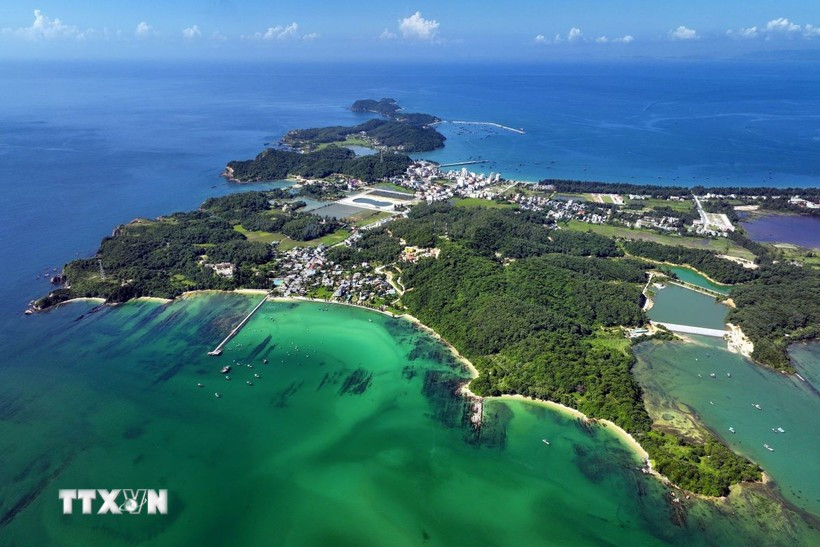
Covering a total area of 18,414 hectares, the conservation area includes 13,230 hectares of functional zones (strictly protected zone, ecological restoration zone, and service-administration zone) and 5,184 hectares of buffer zone.

An aerial view of Co To Lon island. (Photo: VNA)

Quang Ninh (VNA) - The People’s Committee of the northern province of Quang Ninh has issued a decision on the establishment of Co To – Tran Island marine conservation area in Co To special zone.

The establishment of the marine conservation area demonstrates the province’s commitment to implementing the national biodiversity conservation strategy and promoting a sustainable blue economy. It is expected to create an important foundation for developing eco-tourism, scientific research and sustainable livelihoods for local communities.

The area aims to conserve key and unique natural ecosystems, including coral reefs around Co To Con, Thanh Lan, Hon Ngua Island Cluster, Tran Island and Bac Bo Cat Islet, mangrove forests, rocky tidal flats, and aquatic habitats.

It will also protect, restore and expand populations of rare and endangered marine species, particularly migratory species such as green turtles, hawksbill turtles, olive ridley turtles, leatherback turtles, Chinese white dolphins and finless porpoises. The site will help preserve the distinctive natural landscape of the Co To – Tran Island waters for scientific research, education and development of non-extractive eco-tourism, adventure tourism and leisure tourism.

Covering a total area of 18,414 hectares, the conservation area includes 13,230 hectares of functional zones (strictly protected zone, ecological restoration zone, and service-administration zone) and 5,184 hectares of buffer zone.

Six priority projects will be implemented to ensure effective management and sustainable development, including land and water allocation, improving management mechanisms and human resources, building essential infrastructure, restoring and protecting marine ecosystems and biodiversity, supporting community livelihoods, raising public awareness of the protected area’s values, and developing eco-tourism.

The provincial People’s Committee assigned the Department of Agriculture and Environment to coordinate with the Department of Home Affairs and relevant agencies to propose an appropriate organisational and management model for the protected area, in line with central and provincial guidelines on streamlining public units and state-owned enterprises. Relevant agencies and localities are required to actively coordinate in implementing programmes and projects on aquatic resource protection, biodiversity conservation, environmental management, tourism, transport and maritime security.

Quang Ninh has three marine conservation areas, namely Co To – Tran Island, Bai Tu Long Bay and Ha Long Bay. These areas not only possess significant ecological and environmental values but also serve as a foundation for developing the marine economy associated with eco-tourism, scientific research and safeguarding national defence and security in Vietnam’s northeastern waters./.

VNA
See more

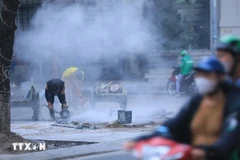
Construction activity is one of the causes of air pollution in Hanoi. (Photo: VNA)

Hanoi takes urgent measures to curb air pollution

The city requires the enhanced application of advanced technologies and remote monitoring systems, including satellite remote sensing, drones, and AI-integrated traffic cameras, to monitor, detect, and strictly address the illegal burning of garbage, straw, and agricultural by-products.

The World Bank delegation holds working session with Can Tho city People's Committee and relevant units (Photo: VNA)

World Bank delegation surveys Can Tho urban resilience project

The project is jointly financed by the WB with up to 250 million USD and a 10-million-USD non-refundable grant from the Swiss State Secretariat for Economic Affairs (SECO), along with counterpart funding from the Vietnamese Government. Its goal is to build a climate-resilient and sustainable city that can drive socio-economic growth across the Mekong Delta, mitigate flood vulnerability in central Can Tho, and improve inter- and intra-regional transport connectivity.

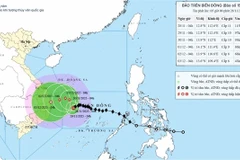
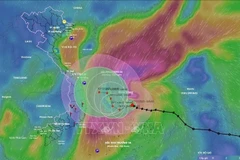
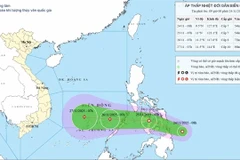
The direction of Storm Koto as of 04:00 on November 27. (Photo: VNA)

Lam Dong province’s coastal localities brace for Storm Koto

Local authorities have activated round-the-clock duty operations, continuously updated storm warnings and flood information and intensified inspections of riverside and seaside areas, low-lying zones, and locations at high risk of landslides and deep flooding.

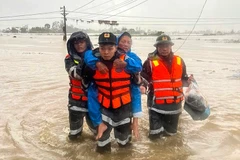
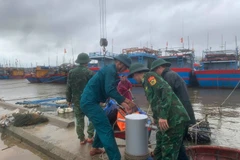
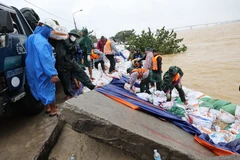
Border guard officers at Ky Ha Port Border Gate are assisting residents in securing their boats. (Photo: VNA)

VPA General Staff directs urgent response to Storm Koto

Military Regions 4, 5 and 7 were tasked with directing provincial military commands to advise local authorities, review response plans, and coordinate with relevant departments and sectors to identify disaster-prone areas, including locations at risk of flash floods, landslides, major dykes, embankments and reservoirs, and flood-prone zones, particularly those heavily affected by recent rains.

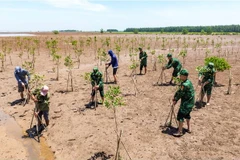
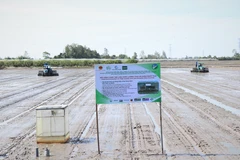
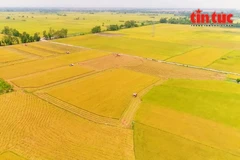
In 2024–2025, the project has implement seven pilot models in Can Tho city and the provinces of Vinh Long, Dong Thap, and An Giang. (Photo: VNA)

One-million-hectare high-quality, low-emission rice project changes mindset of producers

A project on sustainable development of one million hectares of high-quality, low-emission rice cultivation associated with green growth in the Mekong Delta by 2030 has so far helped shift the awareness and mindset of rice producers toward greater responsibility and toward adopting production trends aligned with global orientations for “green development.”

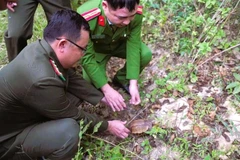
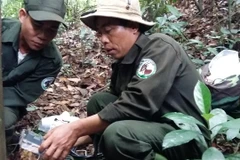
Two rangers check a camera trap in jungle of the Saola Nature Reserve in Hue city. (Photo: VNA)

Vietnam’s forests show signs of wildlife recovery

Vietnam’s forests are among the world’s most biodiverse, yet wildlife remains threatened by habitat loss and snaring. A new WWF-Vietnam survey, using 350,000 camera-trap days across 21 forests, reveals urgent conservation needs and signs of recovery.

A thin layer of frost covered the wooden deck atop Fansipan, where tourists often gather to admire the clouds. (Photo published by VNA)

Fansipan sees first frost of winter season

Visitors and local residents reported that the frost formed shortly before dawn, leaving a light white coating on pathways, stone steps and wooden platforms used for cloud viewing. The cold spell influencing Lao Cai has continued to strengthen and then stabilise, and forecasts suggest temperatures on Fansipan will remain low from late night to early morning on November 22, meaning frost may reoccur.

The north and north-central regions are forecast to turn cold while the northern mountainous and midland areas will see severe cold on November 19. (Illustrative photo: VNA)

Enhanced cold spell hits northern, central Vietnam

Due to the intensified cold spell, the northern region, and the north-central provinces of Thanh Hoa and Nghe An are predicted to experience showers, with some areas likely to record thunderstorms.

Promoting the development of sustainable “green” projects in energy, transport, construction and other sectors. (Photo: VietnamPlus)

Vietnam steps up drive for sustainable green projects on path to net zero

As Vietnam pursues its 2050 net-zero emissions target and advances its commitments under the Political Declaration on Establishing the Just Energy Transition Partnership (JETP), experts and scientists have emphasised the need to phase out projects with high pollution risks while accelerating the development of sustainable green initiatives in the fields of energy, transport and construction.