Hanoi (VNA) - Climate change has become one of the most pressing challenges of the 21st century, directly threatening food security, water resources, socio-economic stability and even the survival of many nations. With its long coastline, extensive low-lying areas and an economy still heavily dependent on agriculture, Vietnam is regarded as one of the country’s most vulnerable to global climate impacts.
According to the Intergovernmental Panel on Climate Change (IPCC, 2007), climate change refers to a shift in the state of the climate that can be identified by changes in the mean and variability of its properties, persisting for decades or longer. Article 3, Clause 32 of Vietnam’s 2020 Law on Environmental Protection defines climate change response as human activities aimed at adapting to climate change and mitigating greenhouse-gas emissions.
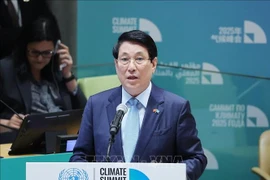
Amid escalating climate risks, Vietnam has actively demonstrated its responsibility through a series of commitments and policies. At the 26th United Nations Climate Change Conference of the Parties (COP26) in 2021, Prime Minister Pham Minh Chinh declared: “Vietnam will achieve net-zero emissions by 2050. We will not stand aside in the global fight against climate change.” This landmark pledge signaled the country’s determination to transition toward a low-carbon economy. Vietnam has since joined a range of international initiatives, including the Global Methane Pledge, the Glasgow Leaders’ Declaration on Forests and Land Use, and the Just Energy Transition Partnership (JETP).
Vietnam has taken concrete steps in both mitigation and adaptation. On mitigation, the National Climate Change Strategy to 2050 (Decision No. 896/QD-TTg) serves as the guiding framework for all climate-related actions. Decree No. 06/2022/NĐ-CP details regulations on greenhouse-gas mitigation, ozone-layer protection, and preparations for the domestic carbon market - an essential mechanism encouraging enterprises to cut emissions.
On adaptation, the National Climate Change Adaptation Plan for the 2021–2030 period (Decision No. 1055/QD-TTg) prioritizes sectors most exposed to climate risks, including agriculture, water resources and critical infrastructure.
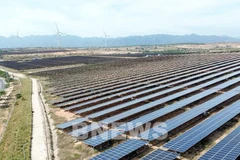
A key pillar of Vietnam’s climate agenda is green growth and energy transition. The National Green Growth Strategy (Decision No. 1658/QD-TTg) charts a pathway toward a circular and low-carbon economy. Power Development Plan VIII sets an ambitious target: by 2030, renewable energy will account for more than 30% of installed capacity - meaning thousands of megawatts of wind and solar power will be added to the national grid, gradually reducing reliance on coal.
According to the Overview Report on the Need for Low-Carbon Technology Development and Measurement, Reporting and Verification (MRV) Methodology, developed under the GEF/ADB-funded project “Mainstreaming Climate Resilience and Environmental Protection for Green Secondary City Development” of the Ministry of Agriculture and Environment, low-carbon technologies are essential to building a low-carbon economy and reducing atmospheric CO₂ concentrations. Such technologies are a suitable choice for low-carbon economic transition, helping both to cut emissions and curb global warming. Shifting to a low-carbon economy protects the environment while creating new growth drivers - from clean-energy jobs to improved quality of life. Transformations now underway in Tuyen Quang, Phu Tho and Hue show that urban development can be both modern and environmentally friendly.
With strong Government determination, active engagement of businesses, and widespread public participation, Vietnam is steadily translating international climate pledges into concrete domestic action. The road ahead remains long and challenging, but the goal is clear: a greener, more sustainable, and safer future for generations to come./.