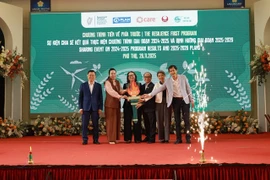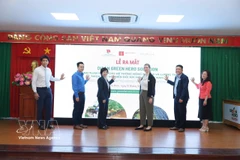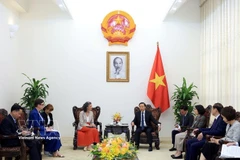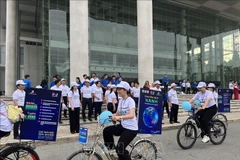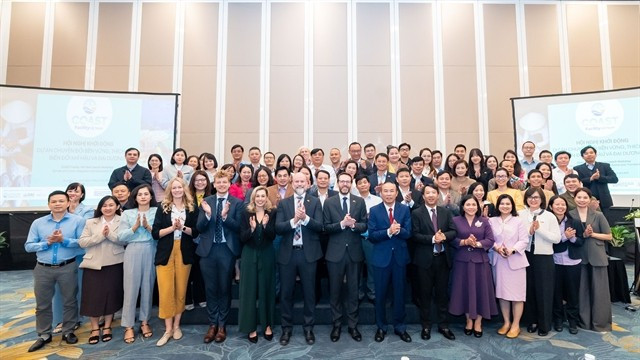
Hanoi (VNS/VNA) - Vietnam and the United Kingdom on December 13 officially launched the Climate and Ocean Adaptation and Sustainable Transition (COAST) initiative in Hanoi.
The launching event brought together senior government representatives, development partners and coastal stakeholders to mark the start of a major new effort to strengthen the resilience of Vietnam’s coastal communities and marine ecosystems.
COAST Vietnam is a five-year project, with a total budget of 18.19 million GBP (24.3 million USD), of which 17.5 million GBP is funded through the UK Government’s Blue Planet Fund, and 0.69 million GBP is funded by the Vietnamese Government in counterpart funding.
The programme aligns closely with the UK–Vietnam Comprehensive Strategic Partnership signed in October 2025 and is a key milestone in the growing collaboration between the two countries.
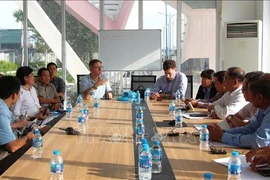
The launching ceremony brought together senior representatives from the Ministry of Agriculture and Environment, the Ministry of Foreign Affairs, the Ministry of Finance, the Ministry of Public Security of Vietnam, and the British Embassy in Hanoi. Members of the COAST Facility Programme Management Unit and the Vietnam country team also took part, alongside delegates from the implementing provinces, international partners and local institutions, universities, and relevant organisations.
An innovative effort for people and nature, COAST is a game-changer for vulnerable coastal communities facing the urgent threats of climate change. Through its largest component, called COAST Facility, it will deliver expert technical assistance, flexible grants, and long-term partnerships to strengthen governance and policy, promote inclusive coastal stewardship and sustainable livelihoods, and enable responsive coastal management.
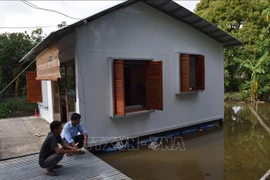
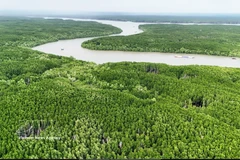
Vietnam is one of the facility’s four priority countries. With a coastline stretching 3,260km and an Exclusive Economic Zone of over 417,000 sq.km, the country’s marine ecosystems underpin its food security, jobs, and economic growth. But these critical resources face growing threats, such as climate change, biodiversity loss, pollution, and unsustainable fishing practices are increasing pressure on marine ecosystems.
COAST Vietnam will help turn the tide by restoring ecosystems, improving livelihoods, and strengthening the governance systems that protect coastal communities.
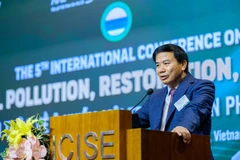
Deputy Minister of Agriculture and Environment Phung Duc Tien remarked that that this programme represents "our shared commitment to protect Vietnam’s coasts, strengthen community resilience, and support a sustainable ocean-based economy."
Iain Frew, British Ambassador to Vietnam, said: “COAST brings together national leadership, local innovation, and global expertise to build a climate-resilient future in Vietnam.”
COAST Vietnam’s roadmap to lasting change
Aligned with Vietnam’s Socio-Economic Development Strategy 2021–2030, the National Climate Change Strategy, the National Strategy on Green Growth, Marine Spatial Planning, and the National Plan for Marine Protected Areas, COAST Facility Vietnam will work towards achieving four strategic objectives.
The programme aims to conserve, protect, and develop fishery resources; restore marine and coastal ecosystems and biodiversity; and improve the climate resilience of marine and coastal aquaculture.
It is also set to promote sustainable livelihood transition for coastal communities, especially vulnerable groups affected by climate change; and strengthen management and policy implementation capacity at national and subnational levels in fisheries, resource protection, ecosystem and biodiversity conservation, as well as climate change response.
The programme will provide technical assistance, flexible grants, and lasting partnerships to advance these four outcomes in eight provinces – Quang Ninh, Hai Phong, Da Nang, Gia Lai, Khanh Hoa, Can Tho, An Giang, and Ca Mau.
COAST Facility is delivered by a global consortium of organisations led by DAI Global UK Ltd. in dialogue with the UK’s Foreign, Commonwealth, and Development Office. In Vietnam, the country team works in close partnership with the Agriculture Project Management Board (APMB) under the Ministry of Agriculture and Environment, and the British Embassy in Hanoi.
Ingrid Kelling, COAST Facility Programme Director, said: “We are thrilled to launch COAST Vietnam. Walking alongside national partners, we will deliver real impact for communities, ecosystems, and livelihoods.”/.
VNA