Da Nang (VNA) – After nearly three months of applying camera-trap technology to study biodiversity, the Management Board of the My Son Sanctuary, a world cultural heritage site in the central city of Da Nang, has recorded encouraging initial results, Director of the board Nguyen Cong Khiet said on February 25.
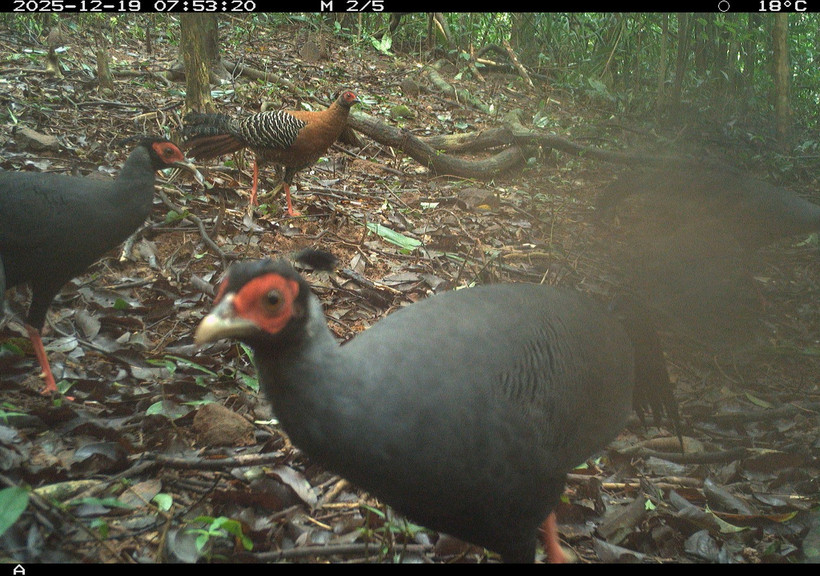
Using smart patrol software, positioning systems and camera traps placed in representative forest habitats, particularly along wildlife movement corridors such as trails, streams and areas with less human impact, the survey documented 27 wildlife species, comprising eight mammal species and 19 bird and ground-dwelling species.
Notable findings feature the Asian palm civet, greater coucal and red-throated flycatcher, as well as Red Data Book species such as the slow loris and pangolin.
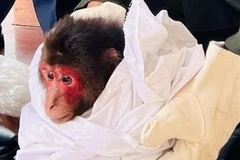
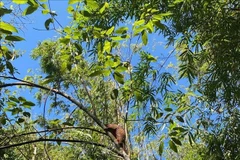
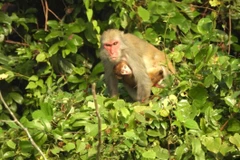
Mammals were mainly detected through camera traps, covering herbivores, omnivores and medium-sized carnivores. Of special significance was the recording of the pig-tailed macaque (Macaca leonina), classified as Vulnerable (VU) on the Red List of the International Union for Conservation of Nature, Khiet noted.
The presence of juvenile monkey individuals suggests that the My Son forest serves not only as a foraging area but also as a breeding habitat capable of sustaining stable populations, testifying to the conservation value of this area and its essential ecological function for primates, he added.
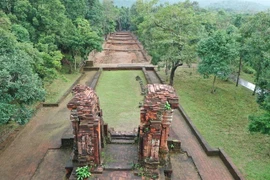
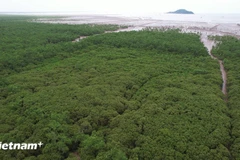
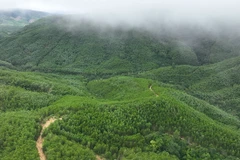
The My Son World Cultural Heritage site is located in a closed valley surrounded by low and mid-elevation mountain ranges, forming a continuous natural space that is relatively isolated from surrounding areas and imbued with distinctive spiritual significance. This topographical structure has acted as a “natural shield” helping to protect the temple complex from external impacts throughout its history, while also creating favourable conditions for the formation, maintenance and development of forest ecosystems typical of the midland – mountainous zone of Da Nang.
Surrounding the core relic area, the landscape protection forest functions as an ecological buffer zone, helping mitigate external impacts, maintain landscape continuity and support the long-term conservation of the site’s outstanding universal values, in line with recommendations of UNESCO, Khiet noted./.
Belgian TV spotlight: Vietnam's wild nature reborn
Through the lens of “Le Jardin Extraordinaire”, Vietnam was portrayed not simply as a travel destination but as a still-emerging realm of discovery: a nation whose nature, though heavily wounded in the past, demonstrates extraordinary powers of recovery, quietly upholding its pristine essence against the pressures of time.