Hanoi targets 20% reduction in PM2.5 levels

Hanoi has affirmed its commitment not to trade environmental protection for economic growth. The city is moving to establish low-emission zones (LEZs) as a core measure to control emissions and promote green, sustainable urban development.

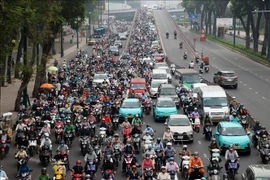
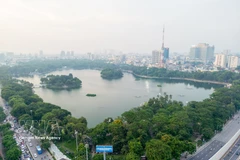
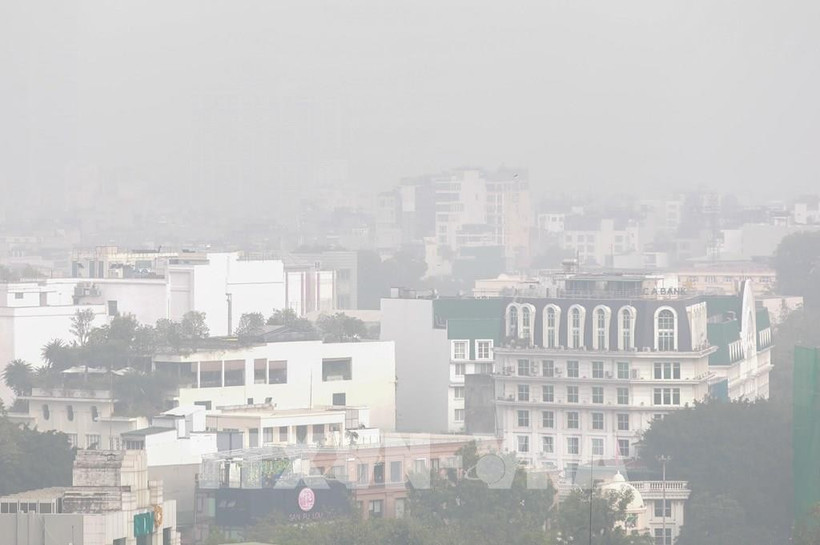
According to the Hanoi Department of Agriculture and Environment, air quality index (AQI) readings have at times reached poor and very poor levels. (Photo: VNA)

Hanoi (VNA) – Hanoi aims to cut average annual PM2.5 concentrations by around 20% by 2030 compared to 2024 levels, lowering them to below 40 µg/m³, as air pollution remains a serious challenge for the capital and other major urban areas.

The goal was emphasised at a January 6 seminar on tackling air pollution in Hanoi, set against the backdrop of new Government and city policies aimed at improving air quality, reducing emissions, and fostering green, sustainable urban growth.

Truong Manh Tuan, Deputy Head of the Division of Environmental Quality Management under the Ministry of Agriculture and Environment’s Vietnam Environment Agency, said air pollution is most acute in Hanoi and neighbouring provinces, particularly during the dry season when PM2.5 levels frequently exceed safe limits. The situation is worsening, posing significant health risks, especially for children, the elderly and people with respiratory and cardiovascular diseases.

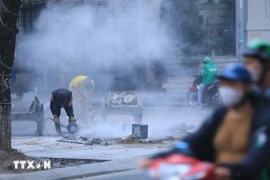
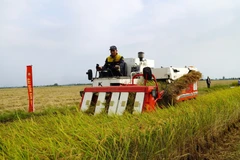
According to the Hanoi Department of Agriculture and Environment, air quality index (AQI) readings have at times reached poor and very poor levels. Key pollution sources include transport, industrial and construction activities, along with the burning of straw and household waste.

The Government has issued a national action plan on air pollution mitigation and air quality management for 2026–2030, with a vision to 2045. Under the plan, Hanoi targets a 20% reduction in PM2.5 by 2030, while neighbouring provinces are expected to cut levels by over 10%. The focus will be on controlling major emission sources and improving the accuracy and usefulness of monitoring data.

At the local level, Hanoi has affirmed its commitment not to trade environmental protection for economic growth. The city is moving to establish low-emission zones (LEZs) as a core measure to control emissions and promote green, sustainable urban development, in line with Resolution No. 57/2025/NQ-HDND of the municipal People's Council and the 2024 Capital Law.

Participants at the event agreed that tackling air pollution is a long-term task requiring coordinated action by authorities, businesses and the public. Effective implementation of the national action plan and Hanoi’s targeted measures, including LEZs, aims to deliver tangible improvements in air quality and public health while supporting sustainable urban development./.

VNA

See more

A waste collection area. (Photo: VNA)

Ca Mau approves investment policy for waste-to-energy plant

The waste-to-energy plant is planned for construction in Dat Moi commune, covering a total area of about 20 hectares. It will have a waste treatment capacity of approximately 600 tonnes of household waste per day and a power generation capacity of 6MW.

Ice coats the summit of Fansipan in the northern province of Lao Cai in the early morning of December 25. (Photo: Published by VNA)

Peak Fansipan blanketed in ice on Christmas Day

With temperatures hovering between 1 and 3 degrees Celsius, frost and ice covered the summit area, creating an ideal condition for tourists eager to admire icy scenery, clouds and experience a Christmas atmosphere amid a sea of cold mist.

Illustrative image (Photo: nhandan.vn)

20 trailblazing companies in national green ESG rankings honoured

In 2025-2026, the “For a Green National Environment” programme will pivot around six tasks that merge expertise with broad social outreach, including targeted communications, "Journey to Net Zero" conferences and trainings, ESG surveys and announcements, a "National Green Ambassador" contest, a "Green Fashion" design competition, and the rollout of "National Green Station" models focused on zero-waste living.

Air pollution in Hanoi. (Photo: VNA)

Hanoi to launch 5,000 public electric bicycles

In a move to reduce air pollution and promote green mobility, Hanoi has approved a plan to deploy 5,000 public electric bicycles, alongside restrictions on petrol- and diesel-powered vehicles in the city’s central area.

Official heritage plaque i sinstalled on the 12 recognised Shan Tuyet tea trees in Dong Phuc commune. (Photo: VNA)

Thai Nguyen: 12 ancient Shan Tuyet tea trees win national heritage status

The recognition honours the biological, cultural and historical values of these centuries-old Shan Tuyet tea trees – natural treasures deeply woven into the livelihoods, traditions and identity of local ethnic communities. The title affirms the community’s commitment to preserving and promoting the value of this iconic local tea variety.

Sarus cranes at Tram Chim National Park (Photo: VNA)

Return of sarus cranes: Hope takes wing in Dong Thap wetland

Beneath the wide Mekong Delta sky, Tram Chim National Park is racing against time, pouring heart and science into a decade-long (2022–2032) plan to rescue the Eastern sarus crane – an elegant, scarlet-headed bird listed as endangered on the International Union for the Conservation of Nature (IUCN) Red List and a living emblem of both the park and all of Dong Thap province

French Ambassador Olivier Brochet speaks at the press conference in Hanoi on December 11 to mark the 10th anniversary of the Paris Agreement on climate change and highlighting the COP30 outcomes. (Photo: VNA)

International community ready to support Vietnam in energy transition, climate response

In a video message to the press conference, UN Resident Coordinator in Vietnam Pauline Tamesis said the UN is ready to support Vietnam in building a pipeline of projects capable of absorbing financing mobilised under the Political Declaration on establishing the Just Energy Transition Partnership (JETP), as well as from global climate finance sources, including the Green Climate Fund and the Loss and Damage Fund.