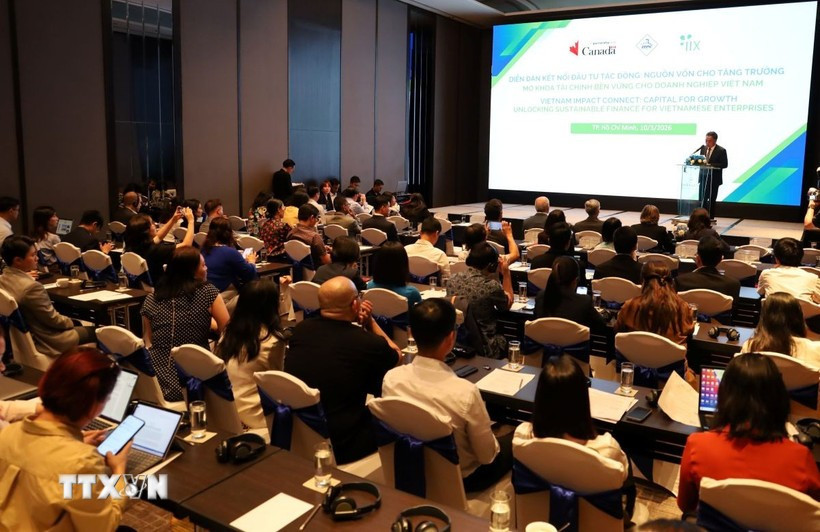
Ho Chi Minh City (VNA) – Small and medium-sized enterprises (SMEs) in Vietnam is facing an estimated annual credit gap of up to 24 billion USD as they seek increasing funding to meet environmental, social and governance (ESG) standards and accelerate their green transition, experts said at the Impact Investment Connect: Capital for Growth Forum held in Ho Chi Minh City on March 10.
The forum, jointly organised by the Ho Chi Minh City Investment and Trade Promotion Centre (ITPC) and the Impact Investment Exchange (IIX) with support from Global Affairs Canada (GAC), gathered nearly 200 investors, financial institutions and businesses from Vietnam and abroad to explore ways of connecting Vietnamese enterprises with global impact investment flows.
The event was part of the Impact Investment Readiness in Vietnam (IIRV) project funded by Canada. Since 2022, the initiative has mobilised more than 17.5 million CAD (about 12.5 million USD) in impact investment for Vietnam while helping build capacity for nearly 250 social impact businesses.
Robert Kraybill, Chief Investment Officer at IIX, said Vietnam’s social impact business ecosystem plays an important role in supporting vulnerable communities such as ethnic minorities, people with disabilities and low-income households, particularly in mountainous areas in the northern and central regions.
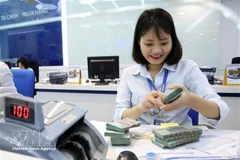
However, access to finance remains a major challenge. About 92.8% of social impact businesses are micro and small enterprises, many of which lack collateral and have limited credit histories.
Despite generating significant social value, both social impact businesses and SMEs in Vietnam face one of the largest credit gaps in ASEAN, with an estimated annual shortfall of around 24 billion USD, of which about 62% of demand remains unmet, Kraybill said.
The pressure on businesses is mounting as Vietnam pursues its goal of achieving net-zero emissions by 2050 and promotes policies on renewable energy, the circular economy and sustainable supply chains. These commitments require enterprises to invest in energy-efficient technologies, digitalised supply chains and product traceability systems.
Speakers at the forum highlighted impact investment as a promising channel to help narrow the funding gap.
Nguyen Loc Ha, Standing Vice Chairman of the Ho Chi Minh City People's Committee, said the city is prioritising higher-quality investment flows and encouraging sustainable business models.
Impact investment, he noted, not only targets financial returns but also generates positive social and environmental outcomes, aligning with global trends toward green growth, the circular economy and inclusive development.
To attract more capital, experts suggested developing innovative financial structures such as blended finance, in which public or development finance institutions share initial risks to attract private investors. Flexible instruments including revenue-based financing, results-based financing and impact-linked loans were also recommended to better suit SMEs’ cash flows.
Jim Nickel, Ambassador of Canada to Vietnam, reaffirmed his country’s commitment to supporting Vietnam in building an inclusive and sustainable economy.
Through the IIRV project and with appropriate support, he said, Vietnam’s social impact enterprises could attract the capital needed to create jobs, improve farmers’ livelihoods and address environmental and climate challenges.
Experts noted that achieving the United Nations Sustainable Development Goals requires an estimated 4 trillion USD in global investment annually. Developing suitable financial infrastructure and capital instruments will therefore be key to mobilising private investment for Vietnam’s SME sector./.