YADEA picks Vietnam as electric motorbike production hub in Southeast Asia

Liu Jia, General Director of YADEA Vietnam, said the factory is a key component of YADEA’s global strategy, designed to primarily serve the Vietnamese market in the initial stage, while gradually expanding its capacity to support exports to neighbouring Southeast Asian countries.

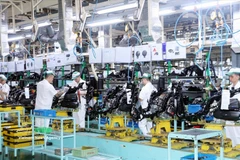
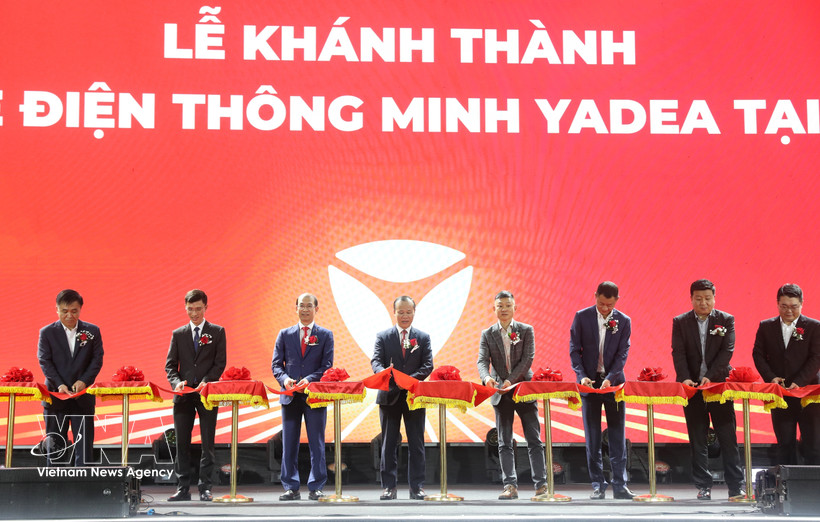
YADEA inaugurates its 100-million-USD smart electric motorbike plant in Bac Ninh province. (Photo: VNA)

Hanoi (VNA) – Chinese electric two-wheeler manufacturer YADEA has chosen Vietnam as a key production hub in Southeast Asia, with its newly inaugurated 100-million-USD smart electric motorbike plant in the northern province of Bac Ninh expected to support Vietnam's demand and exports to regional countries.

In an interview with the Vietnam News Agency, Liu Jia, General Director of YADEA Vietnam, said the factory is a key component of YADEA’s global strategy, designed to primarily serve the Vietnamese market in the initial stage, while gradually expanding its capacity to support exports to neighbouring Southeast Asian countries.

Through local production, the company aims to enhance supply chain responsiveness, better meet the needs of Vietnamese consumers, and contribute to the electrification of transport in the country. With Vietnam’s strategic location, the plant is also expected to expand its reach to neighbouring markets, reflecting YADEA’s long-term commitment to growing alongside Vietnam.

The first phase of the project involves an investment of 100 million USD, with a designed capacity of one million vehicles per year and the potential to reach two million units annually at full capacity. Liu said YADEA is pursuing a long-term development strategy, prioritising strategic value and market expansion rather than short-term profit.

In the short term, the company will focus on upgrading production systems and expanding its service network. Over the longer term, it expects to achieve economies of scale through increased market share, which would generate stable profits while also creating jobs and strengthening the local supply chain.

Liu said Vietnam is currently one of the world’s largest two-wheeler markets, with nearly one motorbike for every two people. He noted that the country’s transition toward electric mobility is becoming increasingly evident, especially as major cities such as Hanoi and Ho Chi Minh City consider policies to limit gasoline-powered motorcycles and encourage electric alternatives.

Against that backdrop, YADEA expects the electric motorbike segment in Vietnam to grow rapidly over the next three to five years, potentially doubling annually. The company aims to capture around 20% of the domestic electric motorbike market in the coming years.

Liu also highlighted the importance of localisation in the company’s supply chain strategy. Increasing the share of locally sourced components not only helps reduce production costs but also improves supply chain resilience and enhances the capabilities of Vietnamese suppliers. He said that YADEA plans to strengthen cooperation between Vietnamese suppliers and experienced international partners within its global supply network, creating opportunities for knowledge sharing and contributing to the development of a stronger industrial ecosystem in Vietnam.

As competition intensifies in the electric vehicle market, Liu said YADEA’s long-term competitiveness will be built around a user-centric strategy based on three main pillars - technology and expertise, distribution expansion and service improvement.

The firm has more than 25 years of experience in electric two-wheelers and has remained the world’s largest electric two-wheeler manufacturer for nine consecutive years in terms of sales. It is also among the few companies in the industry capable of independently developing and producing three core electric vehicle systems – motors, batteries and controllers.

In the coming years, YADEA plans to introduce new products with longer driving ranges, enhanced smart connectivity, and fast-charging and flexible battery-swapping solutions. At the same time, the company aims to expand its distribution network nationwide, targeting coverage at the district level across Vietnam by 2026 through stronger cooperation with local dealers.

Service capability is also expected to improve, with YADEA planning to upgrade its after-sales network and launch a customer service platform on the Zalo messaging application. The system will enable stores to receive service requests via GPS location and provide roadside assistance more quickly, helping integrate sales and after-sales services.

As YADEA’s core manufacturing hub in Southeast Asia, the plant will primarily serve the Vietnamese market in the near term while gradually expanding to support exports to neighbouring countries, Liu said. YADEA views Vietnam not only as a high-growth market but also as a strategic hub for its manufacturing network, supply chain and market development across Southeast Asia, he added./.


VNA

See more

Industrial production surges in the first two months of 2026. (Photo: VNA)

Industrial production posts strong growth in first two months

According to the National Statistics Office (NSO) under the Ministry of Finance, the index of industrial production (IIP) in February was estimated to decrease 18.4% from the previous month but increase 1% year on year. Overall, in the January–February period, the IIP rose 10.4% compared with the same period last year.

A delegation from the Nghe An provincial People’s Committee inspects production and business activities at the VSIP Nghe An Industrial, Urban and Service Park. (Photo:nhandan.vn)

Nghe An steps up reforms to attract FDI

In 2025, the provincial People’s Committee licensed 25 new FDI projects and approved capital adjustments for 20 others, bringing the total newly registered and additional investment to more than 1 billion USD. Many large-scale projects in the Southeast Nghe An Economic Zone have already become operational, contributing to export growth, state budget revenues and job creation.

Nearly 35,500 enterprises are newly registered nationwide, with total registered capital reaching nearly 313.7 trillion VND and more than 167,500 registered workers. (Photo: VNA)

Nearly 35,500 new businesses set up in first two months

The enterprises registered combined capital of about 313.7 trillion VND and more than 167,500 employees. Compared with the same period last year, the number of new businesses surged by 70.7%, while registered capital rose by 36.1% and registered labour increased by 19.1%.

The yarn factory of Unitex Textile and Dyeing Company Limited applies new technology to optimise operations using an automated model. (Photo: VNA)

Resolution 68: International lessons for private sector development

A common feature in many successful economies is a fundamental shift in the perception of private enterprises. In countries such as Singapore, Germany, Republic of Korea (RoK) and China, private firms are viewed not mainly as entities requiring strict control but as development partners and key forces generating growth, jobs and innovation.

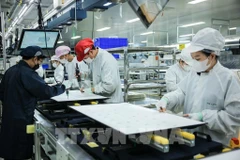
The production line of Regza Electronics Vietnam Co., Ltd. located in Dong Nai province. (Photo: VNA)

Vietnam’s overseas investment rises 2.3-fold in first two months

During the period, 36 new overseas projects were granted investment certificates with total registered capital from Vietnamese investors reaching 532.4 million USD, up 2.3 times compared to the same period last year. In addition, three projects adjusted their capital with an additional 7.8 million USD, 1.5 times higher than a year earlier.

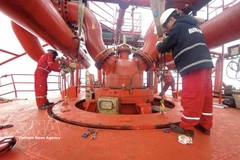
Workers of PTSC Thanh Hoa check the system for crude oil imports. Vietnam saw strong increase in fuel imports in the first two months of this year. (Photo" VNA)

Vietnam records strong increase in fuel imports in two months

Statistics of Vietnam Customs showed that Vietnam spent more than 1.44 billion USD importing 2.18 million tonnes of petroleum products in the first two months of this year, representing a sharp increase of 31.4% and 43%, respectively, over the same period last year.

Prime Minister Pham Minh Chinh visits a macadamia cultivation model in Huoi Tao B village, Pu Nhi commune, Dien Bien province on March 8. (Photo: VNA)

PM requests boosting agricultural development in Northwestern region

PM Chinh encouraged local residents to explore additional crops and livestock suitable for intercropping in order to maximise land use efficiency. Farmers were also urged to strengthen cooperation with one another and with businesses by joining cooperatives, consolidating land resources and working together to expand production and improve incomes.

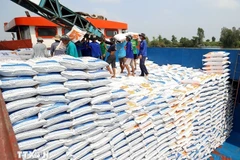
Farmers in the Mekong Delta province of An Giang harvest rice grown under the project 'Sustainable Development of One Million Hectares of High-Quality, Low-Emission Rice Associated with Green Growth in the Mekong Delta by 2030.' (Photo: VNA)

Promoting high-quality rice exports amid mounting challenges

According to the Ministry of Agriculture and Environment (MAE), an estimated 600,000 tonnes of rice worth 370 million USD was exported in January, up 12.4% in volume and 16.9% in value year-on-year. The average export price reached 616.6 USD per tonne, up 4%.

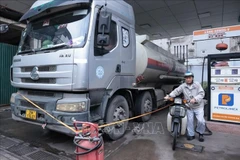
Fuel supply in Hanoi remains stable. (Photo: VNA)

Fuel prices rise sharply from 3 pm on March 7

Since the beginning of this year, domestic fuel prices have undergone 11 adjustments. During this period, both RON95 and E5 RON92 experienced four decreases and seven increases, while diesel oil two falls and nine hikes.

Customers buy and sell fuel at a Petrolimex petrol station. (Photo: VNA)

Capital’s fuel market remains stable after March 5 price adjustment

Operations at several petrol stations across Hanoi have run normally. Along major routes, petrol stations remained open and continued to serve customers as usual. The number of vehicles refueling showed no major changes compared to the days before the price adjustment. Sales activities continued without interruption, and there were no long queues or supply disruptions.