Thailand unveils “10 Plus” strategy to weather global instability

Deputy Prime Minister and Finance Minister Ekniti Nitithanprapas said the policy package focuses on concrete economic measures, including initiatives to help low-income households, elderly citizens and small businesses reduce debt, thereby supporting national economic growth.

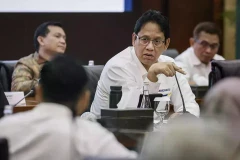
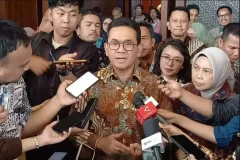
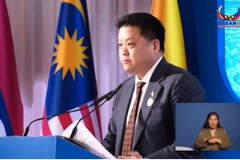
Thai Deputy Prime Minister and Finance Minister Ekniti Nitithanprapas (centre), Commerce Minister Suphajee Suthumpun (left), and Foreign Minister Sihasak Phuangketkeow at the Bhumjaithai Party forum in Buri Ram province on March 8. (Photo: bangkokpost.com)

Hanoi (VNA) – Senior members of Thailand’s Bhumjaithai Party (BJT), led by caretaker Prime Minister Anutin Charnvirakul, have unveiled a “10 Plus” strategy aimed at helping the country cope with global uncertainties, particularly the escalating conflict in the Middle East.

Deputy Prime Minister and Finance Minister Ekniti Nitithanprapas said the policy package focuses on concrete economic measures, including initiatives to help low-income households, elderly citizens and small businesses reduce debt, thereby supporting national economic growth. The package also prioritises investment in green industries to strengthen Thailand’s global competitiveness and ensure sustainable expansion.

Ekniti acknowledged that Thailand’s economy is facing multiple external shocks, especially from the Middle East conflict. Over the past week, PM Anutin has held daily meetings to assess the situation and prepare contingency plans, including measures related to oil supply and consumer prices to mitigate the impact.

Commerce Minister Suphajee Suthumpun said the government must maintain public confidence by demonstrating its ability to manage risks arising from the conflict. Authorities are working to stabilise consumer prices and coordinating with businesses to address potential supply chain disruptions, while warning traders against hoarding goods or raising prices unfairly.

She added that fertiliser supplies are currently sufficient until August. If shortages occur, Thailand will seek additional imports, including negotiations with partners such as Malaysia and Brunei.

Regarding trade with the US, Suphajee said the government is reassessing its position after the US Supreme Court suspended certain tariff measures. Earlier discussions expected tariffs of around 19%, but a new ruling set tariffs at 15% for 150 days, requiring businesses to adjust.

Foreign Affairs Minister Sihasak Phuangketkeow said Thailand must adopt a more proactive foreign policy amid growing global instability and prepare for emergencies, including the possible evacuation of Thai nationals if the Middle East conflict escalates. He also urged lawmakers to support foreign policy initiatives through parliamentary committees to minimise the impact of geopolitical uncertainties./.

VNA

See more

Indonesian Trade Minister Budi Santoso on the sidelines of the Closing Ceremony of Trade Expo Indonesia (TEI) 2025 at ICE BSD, Tangerang. (Photo:jakartaglobe.id)

Indonesia seeks WTO approval to suspend concessions to EU

The dispute dates back to 2018, when the EU issued a directive restricting the inclusion of crop-based biofuels in member states’ renewable energy targets and set a roadmap to phase out palm oil-based biofuels by 2030, citing concerns over the sustainability of palm oil production.

A motorist refuels at a station in Phnom Penh following a Ministry of Commerce warning against domestic fuel stockpiling. (Photo: Khmer Times)

Cambodia strengthens control over retail fuel sales

Cambodia’s Ministry of Commerce has called on the public and fuel station operators across the country to avoid hoarding fuel and to strictly follow technical safety standards in the sale and storage of petroleum products to prevent safety risks and ensure a stable supply.

Lao Prime Minister Sonexay Siphandone (Photo: Xinhua/VNA)

Laos identifies 10 key tasks to build independent, self-reliant economy

Laos will step up agricultural production to ensure food security, meet domestic demand and expand exports; encourage the development of agro-processing industries, including those related to rubber, aquatic products, cassava and sugarcane, as well as fertiliser and animal feed production, in order to increase added value and create jobs in rural areas.

Illustrative image (Photo: Nikkei)

ASEAN faces startup funding drought risks

ASEAN's startups raised 1.16 billion USD in October-December 2025, slightly down from the same quarter a year earlier. For the full year, funding increased 18% to 5.4 billion USD, but that was still about a fourth of the level seen in the peak year of 2021.

Environment Minister Hanif Faisol Nurofiq speaks to the press in Badung, Bali, on March 5. (Photo: Antara)

Indonesia steps up waste sorting at source

Waste sorting at source, combined with modern treatment technologies and stronger community participation, will play a decisive role in reducing pollution and building a sustainable waste management system in Indonesia in the coming years.

Lao girls in a festival. (Photo: asiakingtravel.com)

Laos marks International Women’s Day

The Lao People’s Revolutionary Party and the Lao Government have established policies and legal frameworks to promote women’s development, safeguard women’s rights and interests, and advance gender equality.

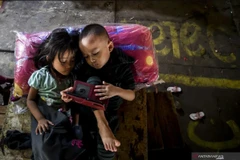
Two children play with a gadget in Jakarta. (Photo: ANTARA)

Indonesia sets age limits on digital platforms to protect children

Minister of Communication and Digital Affairs Meutya Hafid said Government Regulation No. 17 of 2025 on Electronic System Governance for Child Protection, known as PP Tunas, will delay access to high‑risk platforms until age 16, while lower‑risk services will be available from age 13.

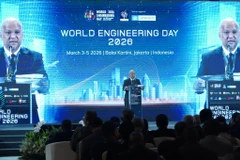
Indonesia looks to expand engineering workforce amid AI push

Indonesia looks to expand engineering workforce amid AI push

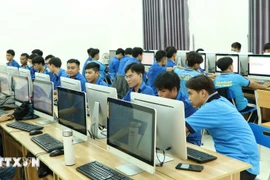
President of the Institution of Engineers, Indonesia (PII) Ilham Akbar Habibie said the number of engineers per one million people in Indonesia remains low. The country currently has about 2,500 engineers per one million people, compared with around 9,500 in Vietnam – nearly four times higher. He described Vietnam as a typical example of how a nation can rely on engineering to strengthen its economy and drive robust economic growth.

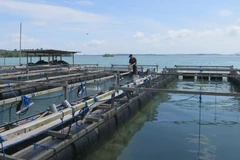
Singapore invests to strengthen food self-reliance

Singapore invests to strengthen food self-reliance

Singapore plans to pump 70 million SGD (55 million USD) over the next five years to help local farms expand production capacity and build capabilities, as the country steps up efforts to strengthen food resilience amid growing global uncertainties.

Illustrative photo: Internet

Guangxi strengthens ASEAN – China trade connectivity

China has remained ASEAN’s largest trading partner for 17 consecutive years, while ASEAN has held the position as China’s top trading partner for the past six years. Guangxi, the only Chinese region linked to ASEAN by both land and sea, plays a strategic role in connecting the two markets.

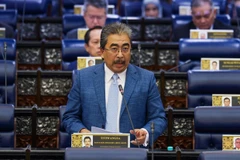
Malaysian Minister of Investment, Trade and Industry Johari Abdul Ghani (Photo: Bernama)

Malaysia boosts exports to CPTPP member countries

Through the CPTPP, exporters can access non-traditional markets such as Canada, Mexico and Peru and, for the first time, gain preferential access to the UK market, which had previously been subject to regular tariffs, said a Malaysian official.