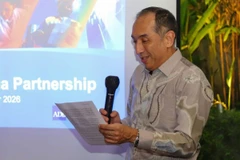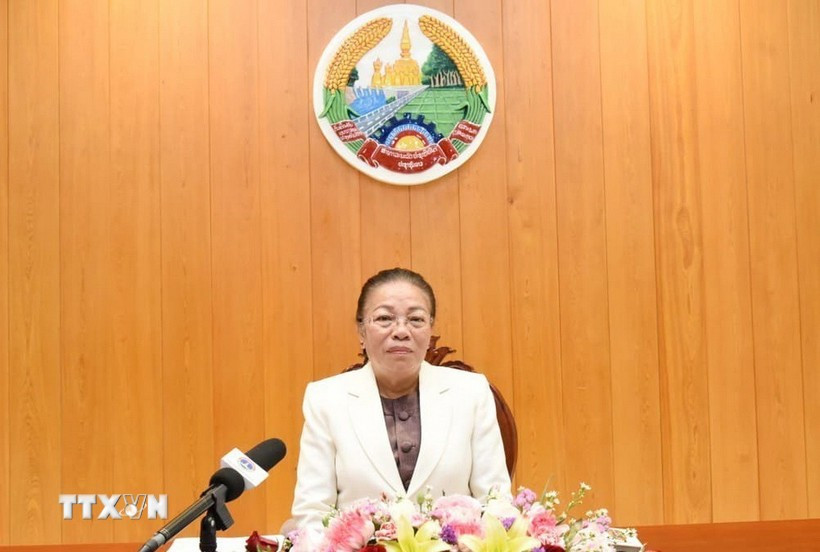
Vientiane (VNA) – Laos officially announced the results of the election of deputies to its 10th National Assembly at a press conference held on March 2 at the National Assembly headquarters in Vientiane.
Speaking at the press briefing, Sounthone Xayachak, Secretary of the Lao People’s Revolutionary Party (LPRP) Central Committee, Vice President of the National Assembly of Laos said that a total of 175 candidates were elected as deputies to the 10th National Assembly across 18 constituencies nationwide. Among them, 52 are women, accounting for 29.71% of the total number of deputies.
Of the newly elected deputies, 51 represent central-level agencies while 124 come from localities. Thirty-two deputies previously served in the 9th National Assembly. The new legislature also includes one representative from a state-owned enterprise and two from private enterprises.
In terms of ethnic composition, the 175 deputies belong to four language groups. The Lao–Tai group accounts for 148 deputies, including 43 women; the Mon–Khmer group has 19 deputies, including six women; the Mong–Iumien group has seven deputies, including three women; and the Sino–Tibetan group has one deputy.
The Lao National Election Committee said the announcement was made in accordance with the amended Law on Elections of National Assembly Deputies and Provincial People’s Council members adopted in 2024, the Presidential Decree, and voting results from February 22.
Vientiane recorded the highest number of elected deputies with 19 representatives, followed by Savannakhet province with 21, while other localities elected between seven and 15 deputies each. Notably, all 18 constituencies nationwide elected at least one female deputy./.
Laos meets UN criteria for graduation from least developed country status
A resolution by United Nations acknowledging Laos’ eligibility for graduating from the group of least developed countries (LDCs) in 2026 reflects international recognition of the country’s sustained efforts and achievements over the past five decades under the leadership of the Lao People’s Revolutionary Party (LPRP).