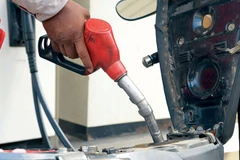
Jakarta (VNA) - Indonesia may have to raise subsidised fuel prices as a last resort if global oil prices surge, putting heavy pressure on the state budget, Finance Minister Purbaya Yudhi Sadewa has said.
Purbaya said government simulations show the state budget deficit could widen to 3.6% of gross domestic product if crude oil prices average 92 USD per barrel this year. The projection exceeds the government’s macroeconomic assumption for the 2026 state budget, which sets the Indonesian Crude Price (ICP) benchmark at 70 USD per barrel.
Under Indonesian fiscal law, the government must maintain the budget deficit below 3% of GDP, a rule designed to protect fiscal discipline and investor confidence.
Purbaya said the government has prepared multiple scenarios to manage potential shocks, including one in which average oil prices reach 72 USD per barrel over the year. Still, the minister acknowledged that raising domestic fuel prices could become a last-resort option if fiscal pressures intensify.
As a net importer of petroleum products, Indonesia faces greater fiscal pressure when oil prices rise, as the government must allocate more funds to fuel subsidies and energy compensation programmes.
Government data shows the state budget posted a deficit of 135.7 trillion IDR (8.7 billion USD), equivalent to 0.53% of GDP, as of the end of February. State revenue reached 358 trillion IDR during the first two months of 2026, while government spending climbed to 493.8 trillion IDR, driven partly by accelerated early-year expenditure.
Tax collection in the first two months of 2026 grew 30%, and it is expected to remain stable going forward, he said.
The government continues to target economic growth between 5.5% and 6% in the coming years, following an expansion of 5.11% last year./.