Laos identifies 10 key tasks to build independent, self-reliant economy

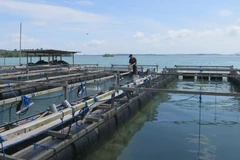
Laos will step up agricultural production to ensure food security, meet domestic demand and expand exports; encourage the development of agro-processing industries, including those related to rubber, aquatic products, cassava and sugarcane, as well as fertiliser and animal feed production, in order to increase added value and create jobs in rural areas.

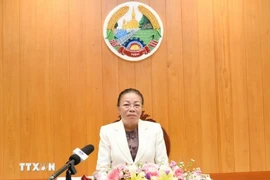
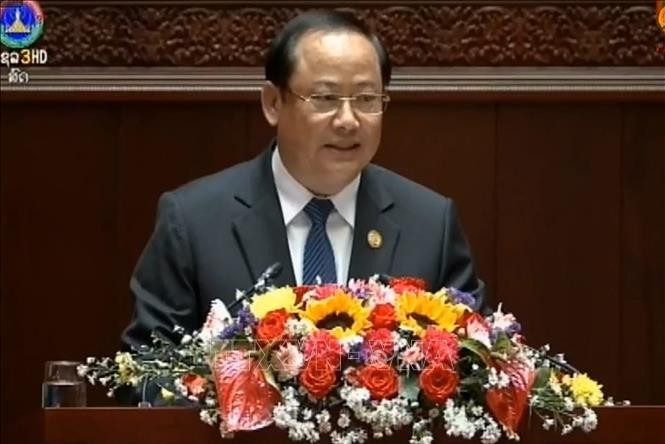
Lao Prime Minister Sonexay Siphandone (Photo: Xinhua/VNA)

Vientiane (VNA) – The Government of Laos has identified ten key tasks aimed at ensuring macroeconomic stability and promoting sustainable growth, with a view to building an independent and self-reliant economy.

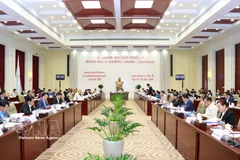
Speaking at a conference to disseminate the country’s 10th five-year socio-economic development plan, Lao Prime Minister Sonexay Siphandone said the tasks focus on diversifying production and service sectors, addressing economic and financial difficulties, and creating momentum for fast and quality growth.

First, Laos will step up agricultural production to ensure food security, meet domestic demand and expand exports. At the same time, the country will encourage the development of agro-processing industries, including those related to rubber, aquatic products, cassava and sugarcane, as well as fertiliser and animal feed production, in order to increase added value and create jobs in rural areas.

The Lao Government will also prioritise the development of clean energy projects such as hydropower, solar, wind and biomass energy. At the same time, it plans to expand electricity transmission networks to strengthen connectivity with neighbouring countries and facilitate regional energy trade.

In the resource sector, Laos aims to increase domestic mineral processing while limiting exports of raw materials. Priority will be given to producing semi-processed and finished products from minerals such as gold, iron, copper, aluminum and potash.

The country will also promote the development of processing industries capable of joining regional supply chains, particularly in special economic zones and industrial parks, while encouraging the production of import substitutes.

Tourism has been identified as another key sector, with Laos planning to develop eco-tourism, cultural, historical and agricultural tourism products in a green and sustainable manner.

Regarding infrastructure, Laos aims to improve logistics systems and cross-border transportation, gradually positioning itself as a regional transit hub for goods within the Association of Southeast Asian Nations (ASEAN). Dry ports in Vientiane and the provinces of Savannakhet, Khammouane and Champasak will continue to be upgraded and utilised more efficiently.

In addition, the government plans to accelerate the development of telecommunications infrastructure and high-speed internet, establish a national data centre, and promote digital government, e-commerce and digital finance.

Alongside economic development measures, Laos will strengthen macroeconomic management, reform the revenue collection system, control inflation, tighten foreign exchange management and gradually address public debt challenges.

The government will also improve the efficiency of public investment, enhance the business climate, promote private sector development and continue reforming state-owned enterprises to improve performance, contribute more to the state budget and enhance the overall competitiveness of the economy./.


VNA

See more

Illustrative image (Photo: Nikkei)

ASEAN faces startup funding drought risks

ASEAN's startups raised 1.16 billion USD in October-December 2025, slightly down from the same quarter a year earlier. For the full year, funding increased 18% to 5.4 billion USD, but that was still about a fourth of the level seen in the peak year of 2021.

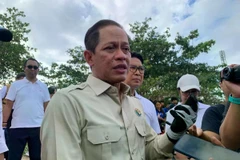
Environment Minister Hanif Faisol Nurofiq speaks to the press in Badung, Bali, on March 5. (Photo: Antara)

Indonesia steps up waste sorting at source

Waste sorting at source, combined with modern treatment technologies and stronger community participation, will play a decisive role in reducing pollution and building a sustainable waste management system in Indonesia in the coming years.

Two children play with a gadget in Jakarta. (Photo: ANTARA)

Indonesia sets age limits on digital platforms to protect children

Minister of Communication and Digital Affairs Meutya Hafid said Government Regulation No. 17 of 2025 on Electronic System Governance for Child Protection, known as PP Tunas, will delay access to high‑risk platforms until age 16, while lower‑risk services will be available from age 13.

Indonesia looks to expand engineering workforce amid AI push

Indonesia looks to expand engineering workforce amid AI push

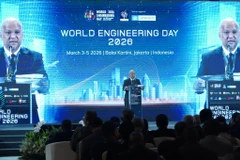
President of the Institution of Engineers, Indonesia (PII) Ilham Akbar Habibie said the number of engineers per one million people in Indonesia remains low. The country currently has about 2,500 engineers per one million people, compared with around 9,500 in Vietnam – nearly four times higher. He described Vietnam as a typical example of how a nation can rely on engineering to strengthen its economy and drive robust economic growth.

Singapore invests to strengthen food self-reliance

Singapore invests to strengthen food self-reliance

Singapore plans to pump 70 million SGD (55 million USD) over the next five years to help local farms expand production capacity and build capabilities, as the country steps up efforts to strengthen food resilience amid growing global uncertainties.

Thailand announces referendum results on constitutional amendment (Photo: eastasiaforum.org)

Thailand announces results of constitutional amendment referendum

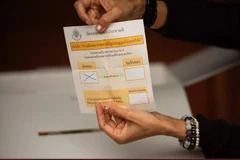
Official results released by the EC and signed by EC Chairman Narong Klanwarin show that a majority of Thai voters (58.64%) supported the amendment of the current Constitution. Meanwhile, 30.46% voted against, 8.34% cast blank ballots, and 2.56% of the votes were invalid.

Illustrative photo: Internet

Guangxi strengthens ASEAN – China trade connectivity

China has remained ASEAN’s largest trading partner for 17 consecutive years, while ASEAN has held the position as China’s top trading partner for the past six years. Guangxi, the only Chinese region linked to ASEAN by both land and sea, plays a strategic role in connecting the two markets.

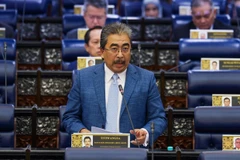
Malaysian Minister of Investment, Trade and Industry Johari Abdul Ghani (Photo: Bernama)

Malaysia boosts exports to CPTPP member countries

Through the CPTPP, exporters can access non-traditional markets such as Canada, Mexico and Peru and, for the first time, gain preferential access to the UK market, which had previously been subject to regular tariffs, said a Malaysian official.

Vietnam attends Cambodia–ASEAN Business Summit 2026

Vietnam attends Cambodia–ASEAN Business Summit 2026

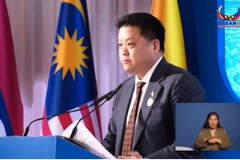
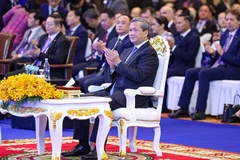
Themed “Transforming ASEAN Transformation: Innovation, Integration and Industrial Evolution,” the event aimed to promote economic growth, deepen regional integration, and advance sustainable development in Cambodia and across ASEAN, underscoring the bloc’s strong commitment to innovation-driven growth and fostering regional competitiveness.

Malaysia's National Scam Response Centre (NSRC) at Menara 2 MCMC, Cyberjaya. (Photo: Straits Times)

Malaysia steps up fight against online financial scams

Since its establishment, the National Scam Response Centre of Malaysia has prevented more than 34.05 million MYR (8.5 million USD) from falling into the hands of scam syndicates. The amount returned to victims rose significantly from 508,479 MYR in 2024 to 6.65 million MYR in 2025.

Singapore prioritises climate change response initiatives

Singapore prioritises climate change response initiatives

In an increasingly volatile world, a Singaporean official stressed the need to prioritise building a climate-ready Singapore now, and prepare infrastructure, businesses and people today to be resilient in a climate-impaired future.

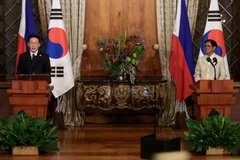
Philippine President Ferdinand R. Marcos Jr. (right) and RoK President Lee Jae Myung at their joint press conference in Manila (Photo: Yonhap/VNA)

Philippines, RoK pledge to maximise bilateral FTA advantages

The Philippines and the Republic of Korea acknowledged ongoing efforts to advance bilateral trade and investment, while expressing their shared determination to fully realise the potential of the Philippines–RoK Free Trade Agreement for the benefit of their people.

Illustrative photo (Photo: 123RF)

Thailand records over 7,300 fraud complaints in one week

Assistant national police chief Pol Lt Gen Jirabhop Bhuridej who is also ACSC deputy director, said that the centre’s online reporting system logged 7,344 complaints between February 22 and 28, up 611 cases compared to the previous week. Total financial damage during the period amounted to 440.7 million THB.

Singapore: Workers can be "bilingual" in AI and their own areas of expertise to solve problems in their domains., said Minister for Digital Development and Information Josephine Teo. (Photo: straitstimes.com)

Singapore to train 100,000 AI-savvy workers by 2029

This ambition will be realised through the new National AI Impact Programme (NAIIP), which aims to train some 100,000 workers to be AI-savvy by 2029. Over the next three years, about 10,000 enterprises will also be equipped with AI capabilities.