Malaysia steps up fight against online financial scams

Since its establishment, the National Scam Response Centre of Malaysia has prevented more than 34.05 million MYR (8.5 million USD) from falling into the hands of scam syndicates. The amount returned to victims rose significantly from 508,479 MYR in 2024 to 6.65 million MYR in 2025.

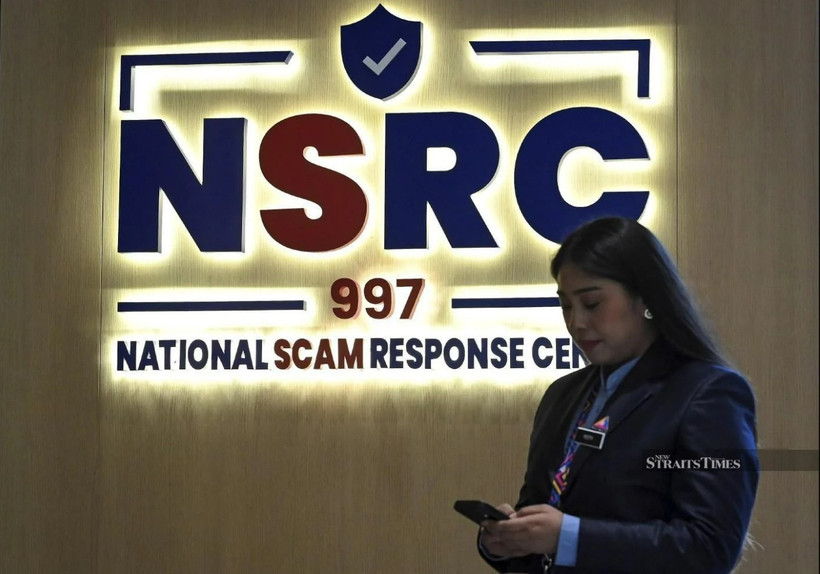
Malaysia's National Scam Response Centre (NSRC) at Menara 2 MCMC, Cyberjaya. (Photo: Straits Times)

Kuala Lumpur (VNA) – Malaysia has officially inaugurated the National Scam Response Centre (NSRC) at the headquarters of the Malaysian Communications and Multimedia Commission (MCMC) in Putrajaya, marking a key step in strengthening coordinated efforts to combat the growing threat of online fraud.

Speaking at the launch on March 3, Prime Minister Anwar Ibrahim stressed the importance of raising public awareness as a central element in tackling online scams, alongside stronger law enforcement and enhanced operations of the NSRC. He noted that awareness-raising campaigns should be intensified to ensure Malaysians do not fall victim to scams, which are sometimes driven by greed or seemingly attractive offers.

According to the Malaysian Ministry of Home Affairs, the NSRC was established in October 2022 and initially operated 12 hours a day starting from 8 am at the Central Bank of Malaysia building in Kuala Lumpur. In November 2025, the centre moved to Putrajaya, expanded its workforce by 82 personnel and begun operating around the clock.

The enhanced operations are part of the government’s broader efforts to strengthen national cyber security and protect citizens from increasingly sophisticated cybercrime.

The NSRC has improved its ability to respond quickly to fraud cases, including helping recover funds for victims, through close cooperation between the Royal Malaysia Police and commercial banks, which now operate within the same command centre. The centre also serves as a coordination hub to trace and freeze funds linked to fraudulent activities while improving response mechanisms to public reports.

Since its establishment, the NSRC has prevented more than 34.05 million MYR (8.5 million USD) from falling into the hands of scam syndicates. The amount returned to victims rose significantly from 508,479 MYR in 2024 to 6.65 million MYR in 2025.

Last year alone, the centre handled 146,167 complaint calls and took action to freeze 138,915 related bank accounts. By January 2026, it had secured 1.44 million MYR through initial account freezing measures./.

VNA

See more

Malaysia considers establishing strategic petroleum reserve

Malaysia considers establishing strategic petroleum reserve

Malaysia, which was previously a net exporter, has now become a net importer due to declining domestic production and rising consumption, with demand estimated at around 800,000 barrels per day compared to production of about 400,000 barrels per day.

Indonesia to halt diesel imports from July

Indonesia to halt diesel imports from July

The move is part of the Indonesian Government’s efforts to strengthen national energy independence by utilising palm oil as an alternative fuel, said Agriculture Minister Andi Amran Sulaiman.

Malaysia’s growing microplastics crisis is largely self-inflicted, driven by domestic waste, weak recycling practices and everyday plastic use, said experts. (Photo: New Straits Times)

Malaysia seeks solutions to microplastic crisis

Microplastics originating from domestic waste and wastewater are increasingly entering the food chain, posing serious threats to seafood safety and the livelihoods of coastal communities.

The new mass emergency alert system SG Alert, which will be used during emergencies such as major fires, chemical or terror incidents, seen on an Apple and Android device on Apr 17, 2026. (Photo: CNA)

Singapore launches new national emergency alert system

SG Alert in Singapore uses cell broadcast technology, enabling alerts to be delivered within seconds without requiring mobile data or collecting personal information. Unlike conventional SMS, which may be delayed during network congestion or depend on internet connectivity, the system ensures fast and reliable message delivery. Alerts can be sent islandwide or targeted to specific affected areas.

Malaysia establishes ‘war room’ to ensure water security

Malaysia establishes ‘war room’ to ensure water security

The establishment of the war room reflects the Malaysian government’s commitment to shift from a reactive approach to a more proactive, data-driven one in managing national water challenges, particularly amid increasingly unpredictable weather conditions caused by global climate change

Indonesia diversifies supply sources to ensure energy security

Indonesia diversifies supply sources to ensure energy security

Indonesia is facing significant supply pressure as crude oil consumption reaches approximately 1.6 million barrels per day, much lower than the domestic production at only around 600,000 barrels per day, forcing the country to rely heavily on imports.