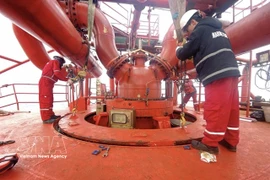
Hanoi (VNA) – The Ministry of Finance (MoF) has proposed reducing the most-favoured-nation (MFN) import tariff on several gasoline and oil products and input materials to 0% as a temporary measure to stabilise domestic supply and help safeguard national energy security amid growing global uncertainties.
The proposal was outlined in a draft decree amending preferential import tariffs for certain goods, which has been submitted to the Ministry of Justice for appraisal.
The MoF said the global situation remains volatile, particularly due to tensions in the Middle East, which have caused sharp fluctuations in energy prices and disrupted global fuel supply chains. Crude oil price has surged as a result, affecting the domestic market. Therefore, adjusting import tariffs is seen as a solution to stabilise supply and ensure national energy security.
It noted that the conflict involving the US, Israel and Iran has significantly impacted global oil and gas business globally, including Vietnam.
Vietnam currently imports most of its oil and gas products from ASEAN countries and the Republic of Korea, benefiting from 0% import tariffs under free trade agreements (FTAs). However, amid global supply disruptions, sourcing refined fuel from these markets could also become more difficult. Maintaining the current tariff structure could therefore create obstacles for Vietnam in ensuring stable supply and price control.
To address this risk, the Ministry of Industry and Trade (MoIT) has proposed reducing MFN import tariffs on oil and gas products to 0%, and submitted this to the MoF for consolidation into the draft decree, with the measure set to remain in force until April 30, 2026.
Specifically, the draft proposes cutting the MFN tariff on unleaded motor gasoline and gasoline blending components such as naphtha and reformate from 10% to 0%. The tariff on diesel fuel, fuel oil, jet fuel and kerosene is also proposed to fall from 7% to 0%.
In addition, several petrochemical feedstocks - including xylene, condensate and p-xylene - would see tariffs reduced from 3% to 0%, while other cyclic hydrocarbons would be cut from 2% to 0%.
The drafting agency estimates that if the new tariff rates were applied based on import turnover in 2025, state budget revenue could decline by about 1.02 trillion VND (over 38.9 million USD).
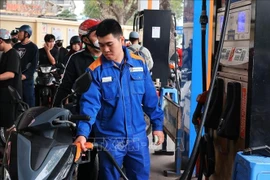
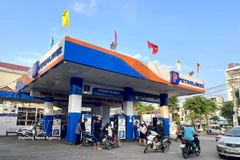
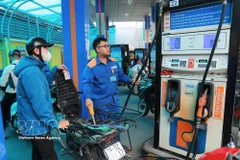
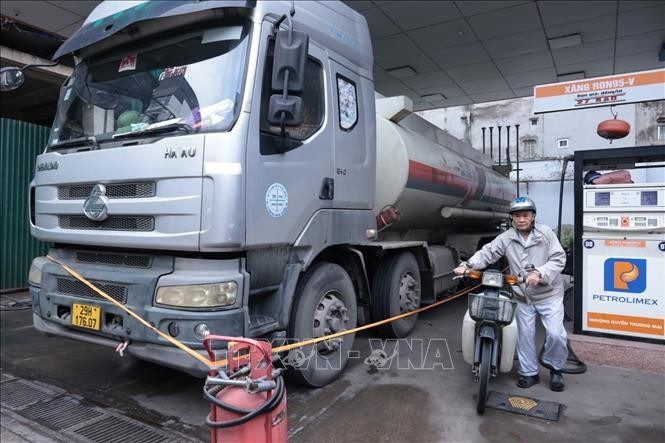
The proposal comes as domestic fuel prices have recently risen sharply. On March 7, retail fuel prices were adjusted upward, with E5RON92 gasoline capped at 25,226 VND per litre and RON95-III at 27,047 VND per litre, up 3,777 VND and 4,707 VND respectively. Meanwhile, diesel was priced at up to 30,239 VND per litre, while kerosene reached 35,091 VND per litre, up 7.207 VND and 8.490 VND per litre./.