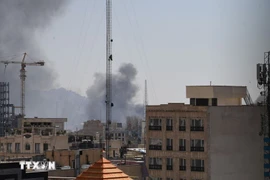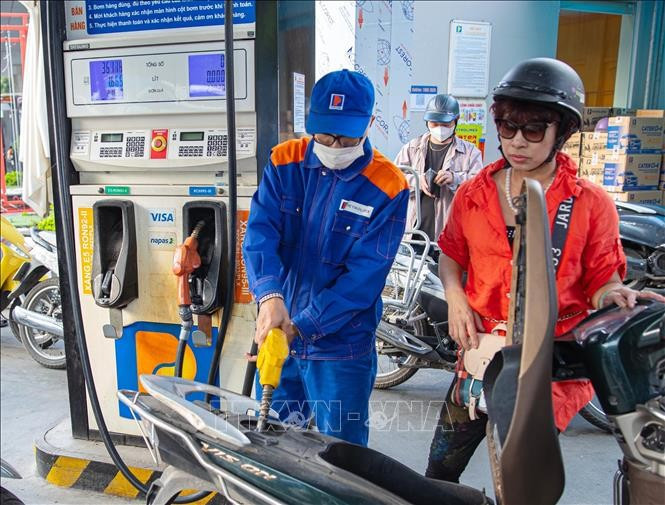
Hanoi (VNA) – Vietnam has activated a monitoring and early-response mechanism to safeguard domestic fuel supply amid concerns that escalating tensions between the US and Iran can prolong instability in the Middle East and put pressure on the global energy supply-demand balance.
The Department of Domestic Market Management and Development under the Ministry of Industry and Trade (MoIT) said the agency convened urgent meetings with the country’s two key refineries – Binh Son Refining and Petrochemical JSC (BSR) and Nghi Son Refinery and Petrochemical LLC (NSRP) – as well as major fuel distributors to review production capacity, inventory levels, import plans and their ability to meet domestic demand under different scenarios.
Based on updated market assessments and international market trend forecasts, the agency has reported the situation to the MoIT and developed a set of operating scenarios corresponding to varying degrees of global price volatility and supply disruption. The approach goes beyond short-term reaction and aims at comprehensive risk management to ensure proactive and flexible governance.
Current solutions are being implemented along three main pillars - closely monitoring market developments and flexibly managing supply in a timely manner; ensuring the smooth operation of the distribution system from wholesalers to retail outlets; and proactively preparing long-term contingency scenarios while strengthening inter-sectoral coordination.
The MoIT will closely monitor global oil prices, output, inventories and trade flows to adjust imports and domestic supply accordingly. It will also intensify oversight of key traders’ compliance with their 2026 minimum reserve obligations. Mandatory reserves serve not only as a legal requirement but as a critical buffer to stabilise the market during periods of heightened volatility.
Inspection and enforcement have been intensified to crack down on hoarding, speculation, unjustified price hikes and any actions that may disrupt supply. The provincial and municipal Departments of Industry and Trade have been instructed to closely supervise retail operations to ensure uninterrupted supply and prevent localised shortages. Key traders and distributors are required to share supply within their systems to maintain stability across the entire supply chain.
The Department of Domestic Market Management and Development has advised the MoIT in submitting policy options to the Government corresponding to each level of risk, towards remaining proactive under all circumstances, including in the face of major and unforeseen global market shocks.
The agency has worked with the Vietnam National Industry – Energy Group to direct refineries to operate safely and stably, ensuring full delivery of contracted output; proactively adjust production plans when necessary and diversify crude oil import sources, expanding to alternative markets beyond the Middle East to minimise dependency risks.
On the regulatory front, the ministry has submitted a new decree to replace existing fuel trading rules, aiming to enhance transparency and competition. It is also coordinating with relevant ministries and the central bank to ensure flexible price management, faster quality clearance for imports, and a smooth rollout of E10 biofuel from June 1, 2026.
The ministry has further urged authorities to prioritise foreign exchange and credit for fuel import businesses during periods of volatility, while strengthening distribution support, security at retail outlets, and market inspections nationwide./.

Vietnamese carriers told to avoid flying over high-risk areas in Middle East
Vietnamese airlines have been instructed not to operate flights through areas and airspace deemed to pose potential safety risks in the Middle East, amid ongoing military tensions in the region.