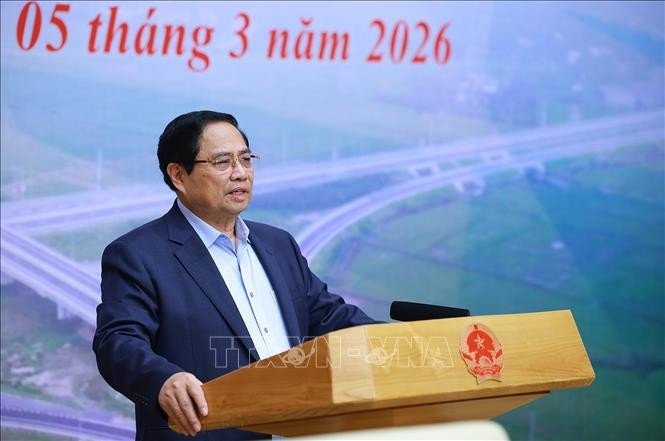
Hanoi (VNA) – Prime Minister Pham Minh Chinh on March 5 called for strongest possible efforts to accelerate transport infrastructure development, stressing its crucial role in helping Vietnam achieve double-digit economic growth in 2026.
Chairing the 24th meeting of the State Steering Committee for national key transport projects, PM Chinh, also head of the committee, urged ministries, sectors, localities, project management boards, investors and contractors to demonstrate the highest sense of responsibility in implementing infrastructure projects.
He emphasised that project execution must be carried out swiftly while strictly complying with legal procedures and regulations, and underlined the need to prevent violations, corruption, losses and wastefulness of public assets. At the same time, agencies were instructed to promptly remove institutional bottlenecks and cut unnecessary administrative procedures.
The Government leader also requested a review and adjustment of development plans to align with the Resolution of the 14th National Party Congress, ensuring a long-term strategic vision. Localities were urged to add interchanges and connection points linking with newly built expressways to maximise project efficiency, and adapt provincial master plans to new development spaces along these routes.
PM Chinh asked ministries, sectors and local authorities to review cost norms, investment levels, and bidding and contractor selection processes to ensure compliance with regulations and minimise risks of wrongdoings. He also highlighted the need to mobilise the entire political system to support transport infrastructure projects, particularly in site clearance and resettlement efforts, ensuring that relocated residents have better living conditions than before.
The PM further suggested engaging forces such as the military, police, youth and women’s organisations in suitable tasks to help accelerate project progress. Contractors, consultants and construction workers were urged to maintain the highest working spirit on construction sites.
Regarding projects in the preparation stage, Hanoi and Bac Ninh were asked to speed up approval of the feasibility study for the road linking with Gia Binh Airport in Bac Ninh, enabling construction to begin soon and the route to be completed on time to serve APEC events.
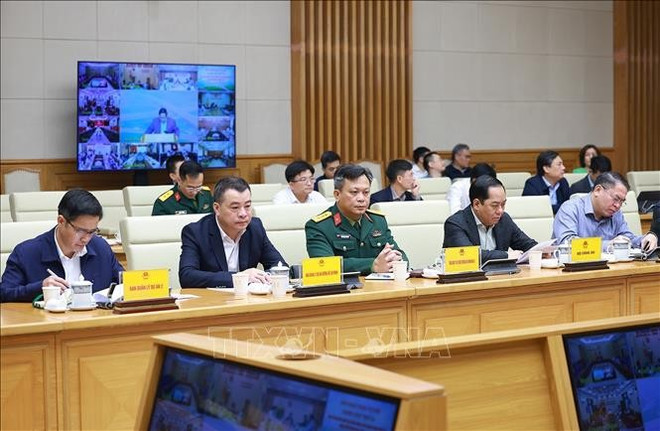
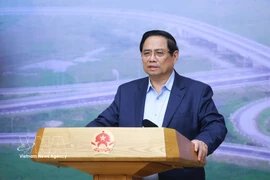
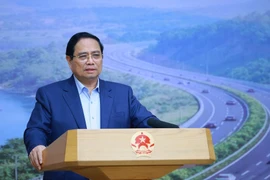
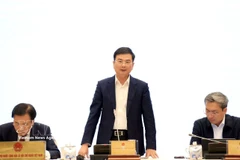
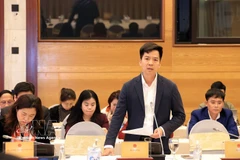
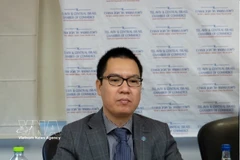
Officials attend the 24th meeting of the State Steering Committee for key national projects and major transport sector projects on March 5. (Photo: VNA)
Meanwhile, Cao Bang and Phu Tho were instructed to coordinate with the Ministry of Finance and relevant agencies to arrange central budget funding and promptly approve investment policies for the Hoa Binh – Moc Chau and Bac Kan – Cao Bang expressway projects.
Other localities, including Ho Chi Minh City, Phu Tho, Nghe An, Gia Lai and Tay Ninh, were requested to accelerate feasibility studies for projects such as the Vinh – Thanh Thuy route, the Quy Nhon – Pleiku sub-project, Ho Chi Minh City's Ring Road 4, and Hoa Lac – Hoa Binh Expressway, aiming to break ground on May 19, 2026.
The PM also asked Ho Chi Minh City to finalise investor selection for the first sub-project of the Ho Chi Minh City – Moc Bai Expressway project by April 2026.
Authorities in the localities hosting the projects were told to expedite site clearance, ensure adequate supplies of construction materials and maintain project quality and progress as committed.
The Steering Committee reported that at its 23rd meeting, the PM assigned 28 tasks to ministries, sectors and localities. So far, three tasks have been completed on schedule, 22 are under active implementation, and three remain unfinished.
Participants noted that the remaining workload is still substantial, with several projects facing obstacles related to site clearance, construction materials, administrative procedures and coordination among relevant agencies. Localities and investors proposed additional capital allocations and expansion of expressways and connection points to maximise the effectiveness of ongoing investments./.