Industrial production posts strong growth in first two months

According to the National Statistics Office (NSO) under the Ministry of Finance, the index of industrial production (IIP) in February was estimated to decrease 18.4% from the previous month but increase 1% year on year. Overall, in the January–February period, the IIP rose 10.4% compared with the same period last year.

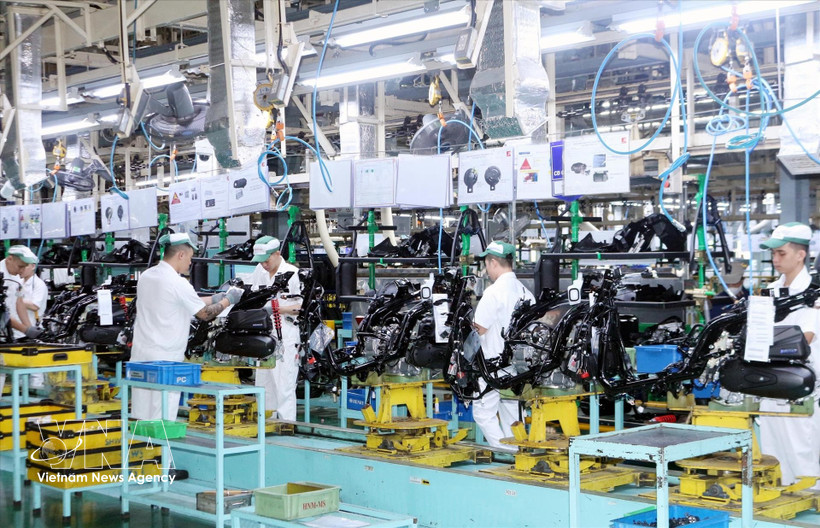
Industrial production surges in the first two months of 2026. (Photo: VNA)

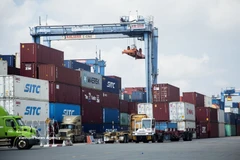
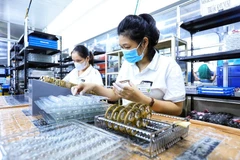
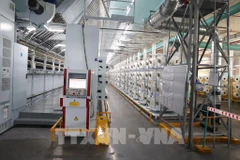
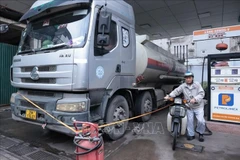
Hanoi (VNA) – Vietnam’s industrial production maintained strong growth in the first two months of 2026 despite fewer working days due to the Lunar New Year (Tet) holiday, with the processing and manufacturing sector continuing to serve as the key growth driver.

According to the National Statistics Office (NSO) under the Ministry of Finance, the index of industrial production (IIP) in February was estimated to decrease 18.4% from the previous month but increase 1% year on year. Overall, in the January–February period, the IIP rose 10.4% compared with the same period last year.

In February, production in the processing and manufacturing sector grew 2.3% year on year. Meanwhile, mining declined 5.3%, water supply and waste management fell 5.6%, and electricity production and distribution dropped 4.5%.

For the first two months of 2026, the processing and manufacturing sector expanded 11.5%, contributing 8.9 percentage points to the overall IIP growth. Electricity production and distribution increased 6.3%, contributing 0.6 percentage points, while water supply and waste management rose 2.1%. Mining grew 5.4%, reversing a decline recorded in the same period last year.

Several key industrial sub-sectors recorded strong growth compared with the same period last year. Production of other non-metallic mineral products increased 33.1%, metal production rose 27.9%, beverages grew 20.9%, paper and paper products expanded 20.4%, motor vehicles increased 20.3%, chemical products rose 20.1%, and wood processing grew 13.4%.

In contrast, some sectors recorded declines, including the mining of hard coal and lignite, down 3.4%, and the production of other transport equipment, which fell 2.7%.

Industrial production expanded in all 34 provinces and centrally-run cities nationwide during the January–February period, largely driven by growth in processing and manufacturing as well as electricity production and distribution.

A number of major industrial products posted significant increases year on year, including cement, up 30.5%; chemical paint, 27.5%; steel bars and angle steel, 25.7%; processed seafood, 24.8%; automobiles, 24%; motorbikes, 22.5%; beer, 18.1%; and phone components, 15.4%. Meanwhile, urea fertiliser output declined 16.7% and clean coal production fell 6.1%.

Regarding industrial employment, the number of workers in industrial enterprises as of February 1 increased 0.2% compared with the previous month and 4% year on year. The employment in foreign-invested enterprises rose 5.9% year on year, while state-owned enterprises saw a 3% decline.

According to the NSO, localities should continue restructuring the industrial sector toward modernisation, improving productivity, product quality and value-added while enhancing competitiveness.

Priority should also be given to developing and mastering new technologies and emerging industries such as chips, semiconductors, artificial intelligence and green technologies, while strengthening supporting industries and linkages between foreign-invested and domestic enterprises.

Nguyen Thi Huong, Director of the NSO, said the industrial sector has shown clearer positive signs and a relatively solid recovery momentum. However, structural and market challenges remain, requiring coordinated solutions to sustain recovery and improve the quality of industrial growth in the coming period./.

VNA

See more

A delegation from the Nghe An provincial People’s Committee inspects production and business activities at the VSIP Nghe An Industrial, Urban and Service Park. (Photo:nhandan.vn)

Nghe An steps up reforms to attract FDI

In 2025, the provincial People’s Committee licensed 25 new FDI projects and approved capital adjustments for 20 others, bringing the total newly registered and additional investment to more than 1 billion USD. Many large-scale projects in the Southeast Nghe An Economic Zone have already become operational, contributing to export growth, state budget revenues and job creation.

Nearly 35,500 enterprises are newly registered nationwide, with total registered capital reaching nearly 313.7 trillion VND and more than 167,500 registered workers. (Photo: VNA)

Nearly 35,500 new businesses set up in first two months

The enterprises registered combined capital of about 313.7 trillion VND and more than 167,500 employees. Compared with the same period last year, the number of new businesses surged by 70.7%, while registered capital rose by 36.1% and registered labour increased by 19.1%.

The yarn factory of Unitex Textile and Dyeing Company Limited applies new technology to optimise operations using an automated model. (Photo: VNA)

Resolution 68: International lessons for private sector development

A common feature in many successful economies is a fundamental shift in the perception of private enterprises. In countries such as Singapore, Germany, Republic of Korea (RoK) and China, private firms are viewed not mainly as entities requiring strict control but as development partners and key forces generating growth, jobs and innovation.

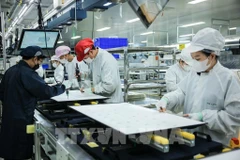
The production line of Regza Electronics Vietnam Co., Ltd. located in Dong Nai province. (Photo: VNA)

Vietnam’s overseas investment rises 2.3-fold in first two months

During the period, 36 new overseas projects were granted investment certificates with total registered capital from Vietnamese investors reaching 532.4 million USD, up 2.3 times compared to the same period last year. In addition, three projects adjusted their capital with an additional 7.8 million USD, 1.5 times higher than a year earlier.

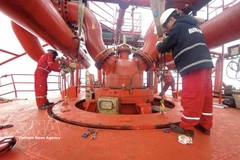
Workers of PTSC Thanh Hoa check the system for crude oil imports. Vietnam saw strong increase in fuel imports in the first two months of this year. (Photo" VNA)

Vietnam records strong increase in fuel imports in two months

Statistics of Vietnam Customs showed that Vietnam spent more than 1.44 billion USD importing 2.18 million tonnes of petroleum products in the first two months of this year, representing a sharp increase of 31.4% and 43%, respectively, over the same period last year.

Prime Minister Pham Minh Chinh visits a macadamia cultivation model in Huoi Tao B village, Pu Nhi commune, Dien Bien province on March 8. (Photo: VNA)

PM requests boosting agricultural development in Northwestern region

PM Chinh encouraged local residents to explore additional crops and livestock suitable for intercropping in order to maximise land use efficiency. Farmers were also urged to strengthen cooperation with one another and with businesses by joining cooperatives, consolidating land resources and working together to expand production and improve incomes.

Farmers in the Mekong Delta province of An Giang harvest rice grown under the project 'Sustainable Development of One Million Hectares of High-Quality, Low-Emission Rice Associated with Green Growth in the Mekong Delta by 2030.' (Photo: VNA)

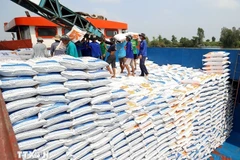
Promoting high-quality rice exports amid mounting challenges

According to the Ministry of Agriculture and Environment (MAE), an estimated 600,000 tonnes of rice worth 370 million USD was exported in January, up 12.4% in volume and 16.9% in value year-on-year. The average export price reached 616.6 USD per tonne, up 4%.

Fuel supply in Hanoi remains stable. (Photo: VNA)

Fuel prices rise sharply from 3 pm on March 7

Since the beginning of this year, domestic fuel prices have undergone 11 adjustments. During this period, both RON95 and E5 RON92 experienced four decreases and seven increases, while diesel oil two falls and nine hikes.

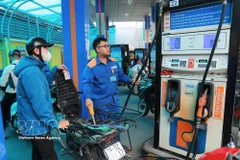
Customers buy and sell fuel at a Petrolimex petrol station. (Photo: VNA)

Capital’s fuel market remains stable after March 5 price adjustment

Operations at several petrol stations across Hanoi have run normally. Along major routes, petrol stations remained open and continued to serve customers as usual. The number of vehicles refueling showed no major changes compared to the days before the price adjustment. Sales activities continued without interruption, and there were no long queues or supply disruptions.