Industrial production rises for 7th straight month

January marked the seventh consecutive month of expansion for the manufacturing sector, underscoring the resilience of the recovery and a firm start to 2026.

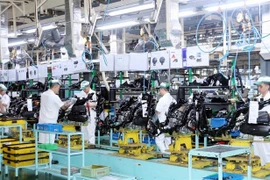
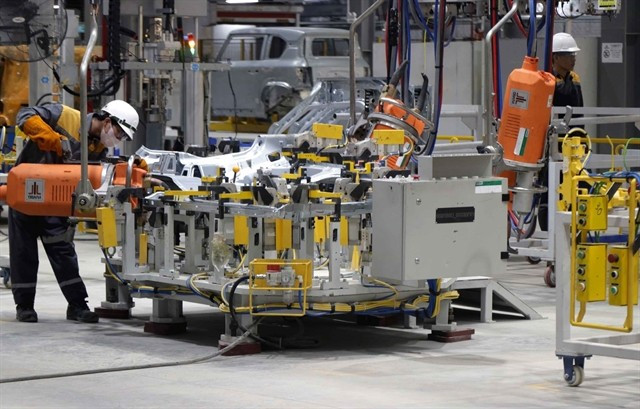
Vietnam’s manufacturing sector maintains its recovery momentum, with output and new orders continuing to rise amid improving business conditions. (Photo: VNA)

Ho Chi Minh City (VNS/VNA) — The manufacturing sector maintained its growth momentum in January 2026, with output, new orders and employment all recording solid increases, and business confidence rising to the highest level in nearly two years.

According to data released by S&P Global, the Purchasing Managers’ Index (PMI) stood at 52.5 points in January, slightly down from 53.0 in December.

Despite the modest decline, the index remained comfortably above the 50-point threshold, signalling continued improvement in overall business conditions.

January marked the seventh consecutive month of expansion for the manufacturing sector, underscoring the resilience of the recovery and a firm start to 2026.

Although the headline PMI edged lower, manufacturing output continued to rise sharply.

Survey respondents attributed the strong increase in production mainly to higher volumes of new orders, which expanded at a faster pace than in December, driven by improving consumer demand.

Total new orders were further supported by a recovery in new export orders.

Several manufacturers reported receiving additional orders from other Asian economies, including India, indicating a gradual improvement in external demand.

Rising output was accompanied by continued growth in employment.

Manufacturing employment increased for the fourth month in a row, with the rate of job creation the fastest since June 2024, although overall growth remained modest.

Some firms noted that newly hired workers were mainly employed on a temporary basis.

To meet higher production requirements, manufacturers stepped up purchasing activity, extending the current expansion in input buying to seven months.

However, input inventories fell for the first time since September 2025, as raw materials were drawn down to support higher output levels.

Stocks of finished goods also declined, and at the fastest pace in four months, reflecting relatively swift delivery of products to customers.

Suppliers’ delivery times continued to lengthen, and was largely attributed to strong input demand and shortages of raw materials.

These factors continued to drive up input costs in January, with inflation easing only slightly from the three-and-a-half-year high recorded in December.

In response to rising costs, manufacturers raised their selling prices further.

Notably, the pace of output price inflation accelerated to its highest level since April 2022.

Looking ahead, business optimism regarding output over the next 12 months improved for the fourth consecutive month, reaching its highest level since March 2024.

Around 55% of surveyed firms expect output to increase in the year ahead, supported by expectations of stronger new orders amid improving market conditions.

Commenting on the results, Andrew Harker, economics director at S&P Global Market Intelligence, said Vietnam’s manufacturing sector has made a solid start to 2026, with firms ramping up production to meet rising new orders and responding promptly to customer demand.

But he cautioned against potential inflationary pressures, as ongoing shortages of raw materials continue to push up costs and selling prices.

While demand has yet to show signs of weakening, he noted that developments in new orders in the coming months will need to be closely monitored. /.

VNA

See more

Industrial production surges in the first two months of 2026. (Photo: VNA)

Industrial production posts strong growth in first two months

According to the National Statistics Office (NSO) under the Ministry of Finance, the index of industrial production (IIP) in February was estimated to decrease 18.4% from the previous month but increase 1% year on year. Overall, in the January–February period, the IIP rose 10.4% compared with the same period last year.

A delegation from the Nghe An provincial People’s Committee inspects production and business activities at the VSIP Nghe An Industrial, Urban and Service Park. (Photo:nhandan.vn)

Nghe An steps up reforms to attract FDI

In 2025, the provincial People’s Committee licensed 25 new FDI projects and approved capital adjustments for 20 others, bringing the total newly registered and additional investment to more than 1 billion USD. Many large-scale projects in the Southeast Nghe An Economic Zone have already become operational, contributing to export growth, state budget revenues and job creation.

Nearly 35,500 enterprises are newly registered nationwide, with total registered capital reaching nearly 313.7 trillion VND and more than 167,500 registered workers. (Photo: VNA)

Nearly 35,500 new businesses set up in first two months

The enterprises registered combined capital of about 313.7 trillion VND and more than 167,500 employees. Compared with the same period last year, the number of new businesses surged by 70.7%, while registered capital rose by 36.1% and registered labour increased by 19.1%.

The yarn factory of Unitex Textile and Dyeing Company Limited applies new technology to optimise operations using an automated model. (Photo: VNA)

Resolution 68: International lessons for private sector development

A common feature in many successful economies is a fundamental shift in the perception of private enterprises. In countries such as Singapore, Germany, Republic of Korea (RoK) and China, private firms are viewed not mainly as entities requiring strict control but as development partners and key forces generating growth, jobs and innovation.

The production line of Regza Electronics Vietnam Co., Ltd. located in Dong Nai province. (Photo: VNA)

Vietnam’s overseas investment rises 2.3-fold in first two months

During the period, 36 new overseas projects were granted investment certificates with total registered capital from Vietnamese investors reaching 532.4 million USD, up 2.3 times compared to the same period last year. In addition, three projects adjusted their capital with an additional 7.8 million USD, 1.5 times higher than a year earlier.

Workers of PTSC Thanh Hoa check the system for crude oil imports. Vietnam saw strong increase in fuel imports in the first two months of this year. (Photo" VNA)

Vietnam records strong increase in fuel imports in two months

Statistics of Vietnam Customs showed that Vietnam spent more than 1.44 billion USD importing 2.18 million tonnes of petroleum products in the first two months of this year, representing a sharp increase of 31.4% and 43%, respectively, over the same period last year.

Prime Minister Pham Minh Chinh visits a macadamia cultivation model in Huoi Tao B village, Pu Nhi commune, Dien Bien province on March 8. (Photo: VNA)

PM requests boosting agricultural development in Northwestern region

PM Chinh encouraged local residents to explore additional crops and livestock suitable for intercropping in order to maximise land use efficiency. Farmers were also urged to strengthen cooperation with one another and with businesses by joining cooperatives, consolidating land resources and working together to expand production and improve incomes.

Farmers in the Mekong Delta province of An Giang harvest rice grown under the project 'Sustainable Development of One Million Hectares of High-Quality, Low-Emission Rice Associated with Green Growth in the Mekong Delta by 2030.' (Photo: VNA)

Promoting high-quality rice exports amid mounting challenges

According to the Ministry of Agriculture and Environment (MAE), an estimated 600,000 tonnes of rice worth 370 million USD was exported in January, up 12.4% in volume and 16.9% in value year-on-year. The average export price reached 616.6 USD per tonne, up 4%.