Vietnam's golden gateway: FDI poised for gains in 2026

More than just volume, the quality of FDI entering Vietnam has improved. The nation is evolving from a base for basic assembly and processing into a genuine contributor to hi-tech manufacturing and R&D across global value chains.

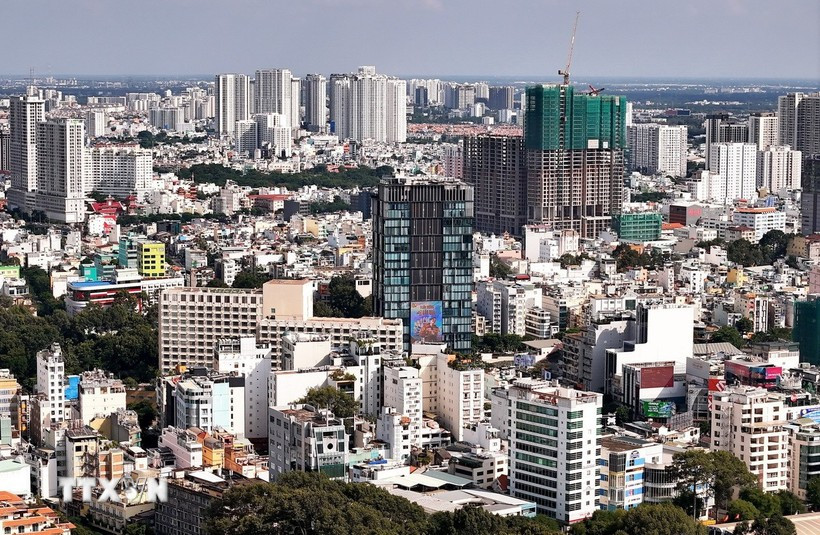
Downtown area in Ho Chi Minh City. (Photo: VNA)

Hanoi (VNA) - Foreign direct investment (FDI) into Vietnam is poised to stay strong in 2026, with early inflows signaling the country’s enduring appeal as multinationals reshape global supply chains.

Early momentum signals strong start

In early February, authorities in northern Bac Ninh province bestowed approvals and registration certificates for a batch of projects surpassing 1.03 billion USD.

Just days earlier, Vice President of Regional Business and Head of the Chairman’s Office of China’s JA Solar Group Li Shaohui held a working session with local leaders and confirmed plans to revive the JA Solar PV Vietnam photovoltaic cell technology project.

At a conference with local firms, President and CEO of Samsung Vietnam Na Ki Hong underscored Bac Ninh’s strategic role in the group’s global manufacturing chain.

Other localities are seeing similar activity. Since early 2026, the northern province of Thai Nguyen has greenlit investment policies and certificates for 11 projects topping 1.059 billion USD, including a major FDI project worth 790 million USD. The province remains one of Samsung’s major investment hubs.

In early January, the northern province of Phu Tho amended registration certificates for two FDI projects, lifting their registered capital by 290 million USD.

Meanwhile, Thailand’s WHA Group is accelerating infrastructure work at its industrial park project in central Nghe An province

Toward a global hi-tech hub

More than just volume, the quality of FDI entering Vietnam has improved. The nation is evolving from a base for basic assembly and processing into a genuine contributor to hi-tech manufacturing and R&D across global value chains.

Vietnam has solidified its status as a production base for top-tier tech companies in recent years. Minister of Finance Nguyen Van Thang has repeatedly pointed to the influx of hi-tech investors as evidence of this trend.

“The successful attraction of strategic investors and large-scale FDI projects in electronics, semiconductors, digital transformation and artificial intelligence (AI) underscores Vietnam’s increasingly important role in the global semiconductor supply chain and high-tech manufacturing”, Thang stressed.
1904-fdi-binh-duong-1.jpg
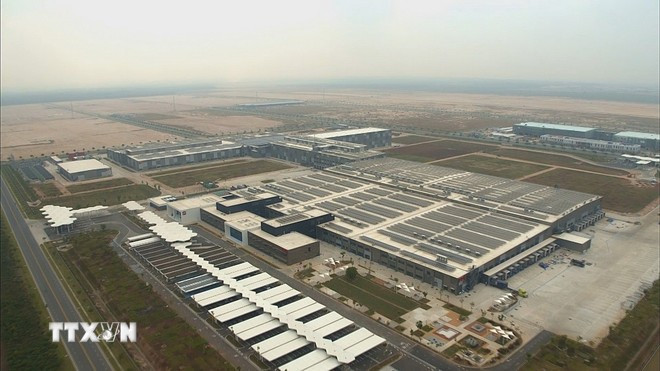
A view of the 1.3-billion-USD Lego factory in Ho Chi Minh City (Photo: VNA)

According to statistics, total registered FDI in Vietnam reached 38.42 billion USD in 2025, up 0.5% year-on-year. Realised FDI was estimated at 27.62 billion USD, the highest during the 2021 - 2025 period, up around 9% annually, despite a global downturn in FDI flows.

Commenting on these results, leaders of the Ministry of Finance’s Foreign Investment Agency (FIA) Foreign Investment Agency credited the performance to Vietnam's enduring political stability, advantageous geographic location, substantial market size, and unwavering push for deeper global integration amid heightened economic fragmentation and uncertainties.

Race for quality FDI

According to the FIA, global FDI flows are shifting away from traditional industries toward hi-tech, eco-friendly sectors that uphold sustainable development.

Vietnam's opportunities appear increasingly clear-cut, with numerous overseas investors confirming its emergence as a key link in semiconductor and AI supply networks. At the same time, authorities are honing mechanisms and policies to channel capital into strategic technology domains.

Recently, the Government has initiated discussions on building up rare earth industry – a vital feedstock for semiconductors, as part of efforts to formulate a long-term national strategy.

The latest survey by JETRO showed that 56.9% of Japanese companies active in Vietnam plan to broaden their footprint over the next one to two years, up 0.8 percentage points from the previous year, the highest rate in ASEAN for the second consecutive year. In contrast, only 4.2% expect to scale back investment, while just 0.7% intend to exit or relocate.

Sustained efforts to improve business climate, selectively attract FDI linked to technology transfer, and develop new models such as international financial centre and free trade zones are set to help Vietnam capture more of these opportunities in 2026./.
VNA

See more

Industrial production surges in the first two months of 2026. (Photo: VNA)

Industrial production posts strong growth in first two months

According to the National Statistics Office (NSO) under the Ministry of Finance, the index of industrial production (IIP) in February was estimated to decrease 18.4% from the previous month but increase 1% year on year. Overall, in the January–February period, the IIP rose 10.4% compared with the same period last year.

A delegation from the Nghe An provincial People’s Committee inspects production and business activities at the VSIP Nghe An Industrial, Urban and Service Park. (Photo:nhandan.vn)

Nghe An steps up reforms to attract FDI

In 2025, the provincial People’s Committee licensed 25 new FDI projects and approved capital adjustments for 20 others, bringing the total newly registered and additional investment to more than 1 billion USD. Many large-scale projects in the Southeast Nghe An Economic Zone have already become operational, contributing to export growth, state budget revenues and job creation.

Nearly 35,500 enterprises are newly registered nationwide, with total registered capital reaching nearly 313.7 trillion VND and more than 167,500 registered workers. (Photo: VNA)

Nearly 35,500 new businesses set up in first two months

The enterprises registered combined capital of about 313.7 trillion VND and more than 167,500 employees. Compared with the same period last year, the number of new businesses surged by 70.7%, while registered capital rose by 36.1% and registered labour increased by 19.1%.

The yarn factory of Unitex Textile and Dyeing Company Limited applies new technology to optimise operations using an automated model. (Photo: VNA)

Resolution 68: International lessons for private sector development

A common feature in many successful economies is a fundamental shift in the perception of private enterprises. In countries such as Singapore, Germany, Republic of Korea (RoK) and China, private firms are viewed not mainly as entities requiring strict control but as development partners and key forces generating growth, jobs and innovation.

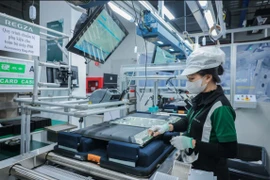
The production line of Regza Electronics Vietnam Co., Ltd. located in Dong Nai province. (Photo: VNA)

Vietnam’s overseas investment rises 2.3-fold in first two months

During the period, 36 new overseas projects were granted investment certificates with total registered capital from Vietnamese investors reaching 532.4 million USD, up 2.3 times compared to the same period last year. In addition, three projects adjusted their capital with an additional 7.8 million USD, 1.5 times higher than a year earlier.

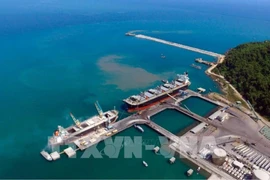
Workers of PTSC Thanh Hoa check the system for crude oil imports. Vietnam saw strong increase in fuel imports in the first two months of this year. (Photo" VNA)

Vietnam records strong increase in fuel imports in two months

Statistics of Vietnam Customs showed that Vietnam spent more than 1.44 billion USD importing 2.18 million tonnes of petroleum products in the first two months of this year, representing a sharp increase of 31.4% and 43%, respectively, over the same period last year.

Prime Minister Pham Minh Chinh visits a macadamia cultivation model in Huoi Tao B village, Pu Nhi commune, Dien Bien province on March 8. (Photo: VNA)

PM requests boosting agricultural development in Northwestern region

PM Chinh encouraged local residents to explore additional crops and livestock suitable for intercropping in order to maximise land use efficiency. Farmers were also urged to strengthen cooperation with one another and with businesses by joining cooperatives, consolidating land resources and working together to expand production and improve incomes.

Farmers in the Mekong Delta province of An Giang harvest rice grown under the project 'Sustainable Development of One Million Hectares of High-Quality, Low-Emission Rice Associated with Green Growth in the Mekong Delta by 2030.' (Photo: VNA)

Promoting high-quality rice exports amid mounting challenges

According to the Ministry of Agriculture and Environment (MAE), an estimated 600,000 tonnes of rice worth 370 million USD was exported in January, up 12.4% in volume and 16.9% in value year-on-year. The average export price reached 616.6 USD per tonne, up 4%.