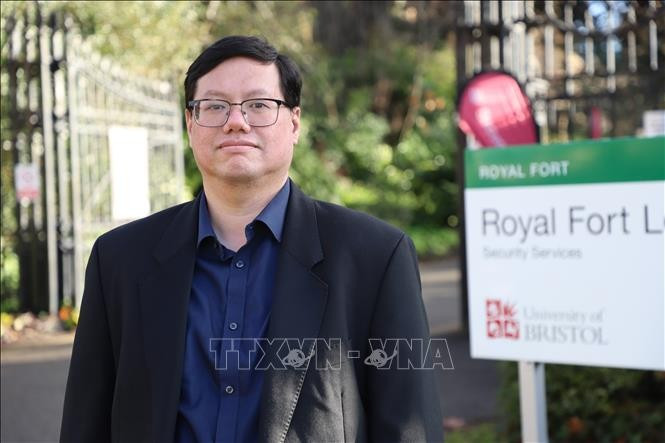
London (VNA) – The Vietnamese Government is showing strategic foresight by pushing ahead with the International Financial Centre (IFC) plan, which will create a new growth driver for the goal of double-digit economic growth from 2026 onward, Dr. Ho Quoc Tuan, senior lecturer at the University of Bristol told Vietnam News Agency reporters based in London.
Tuan said amid ongoing global economic volatility, international financial institutions are scouting alternative hubs. Vietnam’s strategy to develop international finance ecosystem, coupled with its push for greater economic openness, sends a compelling signal of deepening global economic integration and paves the way for international capital flows in the years ahead.
According to him, Vietnam enjoys distinct advantages as a relative newcomer to the arena. It can selectively absorb proven lessons from established financial powerhouses such as Singapore, Malaysia, Hong Kong, and Shanghai, tailoring those insights to its unique context to fast-track progress. Complementing this is a dynamic, technology-savvy workforce primed to build a cutting-edge, flexible financial centre that aligns with global benchmarks. By capitalising on these factors, Vietnam can “shorten the race” to compete with veteran centres, while building credibility through clear strategies and strengths.
Among the reforms being pushed by the Vietnamese Government, Tuan underscored three strategic steps to win trust from global financial players. First, a firm pledge to sustained high growth furnishes investors with a clear investment outlook. Second, investments in infrastructure, including green projects and digital upgrades, mirror global trends and development agendas of financial entities. Finally, quality workforce and progress in sci-tech, particularly in AI and fintech, stand as a decisive factor for the IFC’s efficient, long-term viability.
Together, these three steps clearly demonstrate the Government’s resolve and coherent strategic vision, and they need to be adopted in a coordinated manner to form a robust “strategic framework” that underpins the IFC’s success.
Over the longer horizon, Tuan voiced optimism that Vietnam could emerge as an important link within Asian financial network, joining major service segments such as payment and capital channeling for new technologies. Achieving this will hinge on two priorities: forging a workforce geared toward innovation and rapid technology adoption, and building solid infrastructure, including advanced digital platforms, cybersecurity system and a flexible legal framework.
Together, these key factors must be directly linked to a long-term vision. If workforce, infrastructure, and legal framework advance in concert, Vietnam will not only build an IFC but also proactively and effectively join the global financial value chain, he said.
Vietnam’s IFC journey is a race against time, global volatility, and established centres. From a strategic vantage, the Government’s timely vision, Vietnam’s latecomer benefits, and concerted steps in growth, infrastructure, workforce, and legal frameworks together create an unprecedented opportunity for Vietnam to claim a place on the map.
However, slow progress or lacked coordination among strategic elements could leave Vietnam trailing competitors, allowing other hubs to dominate the influx of global capital. On the flip side, by aggressively leveraging its capacity to learn quickly, assembling premium resources, and flexibly adapting to technological and legal changes, Vietnam's IFC could evolve into a prime magnet for worldwide investment and a vital link in Asian financial network. In the end, Tuan concluded, this is a story of speed, vision, and coordination, where ambition must go hand in hand with capability, and strategy must be matched by action, he added./.