Institutional breakthrough should form core advantage of Vietnam's IFC: PM

Emphasising the viewpoint that institutional breakthrough should be made as the core competitive edge, the PM said institutional frameworks must be superior, distinctive, and in line with international practices.

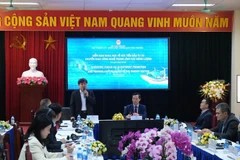
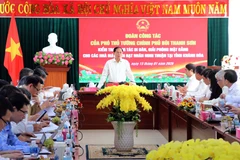
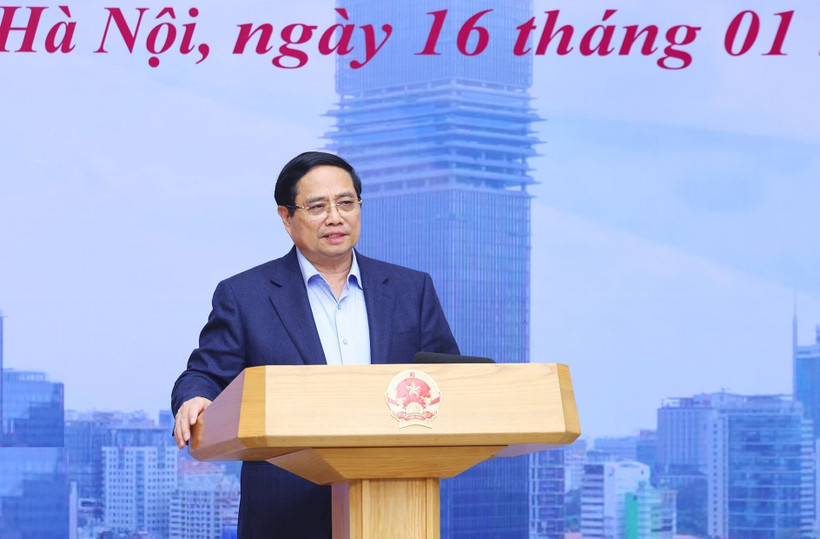
Prime Minister Pham Minh Chinh addresses the first meeting of the Steering Committee for the International Financial Centre (IFC) in Vietnam on January 16. (Photo: VNA)

Hanoi (VNA) – Prime Minister Pham Minh Chinh has underlined the importance of making an institutional breakthrough for the development of the International Financial Centre (IFC) in Vietnam, and viewed this as the core competitive edge.

The PM, who is head of the Steering Committee for the IFC in Vietnam, made the remark while chairing its first meeting on January 16.

He said developing an IFC is a new task, but the Government, ministries, sectors, and localities have been exerting efforts and gained some initial important results, including the Politburo’s issuance of conclusions and directions on the IFC establishment, the National Assembly’s Resolution No. 222/2025/QH15 on the IFC in Vietnam, the Government’s eight decrees guiding the implementation of Resolution No. 222/2025/QH15, and the formation of the central steering council for the IFC and the steering bodies in Ho Chi Minh City and Da Nang, where the IFC is based in.

Pointing out certain challenges related to the competition among regional and global IFCs, high-quality human resources, urban infrastructure and services, and risk management mechanisms, PM Chinh stressed that credibility, trustworthiness, stability, and predictability are core factors of the IFC’s success.

Therefore, he stated, all policies must be transparent and consistent; processes standardised; individual responsibilities clear; issues handled quickly but correctly; openness controlled; and innovation encouraged without compromising system security.

Outlining tasks for the coming time, he asked HCM City and Da Nang to build a strategy for the IFC development until 2035, with a vision to 2045, ensuring it matches current conditions and trends while being feasible and effective. Besides, they need to continue preparing master plans, infrastructure, personnel, and facilities to support the operation of the IFC Steering Council. Exchange activities should also be promoted to learn international experiences.

The Government leader demanded that the IFC should debut in HCM City on February 9 at the latest while an international arbitration centre and a specialised court should also be launched by that time.

Emphasising the viewpoint that institutional breakthrough should be made as the core competitive edge, he said institutional frameworks must be superior, distinctive, and in line with international practices. At the same time, they must suit Vietnam's conditions and ensure sovereignty, financial security, and data safety.
steering-committee-for-the-ifc-in-vietnam-2.jpg
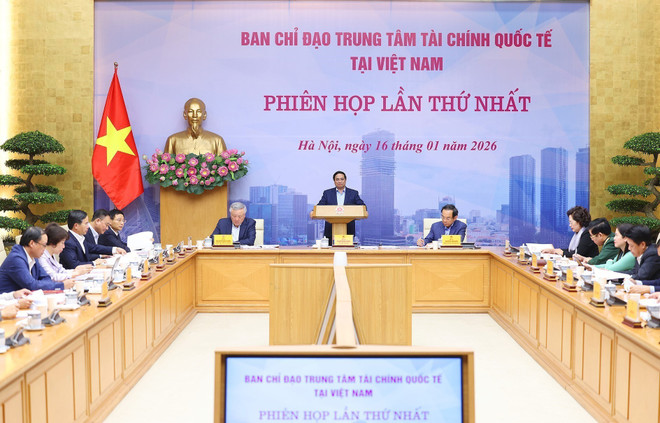
Prime Minister Pham Minh Chinh chairs the first meeting of the Steering Committee for the International Financial Centre (IFC) in Vietnam on January 16. (Photo: VNA)

Amid intense competition among regional and global financial centres, the PM requested that mechanisms must be sufficiently distinctive, attractive, and transparent; implementation decisive, disciplined, and professional; and risk management rigorous, but procedures streamlined and efficient.

It is also important to adhere to the principle of harmonising interests and sharing risks while guaranteeing macroeconomic stability and the financial system’s safety, preventing management loopholes or those for money laundering and terrorist financing, he went on.

Saying people should be placed at the centre and viewed as both the goal and driving force, the PM noted that to develop the IFC, it is essential to first have a team of qualified administrators, managers, experts, and human resources in finance, technology, law, and auditing who possess professional ethics and sense of discipline.

In addition, infrastructure should be treated as the foundation of the IFC, including transportation, electricity, water, digital infrastructure, data, cybersecurity, data centres, trading platforms, identification, authentication, and information sharing.

In his speech, PM Chinh also said markets and products should be the benchmarks, asking relevant sides to identify which institutions, products, markets, and customers the IFC needs to attract; what value it generates for the economy; what contribution it makes to growth and employment; and how it creates ripple effects on other sectors.

He emphasised the need for clearly differentiated and complementary roles between the IFC branches in Ho Chi Minh City and Da Nang to avoid internal competition, overlap, or fragmentation.

Assigning specific tasks to the two cities, ministries, and sectors, the PM reiterated the guideline of “breakthrough mindset – decisive action – substantive results”, and asked the steering committee to keep making efforts to develop a modern, transparent, and efficient IFC where Vietnam affirms its stature, capability, and role in the global financial network.

He voiced his belief that with strong resolve, great efforts, consensus, and active engagement of the entire political system, support from international partners, and endeavours by the steering committee, the country will succeed in developing the IFC and gradually become a global financial hub, contributing to the goals of double-digit growth and a strong and prosperous nation in the new era./.
VNA

See more

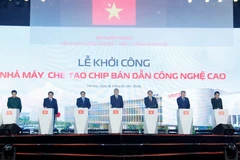
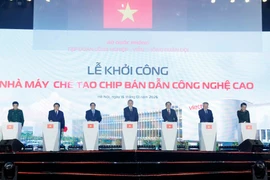
Party General Secretary To Lam (C) and Prime Minister Pham Minh Chinh (third from left) and other delegates break ground Vietnam’s first semiconductor chip manufacturing plant (Photo: VNA)

Vietnam launches first semiconductor chip manufacturing plant

The plant, developed by Viettel Group in line with the mission assigned by the Ministry of Defence and based on the government’s resolution, is located on a 27-hectare site within the Hoa Lac High-Tech Park and is expected to serve national industries such as aerospace, telecommunications, Internet of Things (IoT), automotive manufacturing, medical equipment, and automation.

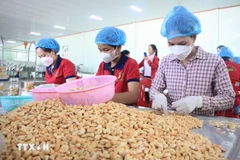
Vietnam’s cashew exports in 2025 are estimated at 766,600 tonnes, generating more than 5.2 billion USD (Photo: VNA)

Cashew sector faces economic efficiency challenge despite high export revenue

Vietnam’s cashew industry has faced a pressing challenge despite an export revenue of over 5 billion USD for the first time in 2025, as this impressive figure has yet to translate into commensurate economic efficiency for exporting enterprises, especially when the industry seeks to ensure that its position as the world’s leading cashew exporter is matched by sustainable profitability.

Deputy Director General of Vietnam National Authority of Tourism Nguyen Thi Hoa Mai (centre) chairs an online meeting on the organisation of ITE HCMC 2026. (Photo: TITC)

International Travel Expo HCM City 2026 set for August

The expo will feature key activities including on-site and online exhibition booths; a digital business-to-business (B2B) buyer–seller matching programme; Vietnam Night; the opening ceremony; programmes for international buyers and media representatives; forums and thematic seminars introducing key source markets and emerging tourism trends; and a tourism consumer festival.

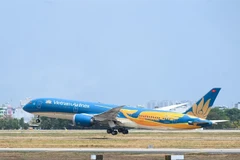
An illustrative image showing a Crystal Bay Airlines plane. (Photo: dantri.com.vn)

New Vietnamese airline takes off with charter capital of 11.4 million USD

According to the company's registration documents, Crystal Bay Airlines Joint Stock Company was established on November 6, 2025, with a charter capital of 300 billion VND (11.4 million USD). The firm operates in 51 business sectors, with its main focus being air passenger transportation.

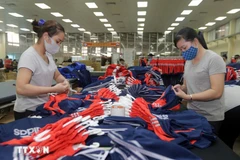
Garment production for export at the Thai Nguyen Garment Company. (Photo: VNA)

Spring Fair 2026 strengthens Vietnam – India cooperation

The seminar aimed to help the Indian business community gain a clearer understanding of the scale, role and potential of the Spring Fair 2026 one of Vietnam’s major trade promotion events hosted by the Government and the Ministry of Industry and Trade.

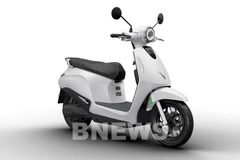
VinFast Evo battery-swap electric motorbike (Photo: VNA)

VinFast rolls out four new electric motorbike models

The automaker introduced three battery-swappable models, Evo, Feliz II and Viper, designed for different customer segments. It also launched the Amio, a compact pedal-assisted model that does not require a driving licence, aimed primarily at students and short-distance urban commuters.

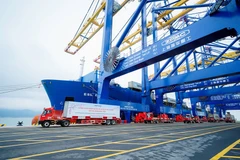
Handling export cargo at Lach Huyen Port, Hai Phong city. (Photo: hanoimoi.vn)

Internal strength crucial for building export resilience

In the new era, strengthening domestic capacity will be crucial to ensuring that Vietnam’s exports grow not only rapidly, but also sustainably, contributing meaningfully to the country’s development aspirations in the new era.

Production activities at a centrifugal concrete pillar manufacturing plant (Photo: VNA)

Rising FDI, investor optimism reinforce Vietnam’s appeal for inflows

Commenting on Vietnam’s FDI performance in 2025, Dr. Nguyen Quoc Viet, a public policy expert at the University of Economics under the Vietnam National University, Hanoi, said that the strong growth in disbursed capital, particularly additional funding for ongoing projects, reflects sustained confidence among international investors.

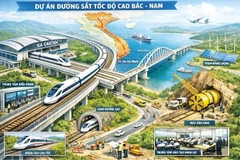
An illustration of the North-South high-speed railway project (Image created by AI)

Vietnam fast-tracks key national railway projects

With the completion of a key legal framework, Vietnam's major national railway projects have kicked off the new year of 2026 with an accelerated implementation phase, notably the North-South high-speed railway and the Lao Cai-Hanoi-Hai Phong railway line