Forum spotlights nuclear power, technology transfer in Vietnam

To promote energy transition, Vietnam should develop a long-term energy transition strategy, improve institutions, diversify energy sources, modernise power infrastructure and strengthen international cooperation.

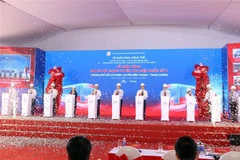
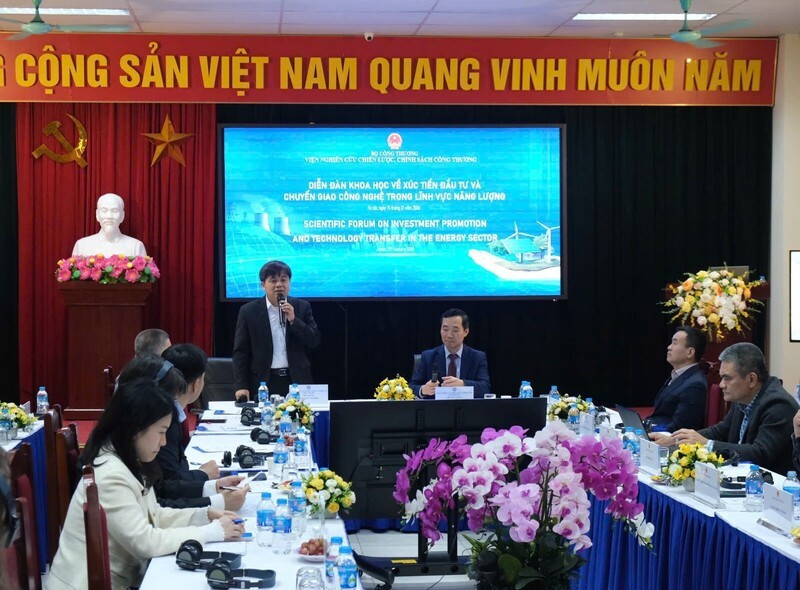
An overview of scientific forum on investment promotion and technology transfer in the energy sector (Photo: congthuong.vn)

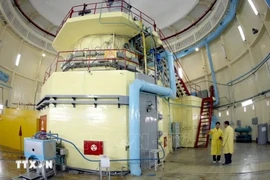
Hanoi (VNA) – The Vietnam Institute of Strategic and Policy for Industry and Trade under the Ministry of Industry and Trade on January 15 held a scientific forum on investment promotion and technology transfer in the energy sector, focusing on nuclear power, in the context of Vietnam facing challenges in energy security and sustainable development.

The event brought together policymakers, experts and businesses involved in Vietnam’s energy transition.

Addressing the forum, La Hong Ky, a representative of the State Steering Committee Office for National Energy Projects, highlighted the Prime Minister's Decision No. 768/QD-TTg dated April 15, 2025, approving adjustments to the Power Development Plan VIII, adopting an integrated approach that maximises domestic energy resources, develops renewable energy alongside appropriate electricity, coal and gas imports while gradually building nuclear power plants to ensure energy security, environmental protection and sustainable development.

Ky said global nuclear power development is showing positive momentum, particularly with the emergence of small modular reactors (SMRs) with capacities below 300 MW. Compared with large-scale nuclear plants, which often require lengthy construction periods and high upfront investment, SMRs offer faster deployment and lower initial capital costs thanks to factory-based mass production and transportation to installation sites. The first SMRs are expected to enter commercial operation by the end of this decade.

He noted that major technology corporations such as Google, Microsoft and Amazon are increasingly turning to nuclear power to meet the surging electricity demand of data centres serving artificial intelligence development. Meanwhile, the extension of reactor lifespans and the restart of older facilities are further driving the global nuclear industry, expanding technology options suitable for Vietnam’s future financial capacity.

The forum underlined that promoting investment and technology transfer in nuclear power serves multiple objectives, including ensuring energy security, mastering advanced technologies, attracting international capital, training engineers and specialists in nuclear operation and safety management, creating jobs, developing supporting industries, and contributing to sustainable economic growth.

Regarding investment models, the State will continue to play a leading role. State-owned enterprises such as Vietnam Electricity (EVN) and the Vietnam National Industry–Energy Group (Petrovietnam) are expected to be designated as investors of the Ninh Thuan 1 and Ninh Thuan 2 nuclear power plants. The Government will introduce specific financial mechanisms, capital mobilisation arrangements and implementation procedures, while flexible mechanisms are being considered to encourage private enterprises to participate in research and investment in SMR projects.

Under criteria set by the National Assembly, selected nuclear technologies must ensure the highest levels of safety, modernity and investment efficiency.

Currently, the main technologies exported worldwide are Generation III+ reactors, with operating lifespans of 60–80 years and full compliance with post-Fukushima safety requirements. Examples include Russia’s VVER-1200, the United States’ AP1000, the Republic of Korea’s APR-1400 and France’s EPR.

Ky also outlined a four-stage roadmap for nuclear technology transfer, covering operation and maintenance, localisation of the supply chain, mastery of fuel and waste management, and independent design and research into new reactor generations such as SMRs. Participants proposed strengthening technology transfer provisions in Engineering, Procurement and Construction (EPC) and build-operate-transfer (BOT) contracts, establishing a Nuclear Power Research and Development Centre at an early stage, and enhancing cooperation with the International Atomic Energy Agency (IAEA).

Beyond nuclear power, the forum shared the European Union’s experience in energy transition. Experts noted that renewables accounted for about 47% of the EU’s electricity output in 2024, supported by a strong legal framework and effective green finance and just transition mechanisms. They recommended that Vietnam develop a long-term energy transition strategy, improve institutions, diversify energy sources, modernise power infrastructure and strengthen international cooperation./.
VNA

See more

Vehicles transporting import and export goods at Mong Cai international border gate. (Photo: VNA)

Mong Cai smart border gate to open new era for cross-border trade

The smart border gate will be based on Industry 4.0 technologies, with cross-border data connectivity serving as its core. Beyond modernising a single customs checkpoint, the project aims to create a regional-scale “digital gateway” facilitating more efficient trade flows.

Vietnam’s Trade Counsellor in Italy Duong Phuong Thao. (Photo: VNA)

Spring Fair 2026: Trade fairs boost Vietnam–Italy trade connectivity

Vietnam’s Trade Counsellor in Italy Duong Phuong Thao said the bilateral relations are developing positively, providing a solid foundation for economic and trade ties. The Italian Government, financial institutions and business community regard Vietnam as a key market in Southeast Asia.

The booth of the Vietnam Trade Office at a trade fair in Morocco. (Photo published VNA)

Spring Fair 2026: opportunities for trade between Vietnam and Morocco

Tran Le Dung, Head of the Vietnam Trade Office in Morocco, said Morocco has accumulated extensive experience in hosting large-scale agricultural trade fairs and exhibitions. Flagship events include the annual International Agricultural Exhibition in Morocco (SIAM), alongside specialised shows covering food and beverages, textiles, handicrafts and logistics.

Prime Minister Pham Minh Chinh delivers closing remarks at the Spring Fair 2026. Photo: VNA

Prime Minister attends Spring Fair 2026 closing ceremony

After 12 vibrant and colourful days, the first Glorious Spring Fair 2026 vividly portrayed the vitality of the nation’s economic and consumer activities at the beginning of the new year, leaving a strong impression on the public and business community.

Vu Thi Thuy, Deputy Consul General and Head of the Vietnam Trade Office in Hong Kong Special Administrative Region (China). (Photo: VNA)

Hong Kong experience offers insights for Vietnam–Hong Kong trade cooperation

At this year’s Spring Fair, the Vietnam Trade Office in Hong Kong facilitated the participation of several Hong Kong enterprises in Vietnam to conduct market surveys, seek import sources and showcase their products. Notably, a company under the Hong Kong Productivity Council presented technological solutions for smart homes and smart manufacturing at the event.

People shop for Tet at a supermarket. (Photo: VNA)

Vietnamese goods dominate Tet market in Mekong Delta

In key retail hubs such as Can Tho, Long Xuyen and My Tho, high-quality Vietnamese goods account for 85–90% of Tet market share. Surveys at major supermarket chains and traditional markets show that consumers this year are prioritising locally-processed foods, confectionery and beverages.

Prime Minister Pham Minh Chinh strikes the gong to inaugurate the Vietnam International Financial Centre in Ho Chi Minh City. (Photo: VNA)

Int’l Financial Centre – A catalyst for Vietnam’s economic breakthrough: Deputy PM

Standing Deputy Prime Minister Nguyen Hoa Binh, who chairs the IFC’s Governing Council, said that the establishment of the centre in Ho Chi Minh City and Da Nang represented the initial realisation of a major task set out in the Resolution of the 13th National Party Congress. While characterising the launch as an early milestone rather than a final achievement, he underscored that it reflected meticulous, methodical and determined preparations at multiple levels of government.

Kobayashi Yosuke, Chief Representative of JICA Vietnam. (Photo: JICA Vietnam)

JICA hails milestones in Vietnam partnership amid green, digital push

In line with Vietnam’s development priorities and its goal of becoming a high-income country by 2045, JICA will continue to work with a wide range of partners in both Vietnam and Japan to mobilise technical and financial resources for more sustainable and inclusive cooperation

Vietnam International Trade Fair for Apparel, Textiles and Textile Technologies (VIATT 2026) is expected to expand its scale by 20% compared to last year's edition. (Photo: bnews.vn)

Int’l trade fair for apparel, textiles, textile technologies to open in Ho Chi Minh City

According to Vietrade, VIATT 2026 aims to promote the development of Vietnam’s textile and garment industry by enhancing production technologies, strengthening sustainability, and expanding technical textile segments. The event is expected to create opportunities for international businesses to tap into the growth potential of Vietnam and ASEAN, while enabling domestic enterprises to connect more effectively with global buyers.