Vietnam gears up for full-force growth push in 2026

A growth path for 2026 has been outlined in line with the National Assembly’s resolution setting a target of more than 10% expansion. Under this scenario, gross domestic product (GDP) would need to rise 9.1% in the first quarter and 10.2% in the second.

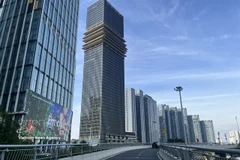
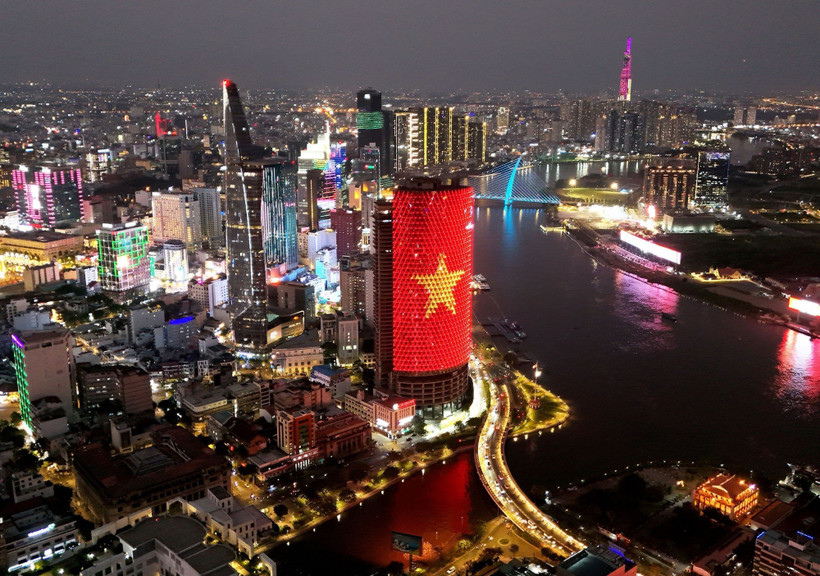
A corner of Ho Chi Minh City (Photo: VNA)

Hanoi (VNA) – Achieving double-digit economic growth in 2026 is widely seen as an “uphill battle”, prompting Vietnam to pool resources early and push hard from the outset of the year.

Which growth scenario for 2026?

A growth path for 2026 has been outlined in line with the National Assembly’s resolution setting a target of more than 10% expansion.

Under this scenario, gross domestic product (GDP) would need to rise 9.1% in the first quarter and 10.2% in the second, lifting first-half growth to 9.7%. The third quarter would require 10.2% expansion, pushing nine-month growth to 9.9%. The final quarter would then accelerate to 10.4% to hit the full-year goal.

The United Overseas Bank (UOB), in its latest GDP forecast for 2026, pointed to a “high statistical base” as a major obstacle ahead.

A high statistical effect, the risk of an export slowdown after an earlier surge, and uncertainty over US tariff policy are among key headwinds for Vietnam’s growth trajectory, said Suan Teck Kin, Head of Global Economics and Market Research at UOB Singapore.

According to Suan, Vietnam’s economic openness leaves it especially exposed to trade tensions, including potential US tariffs. Exports of goods and services account for as much as 83% of GDP, second only to Singapore’s 182% in ASEAN, and the country remains heavily reliant on the US market.

Beyond trade risks, other challenges loom, including consumer purchasing power, industrial output, and the ability of emerging growth drivers to scale quickly. The Ministry of Finance (MoF) indicated that 10% GDP growth in 2026 would require the Industrial Production Index to climb 12-14%, export turnover to rise 15-16%, and total retail sales of goods and services to hike 13-15%. By contrast, those indicators grew 9.2%, 17% and 9.2%, respectively, in 2025. Reaching the new targets will therefore demand an extraordinary effort.

Solid foundation for 2026

Despite these challenges, Vietnam enters 2026 on a relatively solid footing, built on the 2025 achievements.

The UOB, in a report released just days ago, lifted its 2026 growth forecast for Vietnam to 7.5%. With 2025 growth topping 8%, the country has shown resilience and enters the new year with a strong base, Suan said.

The bank noted that Vietnam’s exports and manufacturing have stayed robust despite US tariff pressures. Rising confidence has also boosted foreign investment: newly registered FDI reached 38.4 billion USD, edging higher than the prior year, while disbursed FDI hit a record 27.6 billion USD, surpassing the previous peak of 25.4 billion USD in 2024 as investors accelerated plans amid visible global supply-chain shift toward Vietnam.
no.jpg
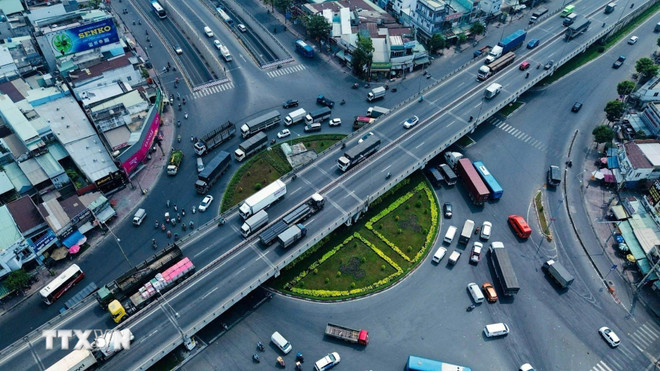
An Suong intersection in Ho Chi Minh City (Photo: VNA)

Another positive signal came from S&P Global Market Intelligence, which reported Vietnam’s Purchasing Managers’ Index (PMI) at 53 in December 2025. This marked six consecutive months of improving business conditions, with both output and new orders rising strongly and business confidence hitting a 21-month high.

Economists said the foundation for 2026 also rests on deeper structural factors, including the outcomes of the 14th National Party Congress, administrative streamlining, the effectiveness of the two-tier local administration model, timely policy and institutional rollout, and the launch and completion of a series of major construction projects. Above all, local authorities’ determination to meet ambitious GRDP growth targets is also crucial.

A full-force push for double-digit growth

Addressing a national conference on accelerating public investment in 2025 and 2026, Prime Minister Pham Minh Chinh directed ministries and localities to fully disburse all 2025 public investment capital, while immediately launching projects to ensure spending from the start of the year.

The MoF reported that as of December 31, over 755.1 trillion VND (29 billion USD) in public investment had been disbursed, or 83.7% of the PM’s plan. This leaves nearly 146.9 trillion VND to be spent in the final weeks of the 2025 budget year, which ends in late January 2026. Meanwhile, total public investment fund for 2026 amounts to 1.08 quadrillion VND, which will also require swift rollout.

The PM also called for a reduction in the incremental capital-output ratio (ICOR) from around 6 to 4.5. Achieving this will demand better project preparation, strict timeline adherence, and quality control so that projects can be brought into operation sooner.

Other key policy priorities include refining institutional framework and laws, particularly those governing investment and trade, to unleash production capacity, pool all available resources and create new growth drivers; prioritising growth while maintaining macroeconomic stability, controlling inflation and ensuring major economic balances; and keeping public debt and state budget deficit within legal limits.

For 2026, only six out of 34 localities have set growth targets below 10%, while the rest aim above 10%. Hai Phong, Quang Ninh and Bac Ninh have the most ambitious goals, at around 12–13%.

At a recent online meeting between the Government and local authorities, many localities put forward proposals to achieve double-digit growth and pledged accountability to the Government for meeting those goals./.
VNA

See more

A Vinh Long official introduces signature local products to Korean guests. (Photo: VNA)

Vinh Long courts Korean investment in key sectors

Vice Chairman of the provincial People’s Committee Nguyen Truc Son vowed to accompany investors and provide them with optimal conditions, while building a transparent and stable business environment to secure long-term engagement from foreign enterprises, particularly those from Daejeon.

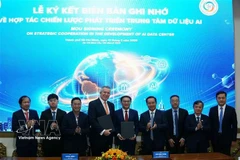
Delegates at the launching ceremony (Photo: VNA)

Digital platform on overseas market development launched

With Vietnam’s network of 64 trade offices overseas, Deputy PM Son noted that connecting them through a modern digital platform could help establish a unified national trade information system that operates efficiently, transparently and with strong forecasting capacity.

The Government’s issuance of Decree No. 72/2026/ND-CP revising preferential import tariffs on several petrol products and raw materials is a timely move to diversify supply sources. (Photo: VNA)

Fuel import tariff cuts strengthen Vietnam’s energy resilience: experts

Economic expert Dinh Trong Thinh said revising fuel import tariffs helps diversify supply sources and reduce reliance on traditional markets, thereby strengthening Vietnam’s ability to cope with potential global supply shocks. Ensuring access to multiple energy sources is also vital for safeguarding national energy security, he added.

Leaders of Dak Lak province inspect IUU fishing prevention and control efforts at Phu Lac fishing port, Hoa Hiep ward. (Photo: daklak.gov.vn)

Dak Lak readies for EC mission on anti-IUU fishing efforts

Dak Lak province is completing preparations for an upcoming European Commission (EC) inspection on efforts to combat illegal, unreported and unregulated (IUU) fishing, with a view to having the fisheries “yellow card” removed.

Vietnamese Ambassador to Argentina Ngo Minh Nguyet speaks at the event. (Photo: VNA)

Vietnam, Argentina promote trade, investment cooperation

On relations with South America, Nguyet noted that in December 2025, Vietnam and the Southern Common Market (MERCOSUR) announced the launch of negotiations for a Preferential Trade Agreement (PTA). She expressed her hope that the agreement will be signed soon, thereby further boosting trade and investment between Vietnam and MERCOSUR member states, including Argentina.

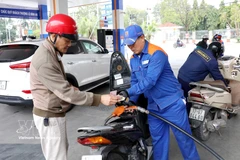
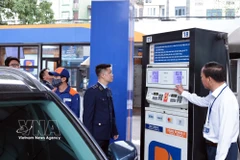
Customers buy petrol at a Petrolimex petrol station in Tran Hung Dao ward, Hung Yen province. (Photo: VNA)

PM orders stronger measures to ensure stable petrol supply

The MoIT was instructed to direct key petrol producers and traders to proactively develop supply plans to guarantee adequate fuel provision for distribution systems, maintain regular sale operations, and sell products at listed prices. It must also closely monitor developments in global and domestic petrol markets and adopt appropriate management measures when necessary.

Farmers in Ca Mau province use combine harvesters to harvest rice. (Photo: VNA)

PM orders coordinated measures to stabilise rice production and markets

The Minister of Agriculture and Environment is tasked with instructing local authorities to closely monitor production developments, improve forecasting capacity, strengthen pest control measures, and proactively respond to adverse weather conditions to protect crops, maintain planned yields and output, and reduce production costs.

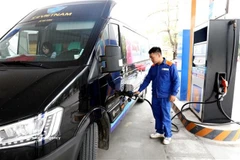
A worker refuels a vehicle at a petrol station in Hung Yen province. (Photo: VNA)

Fuel prices slashed as stabilisation fund used

According to a joint decision by the Ministry of Industry and Trade and the Ministry of Finance, the price of RON95-III petrol – the most widely used grade – fell by 3,880 VND to 25,240 VND (0.95 USD) per litre.

Customers purchase petrol at Station No. 03 (Petrolimex Hung Yen) on Quang Trung Street, Tran Hung Dao ward, Hung Yen province. (Photo: VNA)

Hung Yen takes measures to curb speculation, stabilise fuel market

Petrolimex Hung Yen maintains regular reserves of about 5,500 cubic metres at directly managed outlets and roughly 2,000 cubic metres at franchised stations. The provincial Department of Industry and Trade has ordered closer monitoring of supply and demand and retail prices to detect shortages or unjustified price hikes.

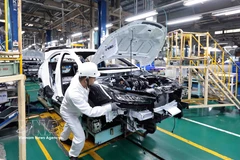
The automobile assembly line of the Honda Phuc Yen factory in Phu Tho province (Photo: VNA)

Honda Vietnam sees decline in motorcycle, car sales

Sales of both motorcycles and automobiles by Honda Vietnam declined in February, dropping 19.6% and 41.8% year-on-year, respectively, according to the company’s latest business results released on March 11.

Team 2 of the Hanoi Market Surveillance Sub-department inspects operations of a Petrolimex petrol station on Tran Quang Khai street (Photo: VNA)

Hanoi maintains stable supply of petrol, LPG

The Hanoi Market Surveillance Sub-department said petrol and LPG trading activities across the city remain stable, with supply largely meeting demand despite volatility in global energy prices.

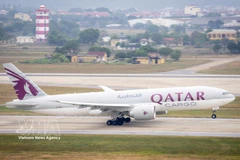
A Qatar Airways aircraft is seen at Noi Bai International Airport in Hanoi. (Photo: VNA)

Qatar Airways cancels 13 more flights amid Middle East conflicts

Statistics show that airspace across the Middle East has yet to return to normal operations, with multiple FIRs still imposing restrictions or partial closures. As a result, international flight operations through the region continue to face disruptions and route adjustments.