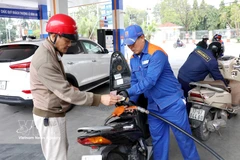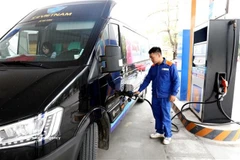
Hanoi (VNA) – The Government’s issuance of Decree No. 72/2026/ND-CP revising preferential import tariffs on several petrol products and raw materials is a timely move to diversify supply sources, reduce import costs and enhance Vietnam’s resilience against global energy market volatility, said insiders.
Global energy markets remain volatile due to geopolitical tensions and supply chain risks, particularly along key oil transport routes. In this context, proactive measures such as adjusting import tariffs have become an important tool to help ensure stable domestic fuel supply.
Economic expert Dinh Trong Thinh said revising fuel import tariffs helps diversify supply sources and reduce reliance on traditional markets, thereby strengthening Vietnam’s ability to cope with potential global supply shocks. Ensuring access to multiple energy sources is also vital for safeguarding national energy security, he added.
From a market perspective, Nguyen Quang Huy from Nguyen Trai University noted that energy prices are influenced not only by production levels but also by transport conditions and supply chain stability. He said when disruption risks rise, markets often add a “geopolitical risk premium” to prices.
According to Huy, recent fluctuations in fuel prices mainly reflect short-term market expectations and global developments. However, the overall global supply of crude oil remains relatively stable, with major oil-producing countries still retaining room to adjust output if necessary.
The plan by the Organisation of the Petroleum Exporting Countries and oil-producing nations (OPEC+) to increase oil production from April 2026 is therefore viewed as a positive signal that could help boost supply and ease price pressures in the coming period, he said.
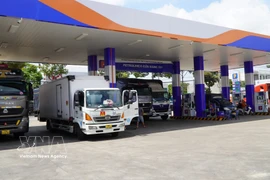
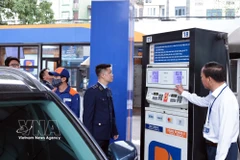
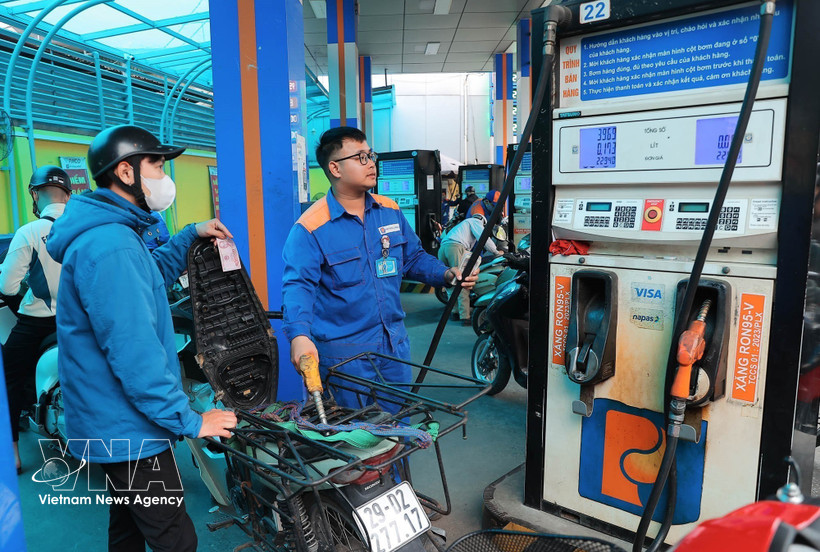
Under Decree No. 72, the preferential import tariff on unleaded motor gasoline has been reduced from 10% to 0%. Import tariffs on several key fuels – including diesel, fuel oil, jet fuel and kerosene – have also been cut from 7% to 0%. In addition, certain petrochemical feedstocks used in fuel production, such as condensate, xylene and p-xylene, have had their import duties reduced to 0%. The policy is in effect from March 9 to April 30.
According to the Ministry of Finance, the tariff reduction aims to ensure national energy security, diversify energy supply sources and balance immediate consumption demands with long-term energy reserves.
Experts said the measure will enable fuel trading companies to expand imports from a wider range of markets. Currently, Vietnam’s petrol imports mainly come from ASEAN countries and the Republic of Korea, where import tariffs are already largely at 0% under free trade agreements.
However, under current global conditions, sourcing refined fuel from these regions may become more difficult as some refineries cut capacity and limit exports, which could tighten domestic supply and add pressure on prices in Vietnam.
Economic experts said flexible tax adjustments are also an important tool to stabilise the domestic market, as petrol prices directly affect production costs, transport expenses and overall inflation.
As global energy markets grow increasingly unpredictable, experts believed flexible fiscal management, diversified import sources and stronger reserves will be essential for helping Vietnam better withstand future supply shocks./.
See more
Reference exchange rate rebounds on April 23
With the current trading band of +/- 5%, the ceiling rate applicable for commercial banks during the day is 26,360 VND/USD, and the floor rate 23,850 VND/USD.
Vietnamese pomelos gain broader access to Australian market
The update by Australia’s Department of Agriculture, Fisheries and Forestry to its Biosecurity Import Conditions system (BICON) on April 10, officially setting out import conditions for Vietnamese pomelos, is regarded as a major milestone in market access efforts.
Fruit, vegetable exports surge on global demand
Export earnings stood at nearly 532 million USD in April, bringing total export value to 2.06 billion USD in the first four months of the year, up 22% year-on-year.
Vietnam, India boost connectivity in textile, footwear sectors
As global supply chains are being restructured towards diversification, sustainability and digital transformation, Vietnamese Trade Counsellor to India Bui Trung Thuong noted that this is an opportune time for both countries to deepen cooperation towards building integrated value chains and enhancing product value.
Railway sector introduces AI-powered flexible fares for short-distance travel
The initiative allows passengers travelling shorter distances to access more affordable fares even within the same carriage, helping to optimise seat occupancy and improve operational efficiency.
Vietjet leads Southeast Asia in emissions efficiency
Under comparable operating conditions, Vietjet’s leading position highlights its ability to optimise performance across its entire operational chain, including aircraft configuration, route network design and load management.
Vietnam Airlines ramps up Hanoi – Moscow flights from July
The expanded schedule will add a Sunday service to the current Monday, Wednesday and Friday operations, with all flights operated by wide-body Boeing 787 aircraft.
Vietnam ranks 18th among world’s top exporters in 2025
Vietnam’s exports reached about 470 billion USD for the first time last year, up more than 16% year on year, with a trade surplus of over 20 billion USD, contributing significantly to maintaining macroeconomic stability.
Viettel Post, FedEx tie up to expand Vietnam’s cross-border logistics
Under the deal effective on April 26, Viettel Post will serve as FedEx’s National Network Provider in the country, giving the US-based courier access to its nationwide delivery network, fleet and domestic infrastructure to deepen market coverage.
Vietnam Night connects businesses at Hannover Messe 2026 in Germany
Vietnamese enterprises are eager to access Germany’s advanced technologies to enhance their production capacity and integrate more deeply into global supply chains.
Canada launches review of anti-dumping measures on Vietnamese concrete reinforcing bar
The review concerns conclusions issued in earlier investigations, notably case NQ-2020-004 (with findings made on June 4, 2021), covering the products originating in or exported from several countries, including Vietnam, Algeria, Egypt, Indonesia, Italy, Malaysia, and Singapore (review code RR-2026-002).
Vietnam’s pet care market emerges as lucrative investment opportunity
Across the Asia-Pacific, 60% of respondents own pets, while Vietnam’s pet ownership rate stands at 79%, among the highest in the region. Notably, 55% of Vietnamese pet owners have two or more pets, signalling that pet ownership has evolved from a hobby into a modern lifestyle choice.
AI emerges as key driver for Vietnam’s F&B sector breakthrough
Businesses start with projects that deliver quick results within six to 12 months, like quality control systems, demand forecasting, or customer service chatbots. In the long run, F&B companies are advised to move toward with AI-driven operating models to keep up with fast-changing market demands.
Global Sourcing Fair showcases Vietnam’s growing supply chain role
Exhibitors are displaying over 40,000 export products across four main sectors: fashion and accessories, home and gifts, electronics and home appliances, and packaging and printing.
Smart border gates power growth in northern border provinces
With a borderline of about 182 km, Lao Cai aims to turn its border gate economic zone into a key growth engine by adopting a smart border gate model, viewing this as a breakthrough measure for improving management efficiency, reducing logistics expenses, and enhancing customs clearance capacity.
Vietnamese awards in Canada spotlight community strength
The gala brought together nearly 200 participants, including community leaders, entrepreneurs and guests from across the country, highlighting both the achievements of Vietnamese businesses and the community’s growing role in the socio-economic fabric of Vancouver and other Canadian cities.
Transport sector ramps up capacity for holiday travel surge
Transport experts said the back-to-back holidays will create travel patterns different from previous years. While some people are expected to combine the two breaks into a longer holiday, others will travel during either period depending on personal plans. Passenger flows are therefore likely to be more evenly distributed, helping ease pressure on transport systems.
Efforts intensify to maintain key agricultural export markets
After years of market expansion, the biggest challenge now is no longer how to enter the US market but how to maintain a foothold, retain customers and expand market share under increasingly competition and demanding conditions.
Imports accelerate, powering exports, public revenues
Previous years show that Vietnam typically runs a trade deficit in the first quarter before shifting to a surplus in the latter half of the year. The current deficit, therefore, is considered both normal and indicative of an economy “recharging” for growth.
Reference exchange rate drops 2 VND on April 22
With the current trading band of +/- 5%, the ceiling rate applicable for commercial banks during the day is 26,355 VND/USD, and the floor rate 23,845 VND/USD.