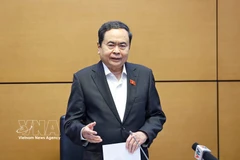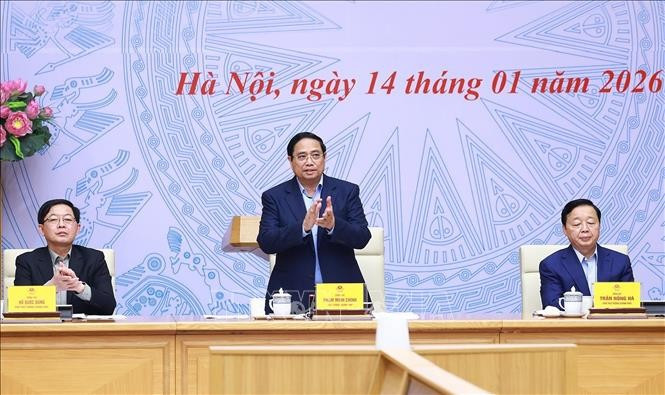
Hanoi (VNA)- Achieving the net-zero emissions target is both a challenge and an opportunity to develop the country sustainably, build an independent and self-reliant economy, and deepen international integration, said Prime Minister Pham Minh Chinh on January 14.
Concluding the sixth meeting of the National Steering Committee for implementing Vietnam’s commitments at the UN Climate Change Conference in Glasgow (COP26), Chinh, who is also head of the Steering Committee, affirmed the correctness of Vietnam’s strong commitments made at COP26 to jointly acting for net-zero emissions by 2050, fulfilling its mission alongside the global community in combating climate change.
He acknowledged and appreciated the proactive, serious spirit and efforts of ministries, sectors, localities, the business community, and the people in implementing Vietnam’s COP26 commitments over the past period. Initial results have laid an important foundation for further progress toward the 2050 net-zero goal.
The Prime Minister noted that ministries, sectors, localities, and enterprises have actively engaged in digital transformation, green transition, development of a low-carbon economy, a circular economy, and energy transition. The institutionalisation and integration of COP26 commitments into the legal system, policies, and strategies have been implemented in a timely and effective manner, creating a legal foundation to promote greenhouse gas emission reduction, green transition, and climate change adaptation.
According to PM Chinh, Vietnam has become a reliable and attractive destination, drawing the attention of many organisations and attracting international financial resources and investors in green development and energy transition. Many reputable international corporations and enterprises have come to Vietnam to survey and seek cooperation opportunities in renewable energy, greenhouse gas emission reduction projects, and carbon credit creation.
Cooperation agreements and memoranda of understanding between Vietnamese enterprises and international financial institutions and credit organisations have been signed and gradually implemented, mobilising resources for green transition and the realisation of COP26 commitments, he said.
Public and business awareness and responsibility for environmental protection and climate change response have been enhanced, reflected in priorities like green consumption, tree planting, forest protection, use of clean energy, proactive disaster response, and the promotion of education and scientific research, he added.
At the same time, the Government leader frankly pointed out existing shortcomings and limitations, such as the slower-than-expected progress of some tasks and projects under the Just Energy Transition Partnership (JETP) and Asia Zero Emission Community (AZEC) frameworks, particularly in mobilising international resources. The implementation of nationally determined contributions (NDCs) on emission reduction and climate adaptation has not been synchronised, and the domestication of international commitments in certain sectors and fields remains slow.
He stressed that climate change is becoming increasingly complex, with natural disasters causing severe and unpredictable consequences. Reality demands an urgent shift from awareness to action, from commitments to concrete results, with faster and more decisive efforts in combating climate change.
The Prime Minister required the Steering Committee to thoroughly grasp the viewpoint that climate change adaptation and achieving net-zero emissions are challenges but also opportunities for sustainable national development and building an independent, self-reliant, and integrated economy.
“Achieving both high growth and emission reduction is a challenge but also a driver of innovation, leveraging internal strength alongside contemporary knowledge and international financial and technological resources to create substantive progress in green development and carbon neutrality,” he noted.
He emphasised that combating climate change must place people and businesses at the centre - as subjects, objectives, drivers, and resources - because no one is safe if others are unsafe, and no country is safe if another is vulnerable to climate change.
He called for continued improvement of institutions related to climate change response, aligned with Vietnam’s conditions while harmonised with global regulations and trends. Stakeholders should focus on developing mechanisms and policies to mobilise finance; establish processes to absorb advanced technologies for green development; build national governance models for green and smart development; and develop human resources for green growth.
He urged accelerating greenhouse gas emission reductions, early piloting of emission quota allocation, and implementation of NDCs. The PM assigned the Ministry of Agriculture and Environment, in coordination with the Ministry of Construction and the Ministry of Industry and Trade, to pilot quota allocation for coal-fired power plants and iron, steel, and cement production facilities immediately after approval of total emission quotas for 2025–2026; urgently complete the draft NDC for the 2026–2035 period for submission to the Prime Minister; and closely monitor implementation.
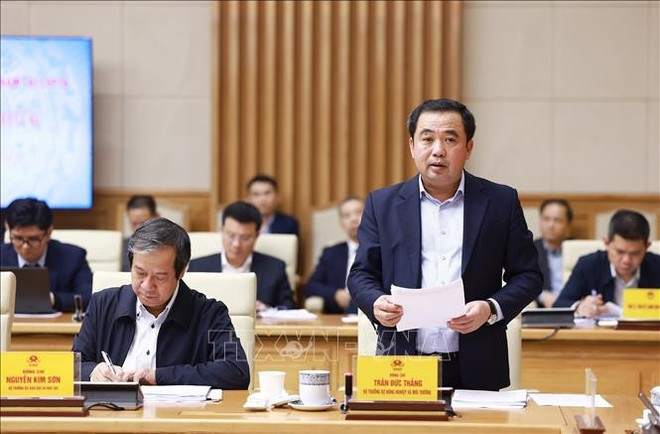
The Ministry of Industry and Trade and the Ministry of Construction were tasked with updating and improving guidelines for facility-level greenhouse gas inventories by sector, and monitoring quota compliance.
The Prime Minister directed efforts to accelerate preparation for the operation of the domestic carbon market and the exchange of emission reduction results and carbon credits.
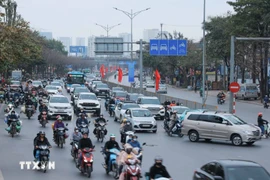
Provincial and municipal People’s Committees shall take the lead in developing public transport systems powered by electricity and green energy, and in formulating and implementing policies to support the transition of vehicles to clean and green energy sources, he stated.
He also requested accelerating tasks related to transport electrification and the development of green transport and green infrastructure. He stressed continued development of renewable energy and promotion of a just energy transition, particularly effective implementation of the Politburo’s Resolution No. 70-NQ/TW.
Regarding green finance and green credit, the Prime Minister assigned the Ministry of Finance to coordinate with the State Bank of Vietnam to assess financial needs of key sectors and revise mechanisms to promote energy transition projects. The central bank was tasked with finalising regulations on interest rate support for green projects and directing credit institutions to prioritise funding for green sectors.
He also emphasized enhancing disaster forecasting and early warning, strengthening scientific and technological applications in climate monitoring, and improving international climate negotiations through proactive diplomacy.
“Bringing Vietnam to net-zero emissions by 2050 is not merely a promise but a commitment to action - a political mission of the nation and a responsibility of the entire political system, the business community, and every citizen. Therefore, all ministries, sectors, localities, businesses, and people must focus on fulfilling this mission effectively,” the leader concluded./.