Vietnam targets vehicle emissions with stricter standards, digital enforcement

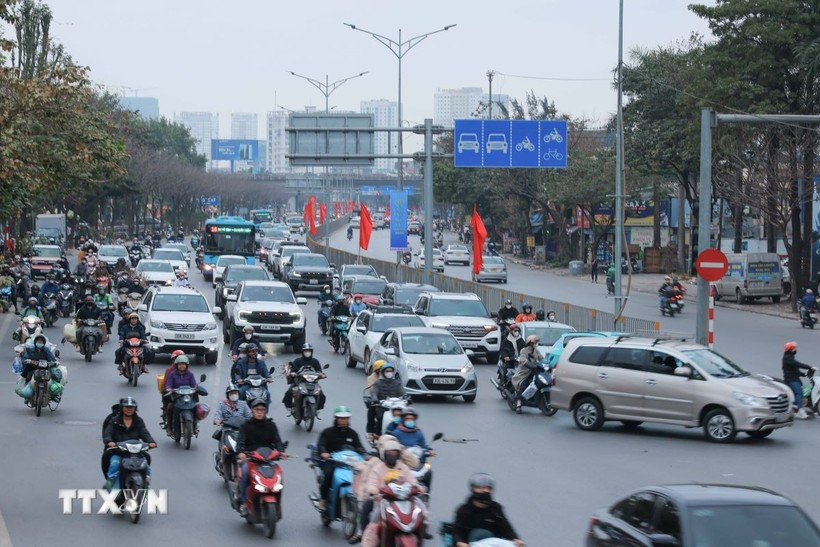
A substantial share of vehicles currently in use, especially motorcycles in use for years without routine checks or upkeep, are aging fleets that rank among the biggest emitters.

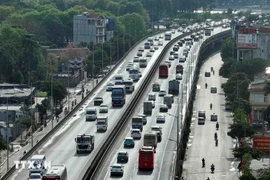
A substantial share of vehicles, especially motorcycles in use for years without routine checks or upkeep, are aging fleets that rank among the biggest emitters. (Photo: VNA)

Hanoi (VNA) – Transportation stands as a leading contributor to greenhouse gas emissions, fine particulate matter, and toxic pollutants detrimental to public health, with surging vehicle ownership intensifying demand on regulators to bolster emissions control.

Data from the Traffic Police Department at the Ministry of Public Security showed that Vietnam now counts over 7.2 million registered automobiles and 80.6 million motorcycles and mopeds. A substantial share of these, especially motorcycles in use for years without routine checks or upkeep, are aging fleets that rank among the biggest emitters. Yet emissions control, particularly in densely trafficked cities, has proven inadequate.

To curb vehicular pollution, the Prime Minister has rolled out a series of key policy decisions, including Decision No. 876/QD-TTg, dated July 22, 2022, endorsing an action plan for green energy transition and cuts to carbon and methane output; Decision No. 19/2024/QD-TTg, dated November 15, 2024, on roadmap for imposing stricter emissions standards on imported and locally built vehicles; and Directive No. 20/CT-TTg, dated July 12, 2025, laying out urgent tasks to combat environmental pollution.

Drawing on these directives, the Ministry of Public Security has equipped traffic police with thousands of advanced specialised vehicles and tools to detect and deal with violations related to vehicle exhaust fumes.

In the first three months after Directive No. 20/CT-TTg took effect, officers nationwide cited thousands of non-compliant vehicles, helping curb environmental harm.

Relevant agencies have been directed to amend and enact legal frameworks and targeted incentives to clear regulatory hurdles, arming enforcement teams with robust tools for swift action against polluters.

Enforcement muscle needs bolstering via upgraded patrol and inspection protocols, coupled with stricter accountability for units and officers tolerating persistent breaches. Adequate vehicles and gear tailored to real-world inspection demand remain critical.

Authorities should fast-track digital transformation in monitoring and violation processing, including data centre construction, big data analytics upgrades, artificial intelligence deployment, and interconnected databases to flag vehicles at risk of non-compliance or overdue checks.

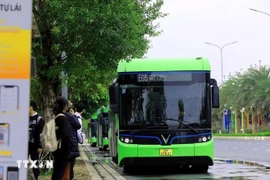
For a smooth shift to greener mobility, policymakers are urged to roll out public incentives such as tax and fee waivers or cuts, installment plans for low-emission vehicles, higher levies on new fossil-fuel registrations, and elevated parking charges in urban areas. Speeding up the construction of charging networks and green vehicle infrastructure, together with expanding public transport systems, in key cities is also deemed vital./.
VNA

See more

UNESCO Representative to Vietnam Jonathan Wallace Baker and Japanese Ambassador Ito Naoki at the signing ceremony (Photo: baoquocte.vn)

UNESCO, Japan sign deal to bolster Vietnam’s disaster early warning

Climate change adaptation remains a top priority in Vietnam’s development strategy and national security outlook through 2050. Vietnam will maintain close cooperation with Japan, UNESCO and other partners to guarantee the project’s effectiveness and advance common goals.

The German Agency for International Cooperation (GIZ)'s Managing Director Thorsten Schäfer-Gümbel speaks at the working session with the Vietnamese-German University. (Photo: VNA)

Vietnam, Germany step up collaboration on energy transition, green hydrogen

Schäfer-Gümbel praised the strong commitment of Vietnamese partners to sustainable energy goals. He noted that the long-standing development cooperation between Germany and Vietnam is evolving, with energy transition emerging as a strategic area of collaboration in addressing global challenges.

Cat Ba langur is an extremely rare primate species found exclusively in the humid tropical forests of Cat Ba island (Photo: VNA)

Belgian TV spotlight: Vietnam's wild nature reborn

Through the lens of “Le Jardin Extraordinaire”, Vietnam was portrayed not simply as a travel destination but as a still-emerging realm of discovery: a nation whose nature, though heavily wounded in the past, demonstrates extraordinary powers of recovery, quietly upholding its pristine essence against the pressures of time.

The macaque, scientifically known as Macaca arctoides. (Photo: VNA)

Quang Tri receives endangered stump-tailed macaque

The Cam Lo-Dong Ha forest protection unit in the central province of Quang Tri has received a rare stump-tailed macaque, a species listed as endangered, precious and rare in the Vietnam Red Data Book.

At a ceremony to donate 100,000 trees to the Naval Region 4 (Photo: HANE)

Tree planting programme spreads green momentum in islands

The Ho Chi Minh City Association for Conservation of Nature and Environment (HANE) on January 11 announced 10 outstanding green programmes and activities carried out in 2025, including a programme to plant 1 million trees in Vietnam’s island areas.

Lam Dong releases hundreds of wild animals into the wild. (Photo: VNA)

Lam Dong releases hundreds of wild animals back into the wild

According to the Ta Dung National Park Management Board, the park has for years served as a trusted destination for authorities and residents to hand over and release wildlife. Such actions not only contribute to biodiversity conservation but also help reduce illegal hunting and captivity of wild animals.

According to the Hanoi Department of Agriculture and Environment, air quality index (AQI) readings have at times reached poor and very poor levels. (Photo: VNA)

Hanoi targets 20% reduction in PM2.5 levels

Hanoi has affirmed its commitment not to trade environmental protection for economic growth. The city is moving to establish low-emission zones (LEZs) as a core measure to control emissions and promote green, sustainable urban development.