Vietnamese startup turns emissions into valuable materials

CO2L Tech was established by three Vietnamese-origin scientists in Canada, with the ambitious goal of converting carbon emissions into new resource streams.

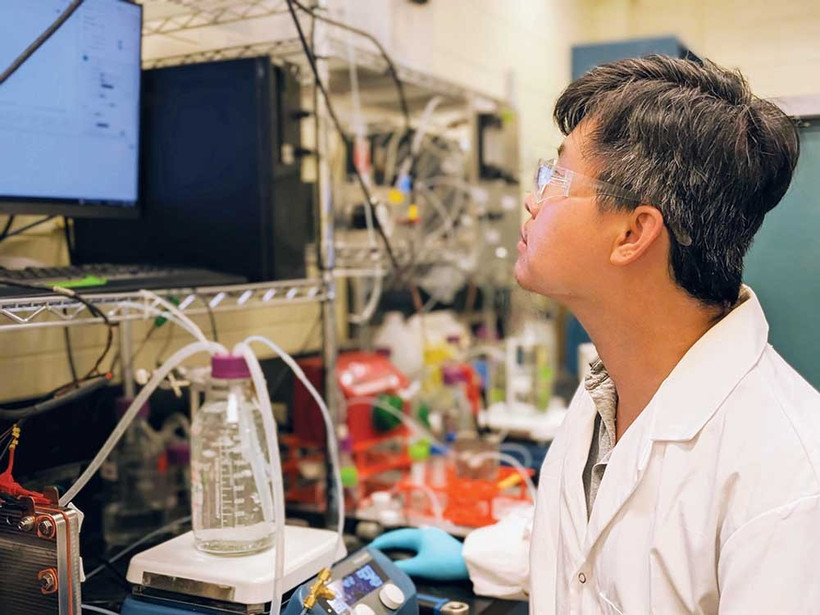
CO2L Tech startup joins hands with Helen Co., Ltd, a desiccant material manufacturer in HCM City, to carry out production in a trial basis at a Helen factory. (Photo: baodautu.vn)

Hanoi (VNA) – Inside a desiccant material manufacturing facility in Ho Chi Minh City, a compact electrochemical system of the CO2L Tech startup has quietly begun operations, transforming CO2 into useful compounds – a process expected to create massive changes in many industries.

CO2L Tech was established by three Vietnamese-origin scientists in Canada, with the ambitious goal of converting carbon emissions into new resource streams.

Dr. Nguyen Ngoc Tu, Dr. Tran Ly Nguyet Anh, and Dr. Dinh Cao Thang from Queen’s University Canada, boasting extensive experience in chemistry, material science, and chemical engineering, believed that the biggest challenge to the green economy is not only capturing carbon to reduce emissions but also determining how to put it to work. From this insight, CO2L Tech was set up, with Electrochemical CO2 Reduction (ECR) technology as its core foundation.

heThe technology demonstrates the natural photosynthesis process, where plants absorb CO2, water, and sunlight to produce oxygen and organic compounds. The ECR system uses renewable energy sources like solar and wind power to convert CO2 and water into economically valuable chemicals.

Unlike many ECR systems that rely on expensive and rare metals such as gold, silver, iridium, or platinum, CO2L Tech’s platform uses affordable and widely available materials, helping cut costs significantly. Besides, it directly handles impure CO2 streams, which many competing solutions cannot manage.

The technology was introduced at the Net Zero Challenge contest held by Touchstone Partners, Singapore-based Temasek Foundation, and the Ho Chi Minh City Institute for Development Studies last November. It was honoured in the renewable energy and carbon neutralisation category, winning the first place worth 5 billion VND (191,000 USD) and receiving 50,000 USD funding from Touchstone Partners Fund. Immediately afterwards, the team decided to bring this technology to Vietnam for commercial testing.

Dr. Anh revealed that after winning the award, the company established a partnership with Helen Co., Ltd, a desiccant material manufacturer in HCM City, to carry out production in a trial basis at a Helen factory. It installed equipment and conducted preliminary testing there. The team continues to build the electrochemical system to achieve a capacity of reducing more than 1 tonne of CO2 a year for each ECR cell unit, envisioning an ECR system with an annual conversion capacity of up to 10,000 tonnes of CO2.

If the pilot production succeeds, CO2L Tech will open the first market for ECR technology in Vietnam, with products applied in the desiccant material sector, which currently needs carbon emission reduction solutions. This could also serve as a foundation for other industries.

Despite early momentum, CO2L Tech acknowledged that the road ahead is full of challenges. Market readiness is the primary challenge as most carbon capture and utilisation (CCU) technologies still face high production costs. Without carbon pricing or emissions caps in place, CCU could not gain a competitive edge, making enterprises reluctant to invest in the area.

Beyond economic feasibility, green startups typically face pressure from factors such as technological, large capital requirements, policy uncertainty, and time. Meanwhile, the climate technology market hinges on national policies like carbon pricing and subsidies.

Ngo Thuy Ngoc Ty, Co-founder of Touchstone Partners, said Vietnam is among the countries first affected by climate change. With the potential to attract Vietnamese-origin researchers from around the world and its competitive production cost, the country is capable of becoming a launch pad for breakthrough initiatives and technologies for addressing global climate challenges./.
VNA

See more

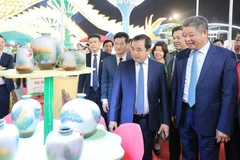
Officials visit a booth at the festival. (Photo: VNA)

Vietnam OCOP Festival 2025 opens in Hanoi

The festival functions as a space to bring together regional OCOP excellence, a forum connecting OCOP stakeholders with distributors, investors, experts and consumers, and a platform to spread pride in indigenous culture, local knowledge, and the aspiration for legitimate prosperity.

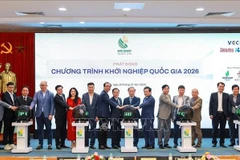
Prime Minister Pham Minh Chinh (third from right) and officials launch the Ministry of Construction’s new information technology systems at the conference on December 21. (Photo: VNA)

Modern, comprehensive infrastructure – a need for fast, sustainable development: PM

The Party and State continue to define infrastructure development as one of the three strategic breakthroughs, with priority given to building comprehensive and modern infrastructure, particularly transport facilities, technological infrastructure, and green – digital transition infrastructure, to help realise the national target of double-digit growth, the PM said.

Prime Minister Pham Minh Chinh addresses he third meeting of the National Steering Committee implementing the Politburo’s Resolution 68 in Hanoi on December 20. (Photo: VNA)

PM pushes trust, breakthroughs to accelerate private sector growth

Prime Minister Pham Minh Chinh noted that since the rollout of Resolution 68, alongside supporting resolutions from the National Assembly (NA) and Government, there has been a marked change in understanding the private sector’s critical position and role in Vietnam’s socialist-oriented market economy.

PM Pham Minh Chinh chairs the meeting (Photo: VNA)

Private sector thrives eight months after Resolution 68’s launch: PM

The private sector has shown marked progress eight months after the launch of Resolution 68, registering about 18,000 new enterprises monthly and pushing the nationwide total to nearly 1.1 million, Prime Minister Pham Minh Chinh told the third meeting of the National Steering Committee in Hanoi on December 20.

Phin Ho Tra – a national five-star OCOP product. (Illustrative photo: VNA)

Hanoi to host Vietnam OCOP Festival 2025

The festival is seen a practical activity celebrating the achievements made by the capital and the country in 2025, affirming OCOP’s role in rural economic development, contributing to realising Vietnam’s aspiration for strong economic growth in the context of deep integration.

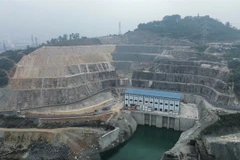
The expanded Hoa Binh Hydropower Plant (Photo baochinhphu.vn)

EVN launches major power projects

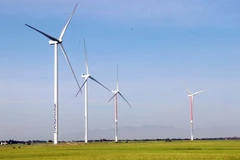
Among the flagship projects inaugurated was the expanded Hoa Binh Hydropower Plant with a total installed capacity of 480MW per year and average annual output of about 488 million kWh.

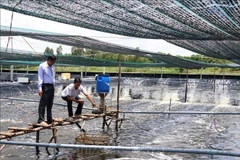
An ultra-intensive shrimp farming model linked with environmental protection in Ca Mau province. (Photo: VNA)

Fisheries take the lead in the Mekong Delta’s green transition

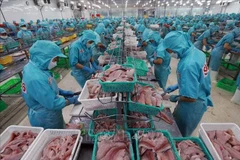
Across the Mekong Delta, leading aquaculture producers, processors and exporters, along with suppliers of inputs, are transitioning to circular, high-tech and clean production models that cut greenhouse gas emissions and comply with international certification standards.

A perspective view of the Red River Landscape Boulevard project in Hanoi (Photo: VNA)

Works starts on Hanoi’s Red River Landscape Boulevard Axis project

The project is among the 234 key works and projects being launched, inaugurated or technically opened simultaneously across 34 cities and provinces nationwide to mark the 14th National Party Congress. Its launch contributes to implementing the country’s strategic development orientations while concretising Hanoi’s development goals in the new period.