Hanoi (VNA) – Prime Minister Pham Minh Chinh has stressed that modern and comprehensive infrastructure is both an urgent requirement and a long-term strategic mission, serving as a stepping stone for fast and sustainable development.
He made the remarks while addressing the Ministry of Construction’s national conference reviewing the 2025 performance and outlining tasks for next year on December 21.
Analysing the 2025 performance of the ministry and the construction sector, PM Chinh not only highlighted notable achievements but also frankly pointed out existing shortcomings that must be addressed. These include shortcomings in planning, slow disbursement of public investment, delays in site clearance for projects, latent risks in the real estate market, and ongoing challenges in developing smart cities and civilised rural areas.
Identifying the causes of both success and limitations, as well as lessons learned, he stressed that 2026 will be a year of great significance as it will witness the 14th National Party Congress, the elections of deputies to the 16th National Assembly and People’s Councils at all levels for the 2026–2031 term. It will also be the first year of implementing the 14th National Party Congress's resolution and the 2026–2030 socio-economic development plan, as well as the first year of efforts towards the double-digit economic growth target to usher the nation into a new development phase.
Within this context, the Party and State continue to define infrastructure development as one of the three strategic breakthroughs, with priority given to building comprehensive and modern infrastructure, particularly transport facilities, technological infrastructure, and green – digital transition infrastructure, to help realise the national target of double-digit growth.
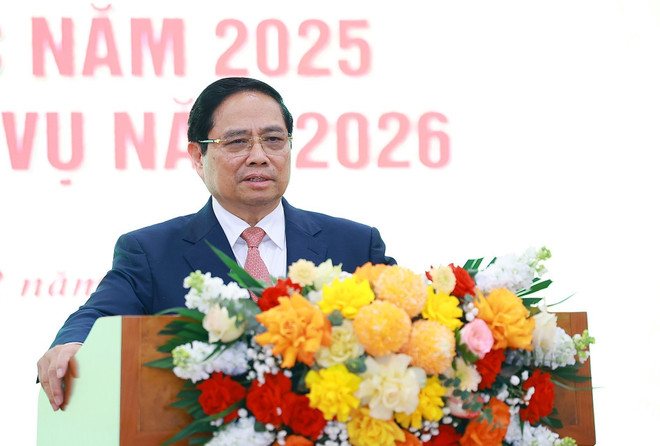
The PM asked the Ministry of Construction to decisively deliver “five guarantees”, which mean ensuring open and transparent institutional frameworks; smooth and well-connected infrastructure; smart and efficient governance; practical and standardised methods; and cooperative and well-coordinated partnerships.
He also emphasised the need for “six breakthroughs”, including a breakthrough in mindset and vision; a breakthrough in concentrating resources on major national projects, especially strategic transport works such as the Lao Cai – Hanoi – Hai Phong railway, the North – South high-speed railway, Phase 2 of the Long Thanh International Airport project, and completion of 5,000 km of expressways ahead of schedule; and a breakthrough in advancing science – technology, innovation, digital transformation, green transition, and circular economy to build smart, sustainable, and climate-resilient cities and modern rural infrastructure.
PM Chinh added that special attention should be paid to making breakthroughs in developing social housing to deliver one million affordable homes by 2028 while ensuring a transparent property market; in developing means of transport by building a more competitive, transparent, and high-quality transport market to reduce logistics costs and enhance goods competitiveness; and in resolutely tackling existing shortcomings by speeding up public investment disbursement, strengthening public – private partnerships, ensuring transparent contractor selection, and tightening supervision to ensure quality, safety and anti-corruption.
The Government leader assigned immediate tasks to the ministry, including completing technical standards for high-speed rail by January 2026 to serve as the basis for selecting suitable technology and investment approaches, establishing a real estate trading platform to foster an open, transparent and sustainable market, and conducting early inspection and supervision to prevent corruption, wastefulness, and other negative phenomena.
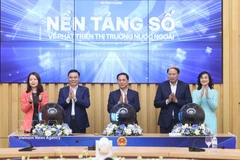
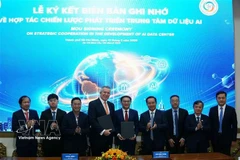
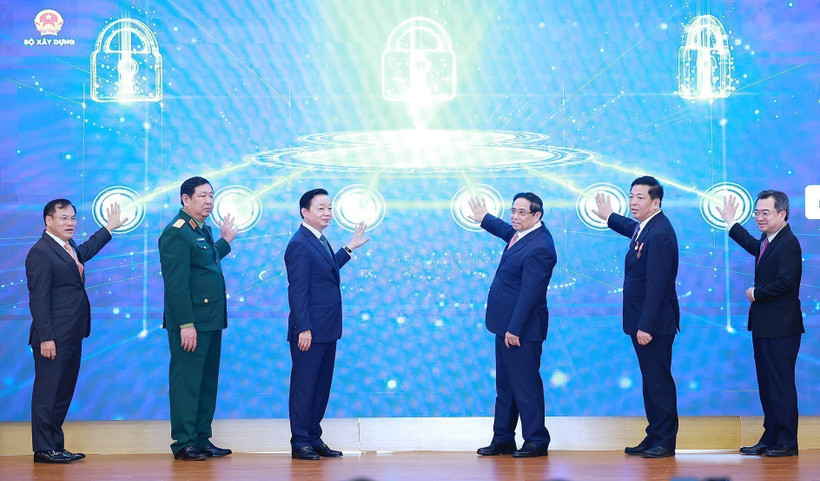
On this occasion, PM Chinh attended a ceremony to announce and launch the Ministry of Construction’s new information technology systems, including the national database on construction activities and nine relevant specialised databases; the centralised information system for handling administrative procedures at the local level; and the national smart city portal./.