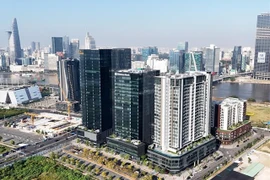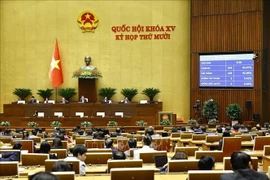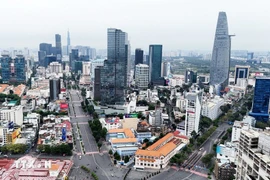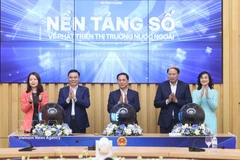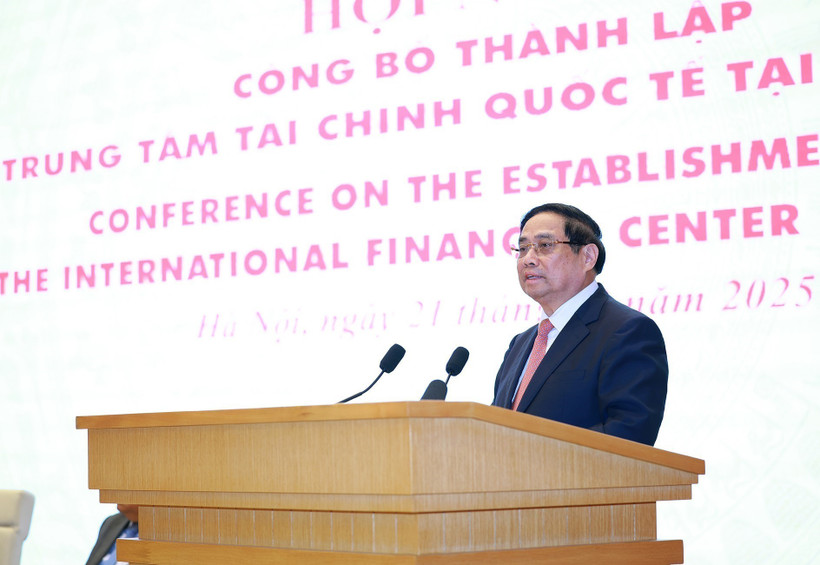
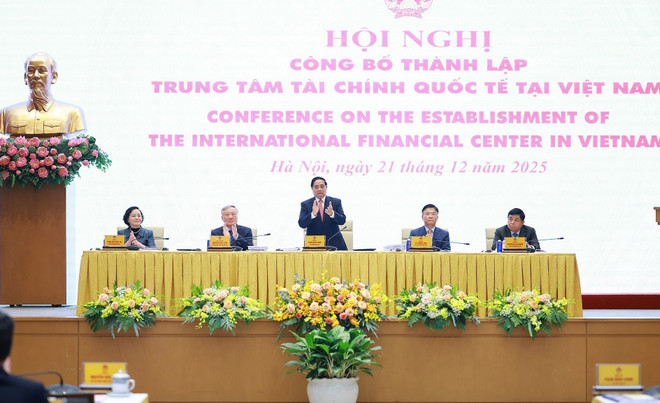
Hanoi (VNA) – The establishment of the International Financial Centre (IFC) in Vietnam was announced at a conference in Hanoi on December 21, with Prime Minister Pham Minh Chinh described the move as a moment for the country to open its door wide to fintech integration and economy greening, helping it reach the developed and high-income status in the near future.
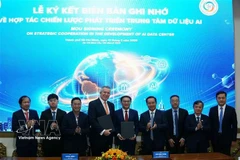
At the event, the PM’s decision on the IFC establishment was publicised, and the steering council for the IFC made debut, with Permanent Deputy Prime Minister Nguyen Hoa Binh serving as its chairman. The decisions on leadership appointments for the IFC governing agencies in Ho Chi Minh City and Da Nang city were also announced.
Participants were also provided with summaries of the Government’s decrees guiding the implementation of the National Assembly’s Resolution No. 222/2025/QH15 on Vietnam’s IFC.
In his remarks, PM Chinh stressed the special significance of the IFC establishment, which marks a turning point in the country’s integration and development process after 40 years of Doi moi (Renewal).
The IFC establishment is an urgent requirement in reality and based on Vietnam’s potential, advantages, and epochal vision for fast and sustainable development. It is a strategic choice, an effective solution, and a convergence of the demand for restructuring global investment flows and Vietnam’s aspiration to reach new heights in the era of the nation’s rise, he noted.
With the foundation of this centre, he went on, Vietnam doesn’t plan to directly compete with other IFCs in the region and the world but to seek a distinctive path with specific and outstanding mechanisms and policies to develop a complementary and interconnected model, creating a unified, efficient, and sustainable financial ecosystem.
PM Chinh said the launch of the IFC signals the beginning of a process of innovation in terms of quantity, quality, and efficiency for the financial market development, with far-reaching ripple effects on all sectors, fields, and entities of the country.
In particular, it is expected to help elevate Vietnam's standing, making Vietnam a crucial link in the global financial security network; creating a breakthrough in resources to develop an efficient, large-scale, and low-cost capital mobilisation channel for strategic infrastructure development without increasing the public debt ceiling; and simultaneously serving as a "platform" for the Vietnamese business community to expand internationally and access the most advanced governance standards.
This is also a "breakthrough of breakthroughs" in terms of institutional frameworks, with the IFC’s greatest benefits not only measured in monetary terms, but in the innovation of management thinking and modern technology. The pressure of international competition will also drive administrative reforms more strongly towards greater transparency and more comprehensive digitalisation, according to the Government leader.
For the IFC to operate efficiently and practically, he asked ministers, heads of sectors, the chairpersons of the People’s Committees of HCM City and Da Nang, along with relevant agencies to ensure the decisive, concerted, and fruitful implementation of the set tasks and measures.
He also called on partners, together with domestic and international businesses and investors, to continue cooperating with and supporting Vietnam during the IFC development process.
The PM demanded reforming the management mindset with a facilitation and service-oriented approach while aligning socio-economic infrastructure and ecosystem with international standards so that experts and investors can feel secure when living and working in Vietnam.
To ensure balance between financial freedom and system safety, as well as between investment efficiency and risk control, he requested the supervisory body to work independently and transparently in accordance with international commitments to money laundering prevention, and facilitate the flows of clean capital with high technology and modern governance expertise into Vietnam.
Vietnamese businesses and investors should exert efforts to weather difficulties and challenges, stay confident, resilient, and united, grasp opportunities, and boost cooperation to grow, PM Chinh continued, adding that the IFC is a launch pad for them to stretch their reach to the region and the world.
The Government, all-level authorities, sectors, and localities will take comprehensive measures to improve the investment and business climate, create optimal conditions, and protect the rights and legitimate interests of partners and businesses in the spirit of “harmonious interests and shared risks”, considering their successes as Vietnam’s, he stated.
He expressed his belief that although numerous difficulties and challenges are still ahead, with the consensus of the entire political system, the active engagement of the business community and people nationwide, and support from international friends, Vietnam will successfully develop a “free – digital, green – safe – transparent – competitive – efficient – sustainable” IFC, helping to pave the way for the country to advance to a new era of prosperity, civility, and happiness and take firm steps towards socialism.
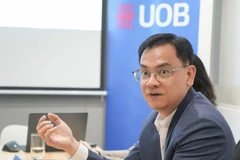
Addressing the conference, representatives of domestic and international businesses and investors spoke highly of the IFC establishment. They pledged to help attract international capital to Vietnam, carry out financial and banking mechanisms, and strongly invest in digital transformation, green finance, and inclusive finance, thus assisting the country to attract not only capital but also knowledge, technology, and sustainable values./.