HCM City builds fintech ‘superhighway’ for international financial centre

Chairman of the municipal People’s Committee Nguyen Van Duoc revealed that nearly 30 international financial heavyweights are preparing to set up operations as early as December 2025, signalling strong early investor confidence in the city’s financial centre ambitions.

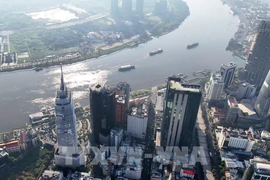
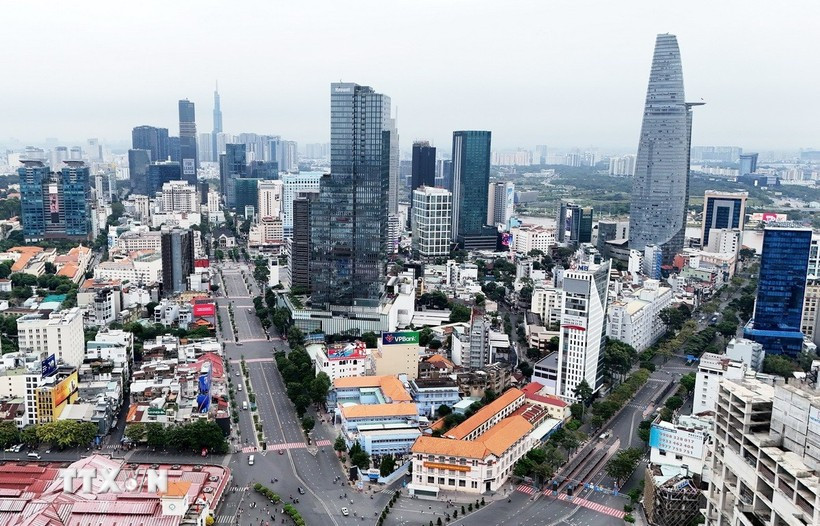
A corner of Ho Chi Minh City (Photo: VNA)

HCM City (VNA) – Ho Chi Minh City, known as Vietnam’s commercial capital, is racing to establish itself as Southeast Asia’s next major sci-tech and innovation hub by 2030 while building an ecosystem strong enough for its future International Financial Centre powered by open data, transparent digital assets, and seamless cross-border fintech flows.

Digital backbone takes shape

At last month’s Autumn Economic Forum, policymakers and industry leaders stressed that a world-class “fintech superhighway” built on international partnerships will be the backbone of the planned IFC.

Lam Dinh Thang, Director of the municipal Department of Science and Technology, said the city is pivoting to a growth model driven by knowledge, core technologies, and digital governance, targeting the top-tier regional status in science – technology and innovation by the end of the decade.

Already topping Vietnam’s national digital transformation rankings, HCM City boasts 82% 5G coverage, runs 16 data centres, and hosts more than 2,000 tech start-ups, over half the country’s total, creating a ready-made “fintech expressway”. The ecosystem is valued at 5.22 billion USD, placing the city fifth in Southeast Asia and closing in on the global top 100 start-up rankings.

For 2026–2030, the city has mapped out three strategic breakthroughs: flexible legal frameworks for new economic models; a fortified innovation ecosystem centred on core technologies, intellectual property (IP) and big data; and upgraded digital governance paired with next-generation talent development.

Thang singled out four priority areas for foreign expertise, including IP development models, digital asset mechanisms for the IFC, a Vietnam – Singapore “fintech superhighway”, and governance and capital models for the centre.

Global giants line up

According to the Centre for Socio-economic Simulation and Forecast under the HCM City Institute for Development Studies, the IFC roadmap consists of three phases. The first phase 2025–2030 focuses on necessary legal, institutional, and organisational frameworks. The second phase 2031–2035 aims for the city’s higher place on global financial centre rankings. From 2035 onward, the third phase envisions shaping the IFC into a fully-fledged hub that meets global and regional standards.

Edward Lim, Country Director of BLOCK71 Vietnam, urged authorities to launch pilot programmes immediately rather than wait for perfect regulations, pointing to research labs and “financial incubators” as proven accelerators for independent fintech growth.

Chairman of the municipal People’s Committee Nguyen Van Duoc revealed that nearly 30 international financial heavyweights are preparing to set up operations as early as December 2025, signalling strong early investor confidence in the city’s financial centre ambitions.

Local leaders have repeatedly pledged a transparent, business-friendly environment and hands-on support as companies scale up and help co-create the IFC.

Peng Yang, CEO of Singapore-based Ant International, committed the payment giant’s technology and expertise to help Vietnam build regulatory sandboxes and deploy solutions that deliver measurable on-the-ground impact./.
VNA

See more

Prime Minister Pham Minh Chinh strikes the gong to inaugurate the Vietnam International Financial Centre in Ho Chi Minh City. (Photo: VNA)

Int’l Financial Centre – A catalyst for Vietnam’s economic breakthrough: Deputy PM

Standing Deputy Prime Minister Nguyen Hoa Binh, who chairs the IFC’s Governing Council, said that the establishment of the centre in Ho Chi Minh City and Da Nang represented the initial realisation of a major task set out in the Resolution of the 13th National Party Congress. While characterising the launch as an early milestone rather than a final achievement, he underscored that it reflected meticulous, methodical and determined preparations at multiple levels of government.

Kobayashi Yosuke, Chief Representative of JICA Vietnam. (Photo: JICA Vietnam)

JICA hails milestones in Vietnam partnership amid green, digital push

In line with Vietnam’s development priorities and its goal of becoming a high-income country by 2045, JICA will continue to work with a wide range of partners in both Vietnam and Japan to mobilise technical and financial resources for more sustainable and inclusive cooperation

Vietnam International Trade Fair for Apparel, Textiles and Textile Technologies (VIATT 2026) is expected to expand its scale by 20% compared to last year's edition. (Photo: bnews.vn)

Int’l trade fair for apparel, textiles, textile technologies to open in Ho Chi Minh City

According to Vietrade, VIATT 2026 aims to promote the development of Vietnam’s textile and garment industry by enhancing production technologies, strengthening sustainability, and expanding technical textile segments. The event is expected to create opportunities for international businesses to tap into the growth potential of Vietnam and ASEAN, while enabling domestic enterprises to connect more effectively with global buyers.

Participants at a conference on digital assets in Hanoi on December 10. (Photo: VNA)

Finance ministry seeks public feedback on minimal tax on digital assets

Under the draft, the transfer and trading of crypto assets would not be subject to value-added tax. Individual investors, regardless of residency status, would be required to pay personal income tax at a rate of 0.1% on the gross value of each transfer. This approach mirrors the current tax method applied to securities transactions.

Steel products of Hoa Phat Group. (Photo: VNA)

Vietnam aims to meet 80–85% of domestic steel demand by 2030

Vietnam aims to meet 80–85% of domestic steel demand by 2030. Crude steel production is targeted at 25–26 million tonnes per year, with annual growth of 7–8%, while finished steel output is expected to reach 32–33 million tonnes per year, growing by 5.5–6.5% annually. Per capita steel consumption is projected at 270–280 kg per year.

One of the products granted Halal certification in 2026. (Photo: moit.gov.vn)

Spring Fair 2026 boosts momentum for Vietnam’s Halal sector

The fair’s greatest value for Halal products lies less in immediate revenue than in building trust and standardising business practices. In a market where certification determines entry, it highlights that expansion must begin with fundamentals, standards, raw materials, production processes and readiness.

Prime Minister Pham Minh Chinh speaks at the fifth meeting of the Steering Committee for Nuclear Power Plant Construction. (Photo: VNA)

PM calls for more vigorous implementation of nuclear power projects

Describing nuclear power plants as nationally significant, strategic projects with a century-long vision, PM Chinh called for urgent and responsible implementation of tasks within assigned authority, with any outstanding issues promptly reported to higher authorities.

Vehicles transporting import and export goods at Bac Luan II Bridge border gate. (Photo: VNA)

Building smart border gates to enhance competitiveness, drive growth

With plans to build the Mong Cai–Ha Long–Hai Phong railway alongside the smart border gate and economic cooperation zone, Quang Ninh is positioning itself as a new growth pole in northern Vietnam and a key gateway for economic cooperation between Vietnam, ASEAN and China.

Noi Bai International Airport is expected to receive a record number of passengers (Photo: VNA)

Noi Bai, Tan Son Nhat airports expect record passenger volumes during Tet

Information from Noi Bai International Airport showed that during the peak Tet period, passenger traffic is forecast to reach a record high, posting double-digit growth year on year. Specifically, in the seven days before Tet (February 10–16), Noi Bai is expected to serve more than 725,000 passengers, up 16% from the same period in 2025, with 4,467 flights, an increase of 12.5%.

The booth of Lang Son province brings about distinctive local products to the fair, and also implemented various promotional programmes to stimulate consumer demand (Photo: VNA)

Spring Fair 2026 spreads cultural values, boost trade

From handwoven brocade textiles to traditional ethnic costumes, the fair presents vivid cultural colours and highlights how local producers are introducing heritage products to the modern market, expanding consumer reach, building brands, and strengthening trade links.