HCM City (VNA) - After years of preparation in planning and strategy, the development of an international financial centre (IFC) in Ho Chi Minh City has entered a substantive implementation phase, driven by new cooperation agreements with leading global financial institutions and internationally standardised training programmes, paving the way for its launch in 2025.
Boosting international cooperation
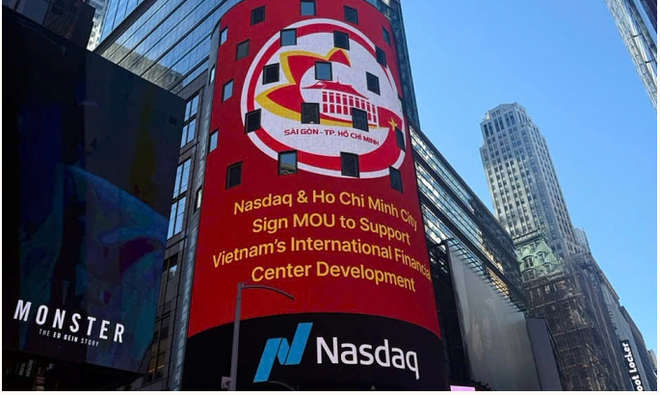
One of the most notable recent developments is the signing of a memorandum of understanding (MoU) between the municipal Department of Finance and the Nasdaq Stock Exchange in New York during a working visit of the Southern metropolis’s delegation to the US in mid-October 2025, led by Chairman of the municipal People’s Committee Nguyen Van Duoc.
Under the agreement, HCM City and Nasdaq will cooperate in five key areas - capacity building and market governance, cross-listing, sharing experience in legal frameworks and operational mechanisms, fintech transfer, and high-quality human resource training.
As the world’s largest electronic stock exchange, where shares of giants like Apple, Microsoft, and Google are listed, Nasdaq sets the global financial benchmark. HCM City’s direct partnership with Nasdaq marks a major step in Vietnam’s financial market integration, boosting technology application, information transparency, and new investment products. It is also one of the few strategic collaborations between a Vietnamese locality and a leading global financial institution, reflecting the city’s proactive and long-term vision.
Alongside technology and market cooperation, HCM City is also placing strong emphasis on human resources — the key foundation for operating a modern financial centre.
In October, the University of Economics HCM City (UEH) signed a strategic partnership with the New York Institute of Finance (NYIF), a globally renowned financial training institution, to jointly implement hands-on international-standard finance training programmes, towards developing a future pool of experts, advisors, and executives for Vietnam’s IFC in HCM City, serving as a core personnel foundation for the centre’s operations.
Notably, the recent upgrade of bilateral relations between Vietnam and the UK to a comprehensive strategic partnership marks a vital milestone, paving the way for deeper cooperation across fields, including speeding up the formation of the IFC.
According to Denzel Eades from the British Chamber of Commerce Vietnam (BritCham Vietnam), this upgrade represents a key development, formalising the Vietnam–UK IFC partnership framework and transforming the collaboration from a strategic intent into a clear execution structure.
The framework clearly defines the UK’s specific role, enabling Vietnam to leverage the extensive expertise of The City of London as a global financial hub and a globally leading centre in green capital market, Eades said, adding that the upgraded relationship also establishes a high-level dialogue channel to accelerate progress and support the completion of legal roadmaps.
Earlier, HCM City’s leaders proactively engaged with domestic and international investors and organised study visits to international financial centres such as Abu Dhabi and Astana to learn from their experiences.
Accelerating key priorities
At a recent conference on socio-economic development, Hoang Vu Thanh, Deputy Director of the city's Department of Finance, stated that the southern hub is actively implementing key initiatives to expedite the operation of the IFC.
Regarding the legal framework, HCM City’s officials have given feedback to all eight draft decrees guiding the establishment of the IFC, joined meetings and discussions with the drafting team and the Ministry of Justice’s appraisal council.
Currently, seven decrees have been appraised, while the decree on residency and immigration policies, led by the Ministry of Public Security, is still under consultation with relevant agencies. In parallel, the municipal authorities are proactively drafting the operational regulations for the IFC, and coordinating with Da Nang to prepare for its operation once the legal framework is finalised.
Regarding staffing and organisation, the Ho Chi Minh City Institute for Development Studies, together with the Department of Home Affairs, have been tasked with advising on personnel plans and the organisational structure of the IFC, while also studying international models.
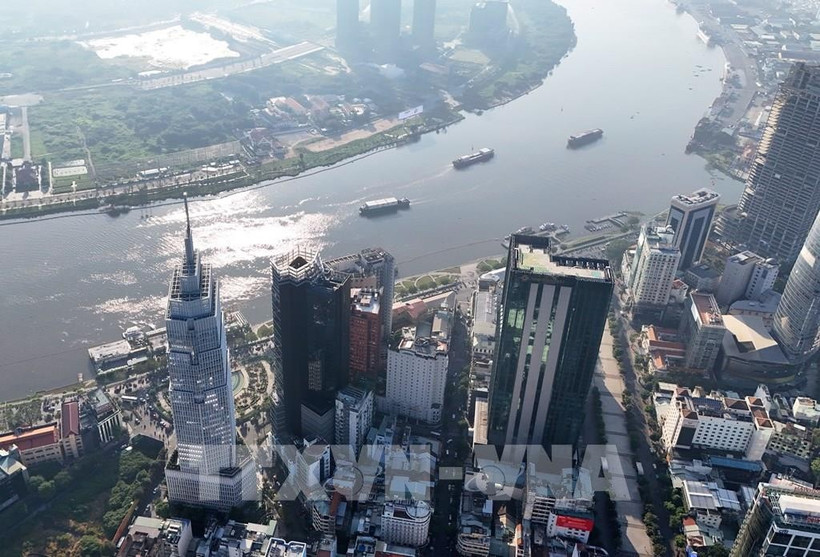
Regarding infrastructure and headquarters, the municipal Department of Finance stated that Vietnam’s IFC is planned to be located in central areas, including Sai Gon and Ben Thanh wards, and the Thu Thiem urban area, covering a total area of 898 ha.
Major telecommunications providers have pledged to invest in high-speed internet networks, ensuring modern digital infrastructure for the centre.
The municipal Department of Science and Technology is developing an electronic information portal for the centre, integrating membership registration and connecting with the IFC in Da Nang to enhance transparency and convenience for investors.
According to Dr. Tran Du Lich, an economic expert, the establishment of IFC in HCM City benefits from multiple favourable factors, particularly following FTSE Russell’s upgrade of the Vietnamese stock market to emerging market status. This opens opportunities to attract large-scale capital from global investment funds.
If effectively implemented, the centre would not only help the southern economic hub mobilise financial resources for strategic infrastructure projects but also elevate its financial stature, bringing it closer to its goal of becoming a global megacity and a hub for innovation and finance in Southeast Asia, Lich said.
Notably, at the 38th edition of the Global Financial Centres Index (GFCI) released in late September 2025, HCM City climbed three places to 95th among 120 global financial centres, surpassing Bangkok of Thailand for the first time. Experts see this as a positive and promising signal in the roadmap to build the IFC in the coming time./.