Hanoi (VNA) – Vietnam’s auto industry is on the brink of a major transformation as excise tax reductions set to take effect in 2026 are expected to significantly cut the cost of hybrid vehicles, driving new investment and propelling rapid market expansion.
Tax incentives set the stage for market acceleration
The sector is approaching a pivotal moment following the National Assembly’s June 14 approval of amendments to the Law on Excise Tax, extending preferential rates to self-charging hybrid electric vehicles (HEVs).
Under the revised framework, effective January 1, 2026, HEVs will benefit from a tax rate equal to 70% of that applied to petrol or diesel vehicles of comparable engine size, a concession previously limited to plug-in hybrids (PHEVs).
The expanded incentive is poised to make hybrid models more accessible to mass-market consumers. Price projections indicate a substantial reduction: excise tax on a sample hybrid model will drop to 157.5 million VND (5,975 USD), with a corresponding decrease in VAT, lowering the final retail price to 723.25 million VND. Consumers stand to save roughly 73.25 million VND, with even greater reductions projected for higher-end models.
Beyond boosting sales, the policy is expected to accelerate the shift toward green transport. With advantages in fuel efficiency and emissions reduction, hybrids are emerging as an optimal transitional solution as Vietnam intensifies efforts to curb pollution, promote sustainability and move toward carbon neutrality. Major automakers such as Toyota and Honda view hybrid technology as an essential stepping stone in the transition from internal combustion engines to full electrification.
Industry ramps up investment as demand expected to boom
Manufacturers are scaling up investment in anticipation of stronger demand from 2026. Toyota and Honda, which boast some of the most diverse hybrid portfolios in the region, have confirmed plans to expand hybrid assembly operations in Vietnam.
Honda Vietnam will begin assembling the CR-V e:HEV at its Phu Tho plant in early 2026, replacing imports from Thailand. The company has positioned its hybrid line-up as central to its electrification strategy, supporting Vietnam’s carbon neutrality targets. Since 2023, Honda has broadened its hybrid offerings with models such as the CR-V e:HEV RS, Civic e:HEV RS and HR-V e:HEV RS, all featuring its advanced e:HEV dual-motor system, which delivers over 30% fuel savings compared with conventional vehicles.
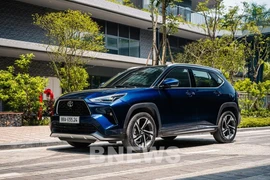
Toyota Motor Vietnam has announced an investment exceeding 360 million USD to upgrade infrastructure and establish hybrid assembly lines at its Phu Tho facility. It currently distributes several hybrid models, including the Corolla Cross Hybrid, Innova Cross Hybrid, Altis Hybrid, Camry Hybrid and Yaris Cross Hybrid, and expects its first domestically assembled hybrid models to debut in 2027. The move aims to boost local production capacity, reduce dependence on imports and enhance competitiveness ahead of an anticipated hybrid surge.
New players are also entering the field. In late October 2025, Omoda & Jaecoo Vietnam, a joint venture between Geleximco and China’s Chery, commenced construction of Vietnam’s first Chinese automobile plant in Hung Yen province. With a total investment of 8.125 trillion VND and a designed capacity of 120,000 vehicles annually, the plant is set to begin operations in 2026, rolling out a variety of next-generation vehicles, including new-energy models, PHEV (Super Hybrid) versions, and fully electric cars.
The joint venture also plans to introduce 16 new SUV models in 2026 across urban, sports and off-road segments, a move expected to intensify competition in the hybrid market.
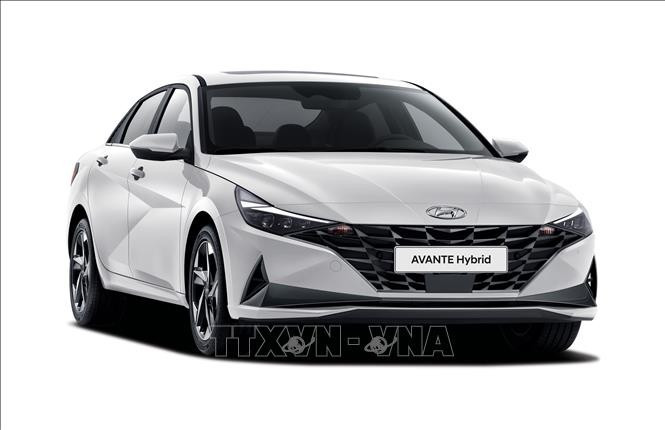
Meanwhile, other global brands, such as Hyundai, Kia, Haval, BYD and Suzuki, continue to import hybrid models, underscoring confidence in Vietnam’s evolving hybrid landscape. With declining ownership costs thanks to tax incentives, combined with fuel efficiencies and advancing technology, hybrids are fast becoming an appealing mid-range choice between petrol-powered and fully electric vehicles.
Experts forecast that 2026-2030 will mark a period of strong growth for hybrid vehicles in Vietnam, a trend that will invigorate the automotive sector while supporting national objectives on emissions reduction, sustainable development and the broader transition to green mobility./.