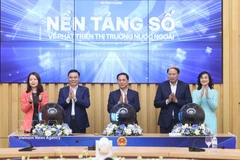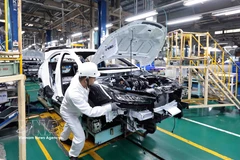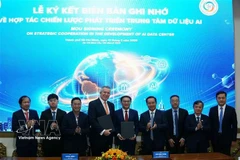
HCM City (VNS/VNA) - As Vietnam plans to increase its total industrial park area to 181,000ha by 2030, experts and enterprises at the IP Forum 2025 in Ho Chi Minh City on December 11 stressed that strong economic diplomacy will be needed to attract high-quality projects.
According to Pham Van Nam, deputy general director of the Vietnam Industrial Zone (VIZ), by the end of 2025, Vietnam will have 478 industrial parks covering 146,000ha.
By 2030, the country plans to expand to 600 industrial parks, adding 35,000ha to reach 181,000ha, and expand industrial clusters from 1,100 to 2,000, with an additional 29,000ha of land.
The deputy general director of the VIZ stressed that raising Vietnam’s profile through economic diplomacy is key to meeting the goal. He outlined four priorities to position Vietnam as a strategic destination in global supply chains.
First, Vietnam should position industrial parks as value-chain hubs where foreign and domestic firms can collaborate, share markets and technology.
Second, he recommended expanding into new development areas by capitalising on administrative mergers; strengthening regional investment branding with consistent policies and infrastructure, and attracting quality foreign direct investment (FDI) links with local manufacturing.
He added that industrial parks should be upgraded along a sustainable development model and integrated with renewable energy, digital infrastructure, and modern logistic links to create attractive living and working environments.
Nam highlighted that Vietnam needs to reinforce the economic dimension of foreign affairs by renewing growth drivers, diversifying markets and expanding trade and investment cooperation. He also underscored the importance of advancing next-generation FTA negotiations, strengthening science-technology diplomacy and accelerating innovation and digital transformation.
He added that deepening ties with major partners and promoting collaboration in science, technology and innovation will be essential to sustaining Vietnam’s long-term competitiveness.
Nguyen Dong Trung, deputy director of the Department of External Relations and Cultural Diplomacy (Ministry of Foreign Affairs), said that effectively implementing Vietnam’s strategy will require diplomacy to play a key role in attracting investment.
Over the coming year, Vietnam will step up ties with priority partners, including China, the US, the Republic of Korea (RoK) and India; deepen relations with important partners such as Bulgaria, Germany, the UK, Portugal and Italy; and expand ties to others such as Egypt, Turkey, Kuwait, and Mexico, Trung added.
Nguyen Quoc Hung, deputy general director of VCN Investment JSC, a company specialising in investment, construction, real estate development, and educational projects, shared that the VCN Dien Khanh-Dien Tho industrial cluster in Khanh Hoa province plans to develop into a green, smart complex that combines industry with a coastal urban ecosystem – a key highlight in the south central region’s strategy for high-value industries.
Priority sectors likely to attract investment include clean manufacturing that is non-polluting and not labour-intensive, such as electronics, precision engineering, pharmaceuticals, food, and interior furnishings.
Trung says growth drivers such as trade, investment, labour and tourism will remain in focus. Investment priorities include resolving stalled projects, attracting higher-quality FDI, and helping domestic firms integrate deeper into global value and supply chains.
Vietnam’s representative agencies in foreign countries will act as bridges for trade and investment promotion, turning diplomatic relationships into economic value for industrial parks. /.

Conversion to green industrial park – a climate-friendly pathway for Southeast region
As developing eco-friendly, new-generation industrial parks helps address climate change and pursue sustainable growth, the Southeast region, the country’s most dynamic economic engine, has jumped on the bandwagon to create a competitive edge in luring high-quality investments.