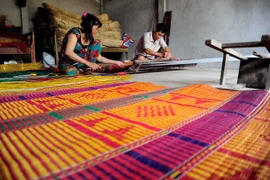
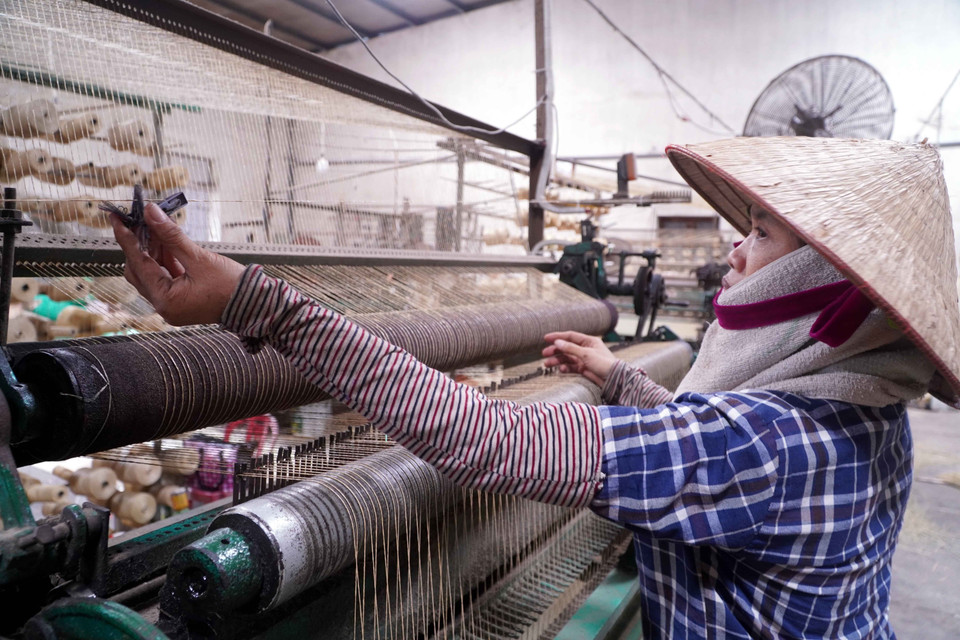
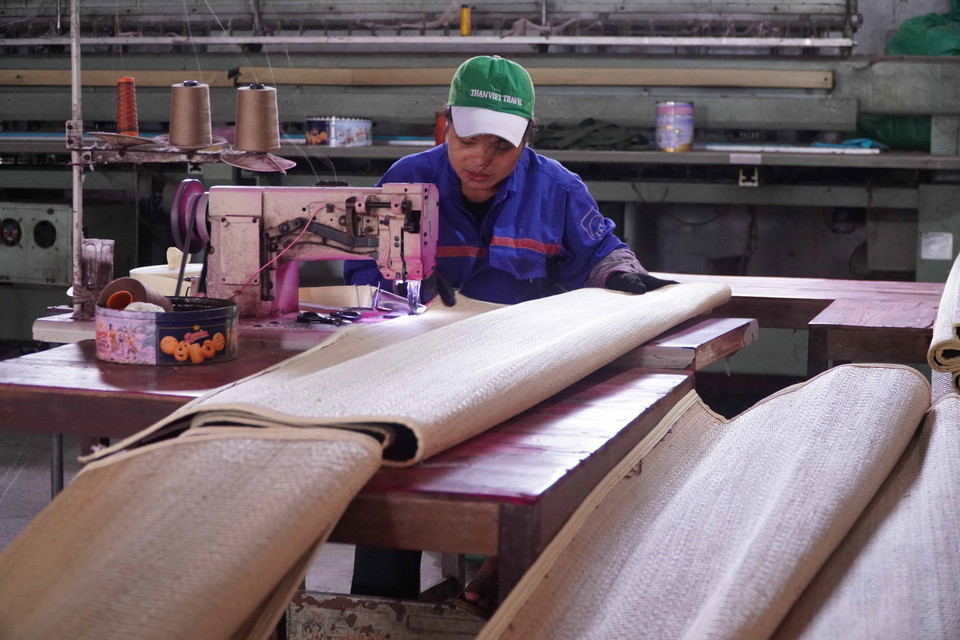
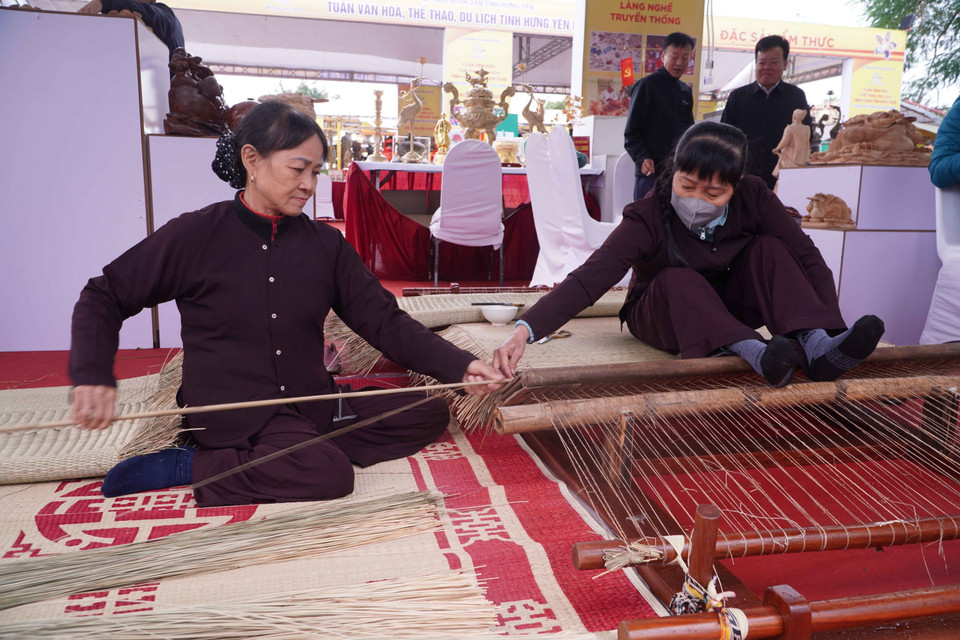
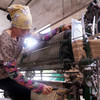

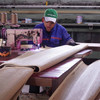

The traditional rush mat weaving has endured over generations and is still being preserved. (Photo: VNA)
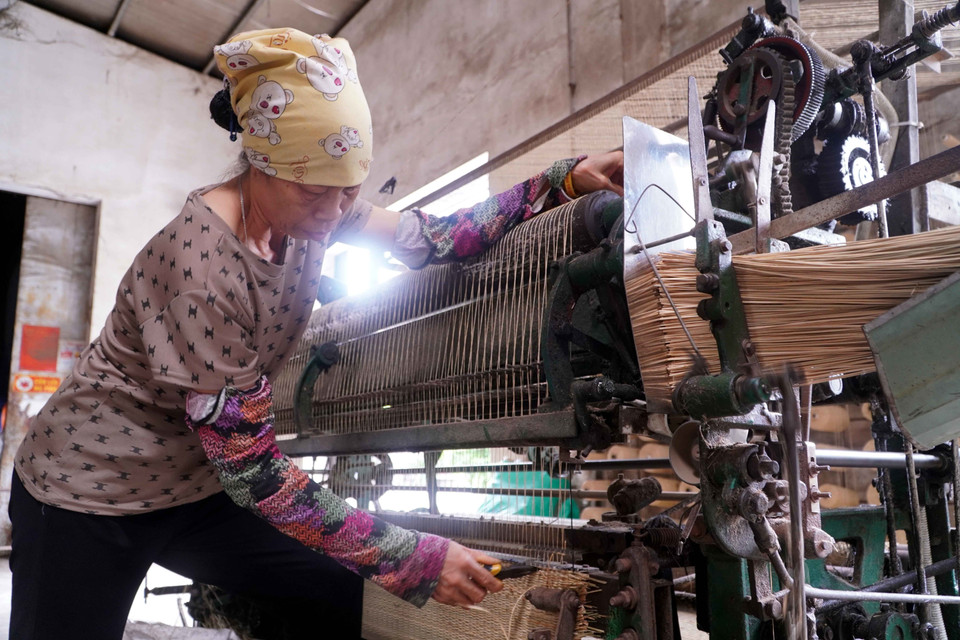
A manual weaver can produce about two mats a day, while a machine operator can weave up to 25. (Photo: VNA)
Machine weaving offers several advantages: thicker and more even mats, and significantly faster edging compared with traditional hand weaving. (Photo: VNA)
Residents of Phu Duc commune (Hung Yen province) demonstrate traditional handweaving at the Hung Yen Culture, Sports and Tourism Week 2025. (Photo: VNA)
0
1
2
3
4

Keeping traditional rush mat weaving alive

The traditional rush mat weaving village in Vu Ha hamlet, Phu Duc commune, Hung Yen province, has a long-standing history. Despite many ups and downs, the craft continues to be maintained and modernised.