Party Central Committee’s Secretariat urges innovating working styles across political system

In the coming time, at least 95% of administrative procedures are to be processed in digital environments, while 100% of official documents and periodic reports must be exchanged online.

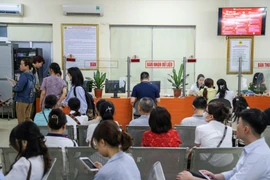
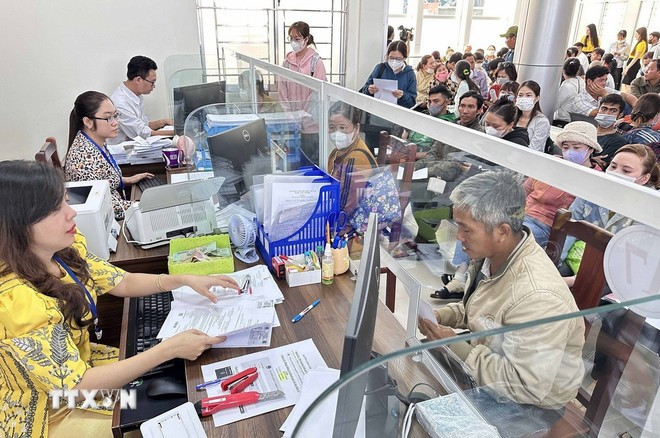
Citizens handle administrative procedures at the Can Tho City Public Administrative Service Centre. (Photo: VNA)

Hanoi (VNA) - The Party Central Committee’s Secretariat has issued a conclusion calling for a fundamental overhaul of working styles across the political system, with digital transformation identified as a key driver to improve efficiency, coordination, and public service delivery.

The conclusion, signed by standing member of the Secretariat Tran Cam Tu, acknowledges that recent efforts to streamline organisational structures have produced positive results, making the political system more compact, effective, and closer to the people. However, it also points out persistent shortcomings, including excessive paperwork, overlapping meetings, weak inter-agency coordination, fragmented reporting mechanisms, and limited application of information technology and digital tools.

To address these issues, the Secretariat requests Party committees, agencies, and local authorities at all levels to accelerate reforms centred on simplification, standardisation, and digitalisation.

A major focus must be placed on reducing administrative documents and meetings through digital means. Agencies are instructed to cut at least 15% of administrative documents annually, avoid duplicative or unnecessary regulations, and ensure all issued documents are concise, practical, and feasible. Meetings are to be reduced by 10% each year, with online conferences accounting for at least 60% of total meetings, thereby saving costs and time while enhancing operational efficiency.

Crucially, the conclusion underscores digital transformation as a strategic solution to modernise governance. Authorities are tasked with investing in and upgrading digital infrastructure, shared data platforms, and secure information systems to ensure seamless connection from the central to grassroots levels. The goal is to standardise data, eliminate duplication, and enable automatic data sharing across agencies.

In the coming time, at least 95% of administrative procedures are to be processed in digital environments, while 100% of official documents and periodic reports must be exchanged online. Public services are to be expanded on digital platforms to better serve citizens and businesses, with satisfaction levels becoming a key metric for evaluating performance.

The Secretariat also calls for capacity building in digital skills, leadership, and management, including the application of artificial intelligence (AI) in professional operations. Reporting systems must be standardised, simplified, and quantifiable, significantly reducing reporting burdens while improving accountability. Heads of agencies are held directly accountable for implementation outcomes, particularly in advancing digital transformation and improving efficiency.

Provincial and municipal Party committees are required to concretise and strictly implement the conclusion, reporting regularly on progress in reducing paperwork, meetings, and advancing digital transformation./.

VNA
See more

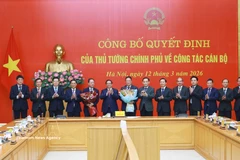
The appointment decision handover ceremony is held in Hanoi on March 12. (Photo: VNA)

PM appoints new leader for Vietnam’s top science academy

PM Pham Minh Chinh asked the VAST to continue to serve as the Party and State’s strategic advisory body on science – technology in key areas such as artificial intelligence, energy, marine economy, water security, and aerospace, alongside building a national sci-tech database.

Do Thanh Hai (right), Deputy Director-General of the East Sea Institute under the Diplomatic Academy of Vietnam, speaks at the dialogue. (Photo: VNA)

Vietnam, India promote maritime security cooperation through blue economy development

Through four rounds of bilateral “Track 1” Maritime Security Dialogue, the two sides have outlined priority areas of cooperation, including marine scientific research, blue economy development, humanitarian assistance and disaster relief, naval and coast guard cooperation, maritime law enforcement, capacity building, and maritime connectivity.

Ha Thi Nga (right), Vice President and General Secretary of the Vietnam Fatherland Front, meets with V.G. Kalganov, Deputy Chairman of the External Relations Committee of Saint Petersburg, in Hanoi on March 12. (Photo: mattran.org.vn)

Vietnam, Saint Petersburg step up people-to-people exchanges

The VFF will continue strengthening bilateral ties and promoting cooperation activities, while seeking closer coordination and support from Saint Petersburg to expand people-to-people exchanges in the coming period, VFF Vice President and General Secretary Ha Thi Nga has said.

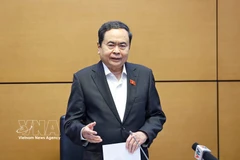
National Assembly (NA) Chairman Tran Thanh Man speaks at the meeting. (Photo: VNA)

Top legislator asked for thorough preparations for NA, People’s Council election

With only three days left before voters head to the polls on March 15, the top legislator described the election as a particularly important political event and a major national occasion that demonstrates the people’s right to exercise their democratic power by directly choosing qualified representatives to the NA and People’s Councils at all levels.

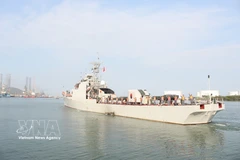
Ship 17 of Brigade 171 under Naval Region 2 of the Vietnam People’s Navy. (Photo: VNA)

Navy ship completes Milan 2026 multinational exercise in India

Over a journey covering more than 5,000 nautical miles, the ship’s officers and crew combined operational participation with extended sea training aimed at enhancing command coordination capabilities, combat readiness, mastery of weapons and technical equipment, and overall physical endurance.

An overview of the 10th session of the 15th National Assembly which opens on October 20, 2025. (Illustrative photo: VNA)

France-based expert suggests elevating parliamentary diplomacy to support national development

Inter-parliamentary cooperation should be closely aligned with the country’s development priorities, including institutional reform, trade and investment, digital transformation, green transition, energy security, high-quality human resources development and the implementation of international commitments, said Le Van Tranh, a Vietnamese doctoral researcher in law at Paris Panthéon-Assas University in France.

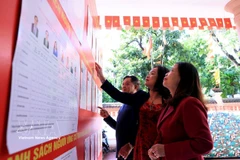
Residents visit polling stations in their wards to review the list of candidates for deputies to the 16th National Assembly and members of People’s Councils at all levels for the 2026–2031 term. (Photo: VNA)

📝OP-ED: Resolutely removing discordant voices ahead of national election day

When March 15 arrives, one will see elderly voters approaching a hundred years old making their way to the polls, young voters casting their ballots with enthusiasm, and multi-generational families going together to fulfil their civic duty. Together, these moments will create a vibrant atmosphere, resembling a national celebration.

Le Thuong, Chairwoman of the Vietnamese Association in the Kansai region, Japan. (Photo: VNA)

OV in Japan place high expectations on NA, People’s Council election

Le Thuong, Chairwoman of the Vietnamese Association in the Kansai region, said overseas Vietnamese are closely following the upcoming election, viewing it as an important opportunity to strengthen the effectiveness of governance and ensure that development policies meet the country’s evolving needs.