Party chief urges stronger, result-oriented implementation of Resolution 57

Turning science, technology, innovation and digital transformation into the main drivers of a new growth model requires substantial efforts. In the coming period, the focus must shift from merely carrying out tasks to delivering tangible and measurable outcomes, while concentrating resources on addressing strategic national challenges, said Party General Secretary To Lam.

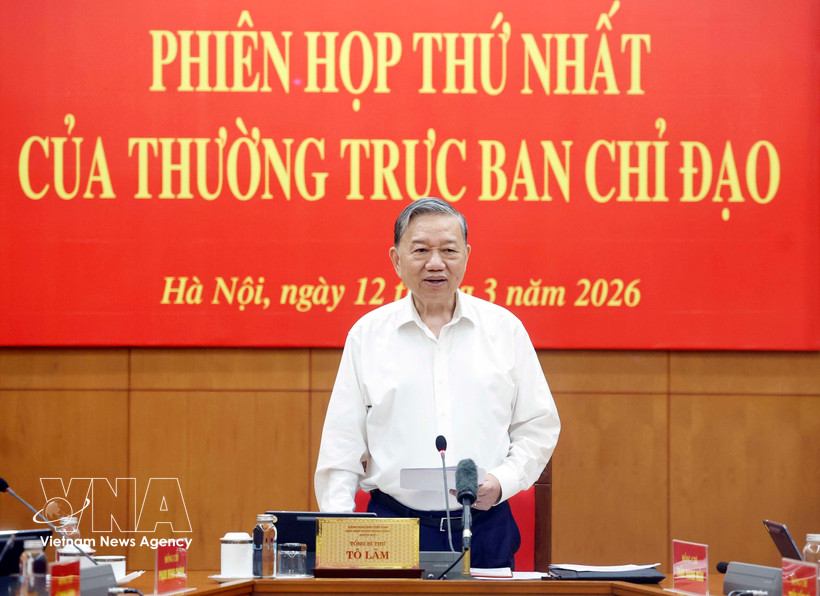
Party General Secretary To Lam speaks at the first meeting in 2026 of the Central Steering Committee for the Development of Science, Technology, Innovation and Digital Transformation on March 12. (Photo: VNA)

Hanoi (VNA) – Party General Secretary To Lam on March 12 urged ministries, sectors and localities to accelerate the implementation of the Politburo's Resolution 57-NQ/TW in a more decisive, systematic and effective manner, ensuring that each task delivers concrete and measurable results.

General Secretary Lam, who heads the Central Steering Committee for the Development of Science, Technology, Innovation and Digital Transformation, made the request while chairing the first meeting in 2026 of the committee’s standing board in Hanoi.

Also attending the meeting were Prime Minister Pham Minh Chinh, National Assembly Chairman Tran Thanh Man, and permanent member of the Party Central Committee’s Secretariat Tran Cam Tu, among others.

After reviewing a report on the implementation of Resolution 57 since the committee’s meeting in last December, participants made assessments of progress, highlighting both achievements and existing obstacles while proposing practical solutions.

The Party chief commended central and local agencies for their efforts and acknowledged the increasingly active participation of technology enterprises, research institutes, universities, and scientists at home and abroad in implementing the resolution’s tasks.

He noted that turning science, technology, innovation and digital transformation into the main drivers of a new growth model requires substantial efforts. In the coming period, the focus must shift from merely carrying out tasks to delivering tangible and measurable outcomes, while concentrating resources on addressing strategic national challenges.

Implementation of Resolution 57, he stressed, must be more decisive and better organised, with each programme addressing key development issues and each sector clearly defining its responsibilities. He said that 2026 has been identified as a year of “breakthrough action and widespread results.”

He also requested that recommendations raised at the meeting be handled with clear responsibility and specific timelines, avoiding situations where proposals remain unresolved.

General Secretary Lam called for stronger efforts to apply scientific and technological achievements directly to production and business activities.

Priority should be given to promoting new technologies such as artificial intelligence, big data, automation and digital platforms across industries and services to enhance productivity, product quality and corporate competitiveness.

At the same time, ministries and localities were urged to review technologies currently used in production and introduce upgrades or replacements to improve efficiency, thereby contributing to the country’s target of achieving double-digit economic growth.
resolution-57.jpg
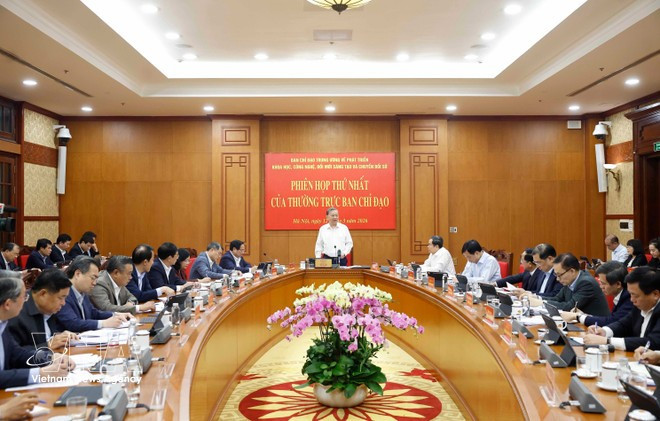
Party General Secretary To Lam chairs the first meeting in 2026 of the Central Steering Committee for the Development of Science, Technology, Innovation and Digital Transformation on March 12. (Photo: VNA)

The Party chief also highlighted the need to continue improving institutions, mechanisms and policies to foster science, technology and innovation. Institutional reforms should not only focus on legislation but also on effective law enforcement, turning institutions into a competitive advantage for national development.

He emphasised the strategic importance of developing core infrastructure and strategic technologies, including national data infrastructure, large databases, shared digital platforms, research and development facilities, and innovation ecosystems.

Strategic technologies, he said, must be linked to market demand and practical needs, creating measurable economic value through research, application, production and commercialisation.

He also underscored the importance of high-quality human resources, particularly in strategic technology fields, while calling for broader digital skills training among the public.

He emphasised that 2026 is the first year of implementing the Resolution of the 14th National Congress and the second year of implementing Resolution 57. There are many things to do, not just about identifying problems, but also about removing bottlenecks, creating concrete, measurable results, and contributing to overall national growth.

He urged leaders of ministries, sectors and localities to take direct responsibility for the progress and effectiveness of assigned tasks, ensuring disciplined implementation and tangible progress from the early months of 2026./.
VNA

See more

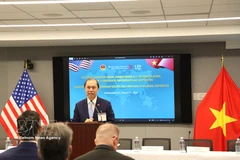
Vietnamese Ambassador to the US Nguyen Quoc Dung addresses the forum. (Photo: VNA)

High-level forum advances Vietnam–US technological cooperation

The ambassador highlighted that Vietnam and the US are highly complementary. Vietnam offers a dynamic economy, a young and increasingly skilled workforce and rapidly growing innovation ecosystem, while the US offers frontier technologies, world class research institutions, capital and leading global companies.

Participants at the first meeting of the National Steering Committee on Semiconductor Industry Development in 2026 (Photo: VNA)

Vietnam becomes vital player in global semiconductor value chain: Deputy PM

Vietnamese companies have also gradually joined the global value chain by improving their capabilities in chip design, production and related services. Notably, a semiconductor chip manufacturing plant project developed by the Viettel Military Industry and Telecoms Group (Viettel) has already commenced.

Young voters in Ho Chi Minh City scan an QR code to participate in an online quiz about the Election Law. (Photo: VNA)

Digital technology helps enhance transparency, trust in elections

The use of technology in this election is not merely a short-term measure but reflects Ho Chi Minh City’s broader commitment to comprehensive digital transformation and smart urban governance, reinforcing public trust in the democratic process and administration.

Information about candidates for the Khanh Hoa provincial People's Council for the 2026-2031 term is published on digital information channels, making it convenient for voters to explore. (Photo: VNA)

Technology breakthrough ensures voters' access, rights

Digital platforms such as the national population database and the VNeID application have been widely applied to streamline election management and improve accuracy in voter registration, helping citizens exercise their civic rights more conveniently.

Mang But commune area in Quang Ngai province. (Photo: VNA)

3.9-magnitude earthquake recorded in Mang But, Quang Ngai

According to the Vietnam Earthquake Information and Tsunami Warning Centre under the Institute of Earth Sciences, the tremor occurred at 11:35:06 (Hanoi time) with coordinates of 14.864 degrees North latitude and 108.210 degrees East longitude, at a depth of about 8.1 km. The event was assessed as having a level-0 disaster risk.

Illustrative photo: AFP

AI Law takes effect, anchors national governance framework

Taken together, the new AI Law and its implementation roadmap not only complete Vietnam’s legal architecture for AI, but also lay a structured foundation for risk management, innovation and ecosystem development, aiming to ensure coherent and effective enforcement in the years ahead.

Viettel Networks and Ericsson sign their cooperation agreement on the sidelines of the Mobile World Congress 2026. (MWC 2026)

Viettel Networks, Ericsson partner to advance autonomous telecom networks

Under a newly signed cooperation agreement, Ericsson will provide network automation platforms and artificial intelligence (AI) technologies while working with Viettel to conduct real-world trials. The collaboration marks a new step forward, combining Viettel’s large-scale network operation expertise with Ericsson’s strengths in automation solutions and advanced technologies.

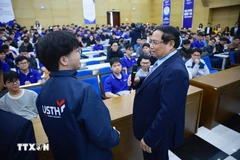
Prime Minister Pham Minh Chinh speaks with students at Hanoi University of Science and Technology (Photo: VNA)

Resolution 57: Developing high-quality sci-tech human resources key to master strategic technologies

After one year of implementing Resolution No. 57-NQ/TW of the Politburo, alongside notable achievements, the Central Steering Committee for science and technology development, innovation, and digital transformation has identified persistent shortcomings and bottlenecks requiring urgent attention - most notably a shortage of high-quality human resources in strategic technology fields.

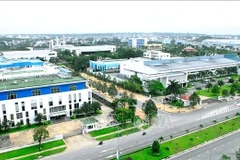
The Saigon Hi-Tech Park (Photo: VNA)

Vietnam advances toward mastering UAV technology

Products are already making their way into the US market, but this is not merely a story of applying new technology in practice, but a gradual process of mastering core details and affirming international capabilities in the UAV industry, one of Vietnam’s strategic high-tech sectors.