Vietnam becomes vital player in global semiconductor value chain: Deputy PM

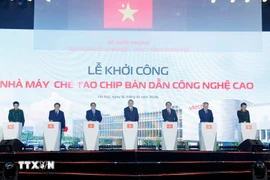
Vietnamese companies have also gradually joined the global value chain by improving their capabilities in chip design, production and related services. Notably, a semiconductor chip manufacturing plant project developed by the Viettel Military Industry and Telecoms Group (Viettel) has already commenced.

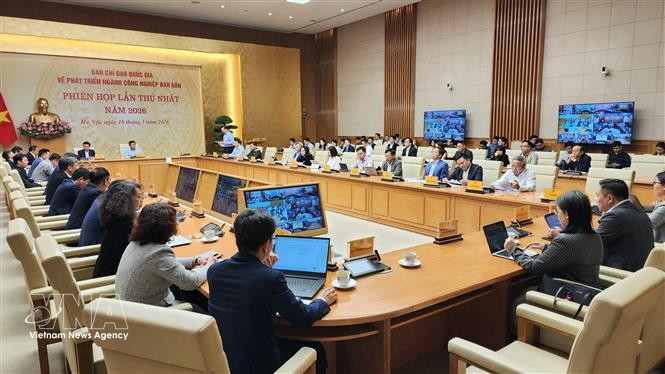
Participants at the first meeting of the National Steering Committee on Semiconductor Industry Development in 2026 (Photo: VNA)

Hanoi (VNA) – Vietnam is emerging as an important link in the global semiconductor value chain, particularly in chip packaging and testing, as the country continues to lay key foundations for developing its semiconductor industry, Deputy Prime Minister Nguyen Chi Dung has stated.

Deputy PM Dung, who is head of the National Steering Committee on Semiconductor Industry Development, made the remark while chairing the committee’s first meeting in 2026 in Hanoi on March 10.

He noted that ministries and sectors have actively implemented tasks under the national strategy for developing semiconductor industry and the programme on developing human resources for the industry, focusing on removing institutional bottlenecks, improving the legal framework and creating favourable conditions to attract investment.
vnanet-6.jpg
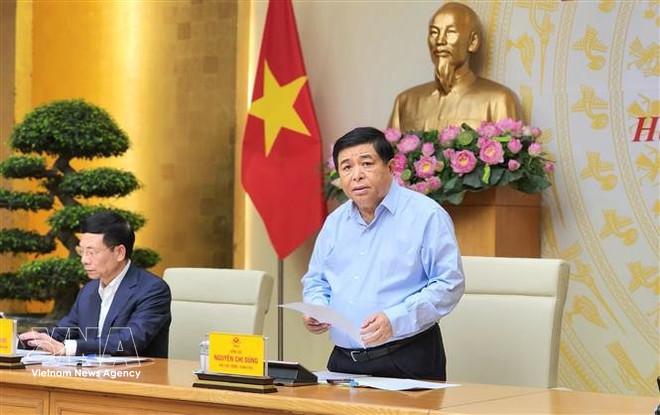
Deputy Prime Minister Nguyen Chi Dung speaks at the first meeting of the National Steering Committee on Semiconductor Industry Development in 2026 (Photo: VNA)

According to the Deputy PM, Vietnam has consistently pursued a balanced approach to developing its semiconductor industry, ensuring harmonious interests and balancing relations with major partners while selectively attracting foreign investment and strengthening the capacity of domestic enterprises.

To date, many global technology giants have invested in and expanded their operations in the country, mainly in semiconductor assembly, packaging and testing.

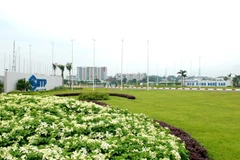
Vietnamese companies have also gradually joined the global value chain by improving their capabilities in chip design, production and related services. Notably, a semiconductor chip manufacturing plant project developed by the Viettel Military Industry and Telecoms Group (Viettel) has already commenced.

However, the Deputy PM pointed out that the industry still faces significant challenges, including shortages of high-quality human resources, limited research and development capacity, infrastructure constraints and the relatively modest participation of domestic enterprises in the global value chain.

At the meeting, members of the Steering Committee reviewed the implementation of assigned tasks and discussed solutions to accelerate the effective and strong development of semiconductor ecosystem in Vietnam.

According to Permanent Deputy Minister of Science and Technology Vu Hai Quan, the national strategy for semiconductor development to 2030 with a vision to 2050 assigns 38 tasks and projects to ministries, sectors and localities. So far, 13 tasks have been completed while the remaining 25 are being implemented on schedule. The tasks are being performed in a coordinated manner with the participation of ministries, sectors, localities, organisations, businesses and research institutions.

Regarding the programme on developing human resources for semiconductor industry to 2030 with a vision to 2050, initial progress has been made. Currently, 166 universities in Vietnam provide training in disciplines related to semiconductor technology. The country now has around 7,000 chip design engineers, more than 6,000 engineers and over 10,000 technicians working in semiconductor packaging, testing and related industries.

Alongside improving the legal framework, the Ministry of Science and Technology is promoting domestic semiconductor production by supporting the implementation of a Vietnamese chip manufacturing plant, the establishment of a national semiconductor manufacturing centre, and chip production activities at companies such as Viettel and FPT. Meanwhile, cooperation with global technology firms such as Samsung, NVIDIA and Qualcomm, as well as investment promotion organisations in Japan, the Republic of Korea and Taiwan (China), has been strengthened.

Minister of Science and Technology Nguyen Manh Hung noted that the ministry will develop a policy communication plan to better promote the development of the industry.

Meanwhile, Deputy Minister of Finance Nguyen Duc Tam said that by March, foreign direct investment in the semiconductor sector had reached nearly 16 billion USD across 228 projects. Investors from the RoK accounted for the largest share at 45.3%, followed by the Netherlands with 25.8% and Singapore with 12%. Ho Chi Minh City leads the country with 53 projects.

In his concluding remarks, Deputy PM Dung said Vietnam is moving in the right direction and has started to establish essential foundations for developing its semiconductor industry.

He stressed the need to further develop a complete semiconductor ecosystem, expand high-quality human resources and boost research and development.

He requested ministries, localities, research institutions and enterprises to strengthen coordination, improve infrastructure and expand international cooperation to enable the country to participate more deeply in the global semiconductor value chain./.

VNA

See more

Young voters in Ho Chi Minh City scan an QR code to participate in an online quiz about the Election Law. (Photo: VNA)

Digital technology helps enhance transparency, trust in elections

The use of technology in this election is not merely a short-term measure but reflects Ho Chi Minh City’s broader commitment to comprehensive digital transformation and smart urban governance, reinforcing public trust in the democratic process and administration.

Information about candidates for the Khanh Hoa provincial People's Council for the 2026-2031 term is published on digital information channels, making it convenient for voters to explore. (Photo: VNA)

Technology breakthrough ensures voters' access, rights

Digital platforms such as the national population database and the VNeID application have been widely applied to streamline election management and improve accuracy in voter registration, helping citizens exercise their civic rights more conveniently.

Mang But commune area in Quang Ngai province. (Photo: VNA)

3.9-magnitude earthquake recorded in Mang But, Quang Ngai

According to the Vietnam Earthquake Information and Tsunami Warning Centre under the Institute of Earth Sciences, the tremor occurred at 11:35:06 (Hanoi time) with coordinates of 14.864 degrees North latitude and 108.210 degrees East longitude, at a depth of about 8.1 km. The event was assessed as having a level-0 disaster risk.

Illustrative photo: AFP

AI Law takes effect, anchors national governance framework

Taken together, the new AI Law and its implementation roadmap not only complete Vietnam’s legal architecture for AI, but also lay a structured foundation for risk management, innovation and ecosystem development, aiming to ensure coherent and effective enforcement in the years ahead.

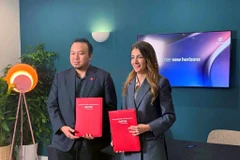
Viettel Networks and Ericsson sign their cooperation agreement on the sidelines of the Mobile World Congress 2026. (MWC 2026)

Viettel Networks, Ericsson partner to advance autonomous telecom networks

Under a newly signed cooperation agreement, Ericsson will provide network automation platforms and artificial intelligence (AI) technologies while working with Viettel to conduct real-world trials. The collaboration marks a new step forward, combining Viettel’s large-scale network operation expertise with Ericsson’s strengths in automation solutions and advanced technologies.

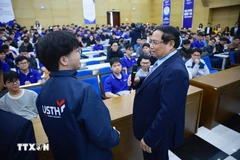
Prime Minister Pham Minh Chinh speaks with students at Hanoi University of Science and Technology (Photo: VNA)

Resolution 57: Developing high-quality sci-tech human resources key to master strategic technologies

After one year of implementing Resolution No. 57-NQ/TW of the Politburo, alongside notable achievements, the Central Steering Committee for science and technology development, innovation, and digital transformation has identified persistent shortcomings and bottlenecks requiring urgent attention - most notably a shortage of high-quality human resources in strategic technology fields.

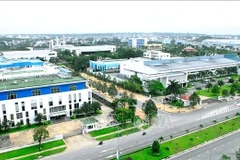
The Saigon Hi-Tech Park (Photo: VNA)

Vietnam advances toward mastering UAV technology

Products are already making their way into the US market, but this is not merely a story of applying new technology in practice, but a gradual process of mastering core details and affirming international capabilities in the UAV industry, one of Vietnam’s strategic high-tech sectors.

Tran Quang Hung, Chairman of the Board of Directors of HIC, presents the company’s operating model at the launch event. (Photo: hanoimoi.vn)

Hanoi’s innovation centre to drive digital transformation, creative industries

HIC is envisioned as a central “brain” connecting data, resources, policies, technology and culture to address urban development challenges, operate the national innovation ecosystem, promote a sustainable digital economy and digital society, improve the quality of life for local residents, and foster creative industries, particularly cultural industries linked to Hanoi’s identity.