OV intellectuals in Europe step up AI cooperation with Vietnam

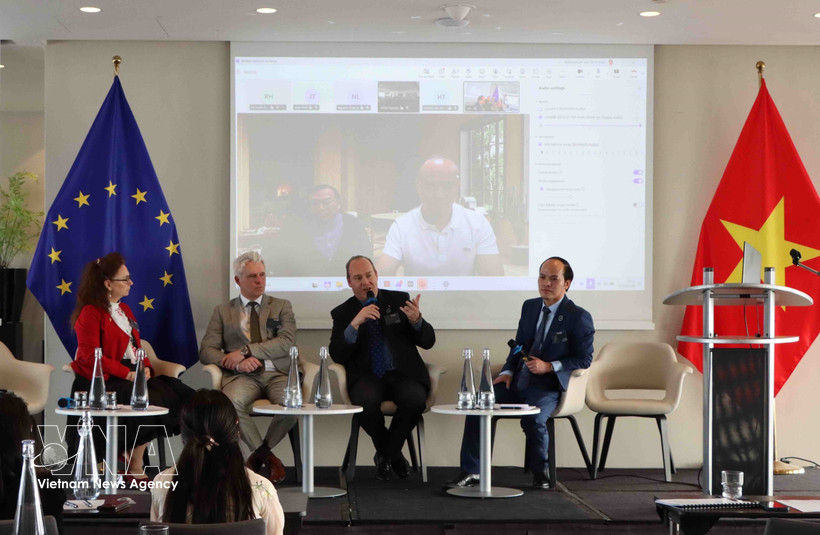
The workshop featured four in-depth discussion sessions with nearly 20 speakers from Vietnam and Europe, covering AI applications in digital transformation, economic development, trade, energy, nuclear medicine and biotechnology.

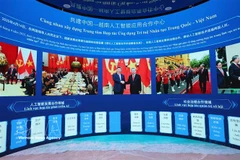
Speakers at an in-depth discussion session (Photo: VNA)

Brussels (VNA) - More than 100 scientists, experts and representatives from Vietnamese businesses operating in Belgium and other European countries on March 7 gathered at a workshop on Vietnam–European Union (EU) cooperation in science, technology and trade, focusing on artificial intelligence (AI) applications in many sectors.

Co-organised by the Embassy of Vietnam in Belgium and Luxembourg and the Vietnamese Mission to the EU, in coordination with the Vietnamese Intellectuals Association in Belgium and Luxembourg (ViLaB) and the Vietnam Business Association in Belgium, the Netherlands, Luxembourg (VBAB), the workshop was seen as an important forum connecting Vietnamese intellectuals across Europe to foster cooperation in high-tech sectors, particularly AI.

It featured four in-depth discussion sessions with nearly 20 speakers from Vietnam and Europe, covering AI applications in digital transformation, economic development, trade, energy, nuclear medicine and biotechnology.

In his opening remarks, Vietnamese Ambassador to Belgium Nguyen Van Thao highlighted the flourishing development of the Vietnam – EU relations, as well as the bilateral ties between Vietnam with Belgium and Luxembourg, especially in the fields of trade, investment, climate change adaptation and green development.

He noted that under the joint statement on the Vietnam–EU Comprehensive Strategic Partnership signed in January, science, technology and innovation have been identified as important pillars of cooperation for the coming period.

According to ViLaB President Phung Quoc Tri, as innovation and digital transformation are becoming major drivers of economic growth worldwide, the workshop aimed to foster connections between scientists, businesses and research organisations from Vietnam and the EU, paving the way for future collaborative projects.

VBAB President Nguyen Thanh Vinh said the event marked the first large-scale AI workshop in Europe organised by Vietnamese associations. He noted that many businesses, especially small- and medium-sized enterprises, are keen to adopt AI but lack clear strategies, therefore engagement with experts and researchers could help them identify suitable solutions.

Meanwhile, Dr Nguyen Duy Cu, Vice President of ViLaB, emphasised that stronger international cooperation is essential to improving scientific and technological capacity as AI becomes a major force driving global innovation.

According to the expert, Europe has strong foundations in technology, education and scientific research, while Vietnam benefits from a young, dynamic workforce capable of rapidly adopting new technological trends. Connecting these complementary strengths could significantly boost scientific and technological development.

Speakers also shared technological advances and experiences in research cooperation between Vietnam and Europe.

Prof. Geert Angenon from Vrije Universiteit Brussel (VUB) noted that collaboration with Vietnamese partners in biotechnology could pave the way for a range of cooperative programmes between universities and research institutes.

Participants also discussed practical technology applications, including the use of robotics in dairy farming and biotechnology solutions for soil remediation and clean agriculture.

Beyond academic exchanges, the event underscored the increasingly important role of Vietnamese intellectuals in Europe in connecting knowledge, technology and international resources for Vietnam’s development.

Such initiatives are expected to help make science and technology, especially AI - a key bridge for deepening Vietnam–EU relations in the future./.
VNA

See more

Mang But commune area in Quang Ngai province. (Photo: VNA)

3.9-magnitude earthquake recorded in Mang But, Quang Ngai

According to the Vietnam Earthquake Information and Tsunami Warning Centre under the Institute of Earth Sciences, the tremor occurred at 11:35:06 (Hanoi time) with coordinates of 14.864 degrees North latitude and 108.210 degrees East longitude, at a depth of about 8.1 km. The event was assessed as having a level-0 disaster risk.

Illustrative photo: AFP

AI Law takes effect, anchors national governance framework

Taken together, the new AI Law and its implementation roadmap not only complete Vietnam’s legal architecture for AI, but also lay a structured foundation for risk management, innovation and ecosystem development, aiming to ensure coherent and effective enforcement in the years ahead.

Viettel Networks and Ericsson sign their cooperation agreement on the sidelines of the Mobile World Congress 2026. (MWC 2026)

Viettel Networks, Ericsson partner to advance autonomous telecom networks

Under a newly signed cooperation agreement, Ericsson will provide network automation platforms and artificial intelligence (AI) technologies while working with Viettel to conduct real-world trials. The collaboration marks a new step forward, combining Viettel’s large-scale network operation expertise with Ericsson’s strengths in automation solutions and advanced technologies.

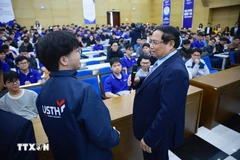
Prime Minister Pham Minh Chinh speaks with students at Hanoi University of Science and Technology (Photo: VNA)

Resolution 57: Developing high-quality sci-tech human resources key to master strategic technologies

After one year of implementing Resolution No. 57-NQ/TW of the Politburo, alongside notable achievements, the Central Steering Committee for science and technology development, innovation, and digital transformation has identified persistent shortcomings and bottlenecks requiring urgent attention - most notably a shortage of high-quality human resources in strategic technology fields.

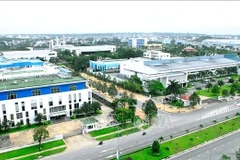
The Saigon Hi-Tech Park (Photo: VNA)

Vietnam advances toward mastering UAV technology

Products are already making their way into the US market, but this is not merely a story of applying new technology in practice, but a gradual process of mastering core details and affirming international capabilities in the UAV industry, one of Vietnam’s strategic high-tech sectors.

Tran Quang Hung, Chairman of the Board of Directors of HIC, presents the company’s operating model at the launch event. (Photo: hanoimoi.vn)

Hanoi’s innovation centre to drive digital transformation, creative industries

HIC is envisioned as a central “brain” connecting data, resources, policies, technology and culture to address urban development challenges, operate the national innovation ecosystem, promote a sustainable digital economy and digital society, improve the quality of life for local residents, and foster creative industries, particularly cultural industries linked to Hanoi’s identity.

Participants pose for a group photo at the International Conference on Advanced Microscopy for Life Sciences and Materials held in Gia Lai on February 25. (Photo: ICISE)

International conference spotlights advanced microscopy in life sciences, materials

The microscopy user community in Vietnam remains fragmented, lacking a common platform for sharing technical expertise, research experience and collaboration opportunities. This limited connectivity has, to some extent, curtailed the full potential of microscopy technologies in advancing scientific progress and industrial applications at home and abroad.