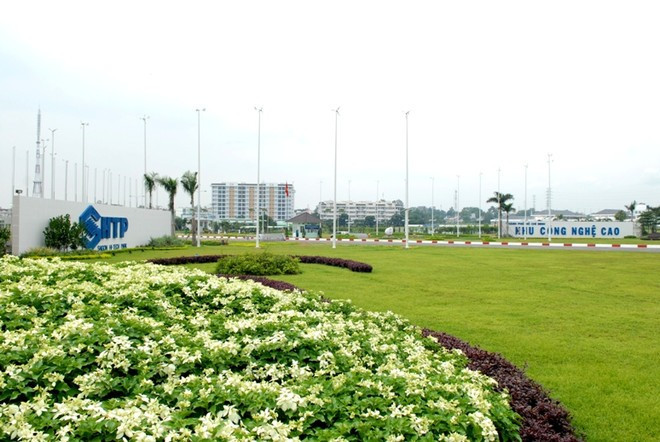
Ho Chi Minh City (VNA) – Located in Ho Chi Minh City, the Saigon High-Tech Park (SHTP) aims to become an international centre for science, technology and innovation by 2030, contributing to a green and sustainable economic transition while serving as the core of innovation clusters in southern Vietnam.
In 2025, SHTP continued to assert its position as a key driver of the city’s high-tech industry, with an estimated production value reaching about 23 billion USD.
Destination for core technology projects
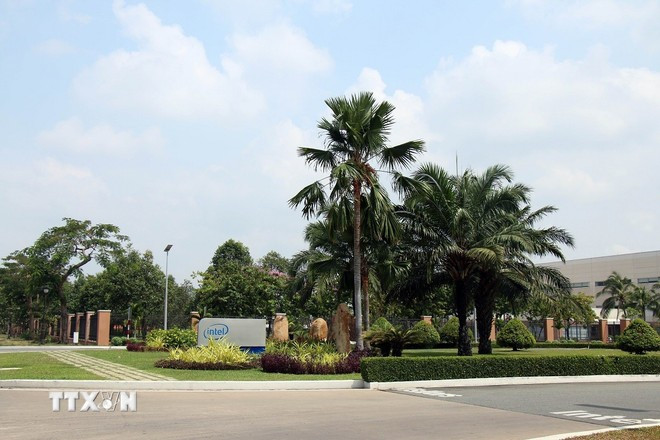
Tse Kenneth, Vice President and General Manager of Intel Products Vietnam, said by the end of 2025, Intel’s cumulative export value had exceeded 100 billion USD, with more than four billion product units shipped globally. Over nearly 20 years of operation in Vietnam, Intel has invested more than 1.5 billion USD and created nearly 6,000 jobs, including about 2,000 employees currently working at its manufacturing facility.
He noted that many Vietnamese professionals now hold key leadership positions within Intel in Vietnam and across the region, demonstrating the quality and competitiveness of the local workforce.
Alongside deploying advanced technologies and developing breakthrough products, Intel is committed to sustainable investment in human and the environment through energy-saving initiatives, carbon emission reduction and corporate social responsibility programmes.
In 2026, Intel is coordinating with the Vietnamese Government and SHTP to roll out two major initiatives: “AI for Leaders” that aims at enhancing the capacity of local officials, and “AI for the Future Workforce” that targets university students, Kenneth added.
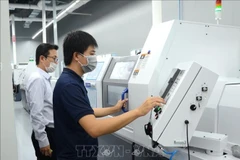
SHTP currently plays a leading role in shaping Vietnam’s semiconductor ecosystem, hosting nearly 70 enterprises in microelectronics and information technology, alongside almost 30 biotechnology investment projects. The park has attracted global technology giants such as Intel, Samsung and Sanofi.
Notably, the park has managed to master two core technologies: nanotechnology applied in biomedical and energy fields, and MEMS chip design and fabrication for environmental monitoring and industrial applications. It has also developed an incubation model linking the State, academic institutions and enterprises, with a strong focus on supporting projects through the incubation and commercialisation stages.
Working towards international research standards
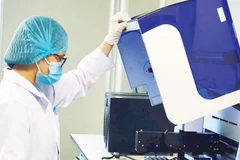
The SHTP Research and Development Centre (SHTP Labs) serves as a hub of innovation, equipped with state-of-the-art facilities for the design and packaging of miniature electronic components. Boasting a team of highly capable researchers, the centre has secured 18 patents, transformed over 20 scientific ideas into real-world products, and shared its discoveries in more than 120 scientific papers both in Vietnam and abroad.
With its sights set high, SHTP Labs aims to become a world-class research centre within the next five years.
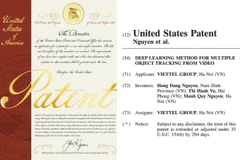
With more than 160 active projects, SHTP’s cumulative high-tech production value has surpassed 176 billion USD. The park currently holds nine international patents, nearly 60 national patents and 155 industrial property titles, providing a solid foundation for its ambition to become an international science, technology and innovation hub by 2030 and a highly interactive innovation nucleus of the southern key economic region.
Prof. Dr Nguyen Ky Phung, head of the SHTP management board, said that for 2045, SHTP is envisioned as an international-standard science and technology park and the core of a highly interactive creative urban area to support sustainable development in Ho Chi Minh City and the whole southern region. This long-term vision is built on six breakthrough pillars: application and technology transfer, infrastructure development, human resources, science and innovation, international cooperation, and digital governance./.