Hanoi (VNA) – With traditional growth engines nearing their limits, Vietnam is being compelled to pivot towards a development model powered by science – technology, innovation and digital transformation, an essential shift to sustain fast and sustainable growth in the new era.
Minister of Science and Technology Nguyen Manh Hung said these three central drivers will underpin the country’s new growth model, providing the momentum for Vietnam to make breakthroughs and move towards the high-income and developed-nation status.
Growth anchored in knowledge and technology
Politburo Resolution No. 57-NQ/TW on breakthroughs in science – technology development, innovation and national digital transformation, together with related policies and legal frameworks, makes clear that as Vietnam advances to a higher stage of development, these factors will become the decisive drivers of economic growth.
At the core of the new model is the ability to generate knowledge and turn it into economic value.
Hung said science and technology create new knowledge and tools; innovation translates that knowledge into products and services; and digital transformation accelerates diffusion across society, unlocking growth and added value. This marks a fundamental shift as science and technology move from a supporting role to becoming a cornerstone of the economy, shaping productivity, efficiency and national competitiveness.
Crucially, science and technology are creating new growth engines through the rise of emerging industries and strategic technologies, including artificial intelligence, semiconductors, blockchain, the Internet of Things and other advanced digital fields.
The minister noted that growth is no longer driven mainly by expanding production scale, but by the ability to innovate, master and apply technology. Rapid progress can come from turning challenges into markets and business opportunities, rather than treating them as constraints, highlighting how science and technology not only boost production efficiency but also open up fresh growth space for the economy.
Real momentum for the economy
Emerging and strategic technologies are now delivering tangible growth momentum for Vietnam, improving not just revenue size but also growth quality, competitiveness and the country’s standing in global value chains.
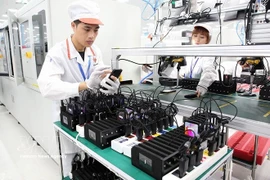
The digital technology sector has become the leading growth pillar. In 2025, industry revenue reached about 198 billion USD, up 26% year-on-year, contributing roughly 1.075 quadrillion VND (nearly 40.9 billion USD) to GDP, a 10% increase from 2024. Hardware and electronics exports climbed to 178 billion USD, up 35%, remaining a major foreign currency earner.
These figures show that digital technology is no longer a supporting field but has become a key production and export sector. This structural shift reflects Vietnam’s transition from a growth model based on low-cost labour and assembly – processing to one driven by knowledge, technology and higher value added.
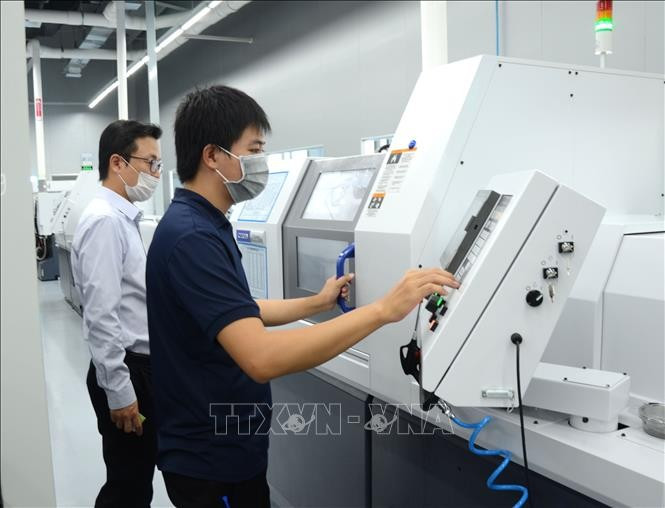
The semiconductor and electronics industry is another strategic area generating clear impact. Deeper integration into global semiconductor value chains, alongside the presence of major multinational corporations and international partners, has strengthened Vietnam’s industrial capabilities.
The Government aims to train 50,000 semiconductor engineers by 2030 and build a domestic ecosystem for chip research, design and manufacturing. In early 2026, the first domestically developed chip manufacturing plant using a 32nm process broke ground at the Hoa Lac Hi-Tech Park, with pilot production slated for 2028.
Greater participation in the semiconductor sector is helping Vietnam move beyond assembly into design and technology development, raising value added and creating a fresh growth impetus.
Artificial intelligence is also emerging as a strategic field with strong potential to deliver productivity gains and growth breakthroughs. Vietnamese technology firms are scaling up investment in AI infrastructure. Among them, FPT has carried out an AI centre project worth some 174 million USD and a scheme to build an AI plant valued at 200 million USD to develop AI applications, data centres and high-quality human resources.
The rapid rise in the number of technology enterprises signals the strong formation of an innovation ecosystem. This not only supports short-term growth but also lays the foundation for long-term and sustainable development through innovation and home-grown technological capabilities.
Overall, strategic sectors such as digital technology, semiconductors and AI are contributing directly to GDP growth, exports and revenues while generating broad spillover effects across the economy. Their expansion reflects Vietnam’s gradual shift from a resource- and labour-driven model to one based on knowledge, technology and innovation, essential for sustaining high growth, improving growth quality and deepening integration into global technology value chains.
Spreading gains through digital transformation
In the new growth model, digital transformation plays a pivotal role in spreading the benefits of science and technology. It involves creating digital representations of the physical world to enhance efficiency and generate new values.
Innovation acts as the bridge between research and the market, enabling research outcomes to be translated into practical applications, products, services and new business models. Growth in the new phase hinges not only on research capacity, but also on the ability to deploy technology in practice and scale it across society.
Minister Hung stressed that for science and technology to become a genuine growth driver, institutional perfection is critical, shifting from input-based to output-based management, and from allocating research funding to commissioning and purchasing concrete research outcomes. This ensures closer alignment with real-world needs and more efficient use of resources.
Resolution 57 identifies science – technology, innovation and digital transformation as a top-priority breakthrough to strengthen national autonomy across all sectors.
Its core spirit lies in granting greater autonomy in scientific research, accepting risk and encouraging creativity, thereby unleashing innovation potential throughout society. Advancing these pillars is decisive for the new growth model, opening up new growth space while improving growth quality, raising labour productivity and strengthening national competitiveness in pursuit of fast and sustainable development in the years ahead, according to the official./.