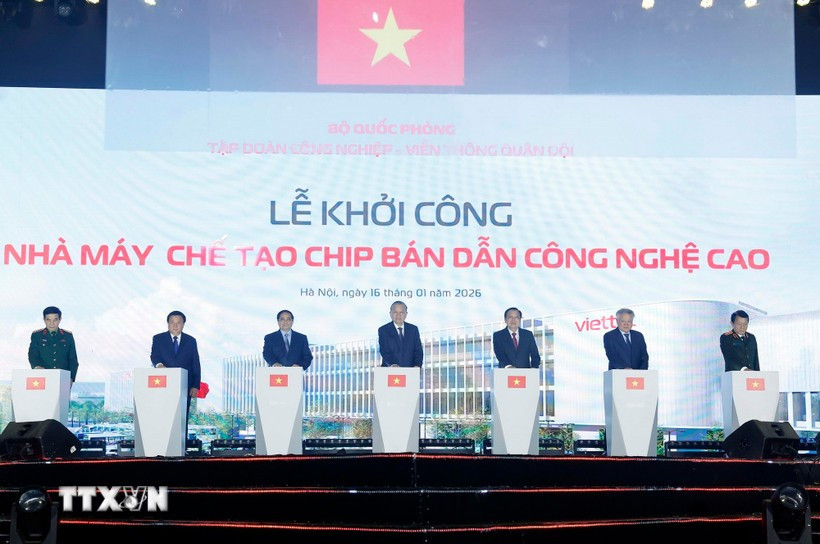
Hanoi (VNA) – Although still at an early stage of development, Vietnam’s semiconductor industry has recorded notable progress thanks to the concerted engagement of the entire political system, driven by strategic policies on science, technology, innovation and digital transformation.
Thanks to a favourable policy framework, a series of large-scale investment projects, alongside expanded human resource training, is gradually shaping a national semiconductor ecosystem.
Policy-driven advantages
The Politburo's Resolution No. 57-NQ/TW on breakthroughs in the development of science, technology, innovation and national digital transformation; The Prime Minister’s Decision No. 1131/QD-TTg on strategic technologies; and Decision No. 1018/QD-TTg approving the national strategy for semiconductor industry development – which targets the establishment of 10 advanced testing and packaging plants by 2030 – have brought fresh momentum to Vietnam’s semiconductor sector.
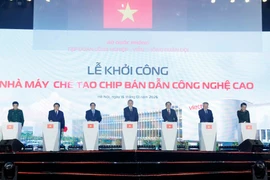
In recent years, Vietnam has attracted major investment projects from leading global technology corporations such as Intel, Samsung, Amkor and Hana Micron, alongside growing participation from domestic enterprises including Viettel, FPT and VNChip. On January 16, the Viettel Military Industry and Telecoms Group (Viettel) broke ground on Vietnam’s first semiconductor chip manufacturing plant based on the 32nm process at the Hoa Lac Hi-Tech Park, with trial production expected to begin in 2028. Earlier, on January 28, FPT announced the establishment of an advanced semiconductor chip testing and packaging plant – the first of its kind in Vietnam fully mastered by Vietnamese engineers.
According to Deputy Minister of Science and Technology Bui Hoang Phuong, Vietnam possesses significant advantages in capturing global supply chain shifts, including its strategic geopolitical position in Southeast Asia, high economic openness, an extensive network of free trade agreements, and a large electronics manufacturing base with hardware exports exceeding 132 billion USD in 2024. The country also benefits from a young and abundant workforce, with around 1.9 million people employed in the technology sector and more than 7,000 chip design engineers.
Documents prepared for the 14th National Party Congress identify science, technology, innovation and digital transformation as key drivers of rapid and sustainable development. In this context, developing and mastering strategic technologies such as semiconductors is regarded as a critical pillar for enhancing national autonomy, competitiveness and Vietnam’s position in global value chains. Phuong stressed that strong and consistent political determination from the highest leaders remains Vietnam’s greatest advantage in advancing this field.
Human resources for “semiconductor race”
Human resources are seen as a decisive factor in semiconductor development. The Government has approved the programme on developing human resources for the semiconductor industry to 2030, which aims to train at least 50,000 university-level and higher personnel. Of these, around 15,000 will specialise in chip design, while 35,000 will serve manufacturing, packaging and testing. The programme also targets the training of an additional 5,000 artificial intelligence experts and the upskilling of 1,300 university lecturers and researchers.
According to the Ministry of Education and Training, around 35 higher education institutions are currently involved in semiconductor-related training, a figure expected to rise significantly over the next two to three years. Major universities such as Vietnam National University, Ho Chi Minh City; Hanoi University of Science and Technology; Vietnam National University, Hanoi; and the University of Da Nang, along with a number of public and private universities, have opened new programmes and specialisations in semiconductor technologies.
To support training and research conditions, the Ministry of Science and Technology recently issued Circular No. 30/2025, allowing enterprises to import used machinery and equipment for semiconductor production with a maximum age of 20 years, double the previous limit.
Meanwhile, educational and research institutions are not subject to age restrictions on imported equipment. However, all equipment must meet strict criteria on technology standards, environmental protection, occupational safety and energy efficiency. For production lines, efficiency must reach at least 85% of the original design capacity, in order to avoid importing obsolete, inefficient or energy-intensive systems.
According to regulatory authorities, this approach is intended to help enterprises and training institutions access technologies suited to their investment capacity while ensuring technical standards essential for the industry's development.
With an increasingly complete policy framework, expanding investment inflows and a structured human resource development strategy, the semiconductor industry is expected to become a strategic technological pillar of Vietnam in the coming period.
Nevertheless, experts held that to realise the goal of deeper integration into global value chains, ensuring training quality, mastering core technologies and building a coherent ecosystem linking enterprises, educational institutions and regulatory agencies remain key challenges for Vietnam’s semiconductor industry./.
See more
Outstanding achievements/events in science, technology, innovation, digital transformation announced
The selected achievements and events reflect the increasingly important role of science, technology, innovation and digital transformation in improving institutions, promoting socio-economic development, ensuring national defence and security, and enhancing Vietnam’s position amid deep international integration.
Resolution No 57: Vietnam begins operating first state-of-the-art supercomputer
The platform represents the world’s most advanced high-performance computing infrastructure, designed to support research and development of next-generation artificial intelligence (AI) models.
Digital economy helps power breakthrough growth
The application of digital technologies, big data, artificial intelligence, e-commerce and digital platforms is creating new opportunities for businesses and citizens across production, business activities and social governance. Sectors such as e-commerce, digital finance, smart logistics and digital platform-based services are generating significant added value, while online public services, cashless payments, digital education and digital healthcare are increasingly improving quality of life and the transparency and efficiency of state management.
Resolution No. 57: Vietnam moves to create favourable legal framework for technology transfer
The Ministry of Science and Technology has sought feedback on a draft decree amending the Government's Decree No. 76/2018/ND-CP, aiming to strengthen the legal framework for technology appraisal and transfer, improve support policies for participating entities, and enhance risk management to ensure sustainable development, environmental protection and public health.
Glorious Spring Fair 2026: technology underpins product quality
With the Politburo's rollout of Resolution No. 57-NQ/TW on breakthroughs in science, technology, innovation, and national digital transformation, along with Resolution No. 68-NQ/TW on developing the private economic sector, a key focus is on applying scientific and technological advances to produce essential consumer goods.
Hanoi rolls out technology exchange, digital transformation marketplace
The technology exchange and digital transformation marketplace are not meant to showcase technologies, but to ensure that technology delivers real economic value, with effectiveness and scalability as the key criteria.
International scientists discuss biotechnology for sustainable development in Gia Lai
A key highlight was the official announcement of the establishment of the AFOB liaison office in Vietnam, based at the International Centre for Interdisciplinary Science and Education (ICISE) in Gia Lai’s Quy Nhon Nam.
Resolution No. 57: Vietnamese intellectuals in France contribute to sci-tech development at home
Discussions at the event underscored support from Vietnamese intellectuals in France to the Party and State’s strategic vision, particularly the view that science – technology, innovation and digital transformation are key breakthroughs and primary drivers of fast and sustainable growth.
PM orders tougher IP enforcement under new decree
The move aims to promptly combat, curb, and minimise IP violations; safeguard the legitimate rights and interests of citizens and businesses; build a transparent and healthy business environment; spread the nation’s image and prestige to advance rapid and sustainable development.
Vietnamese intellectuals in France join hands to advance science, technology at home
Held amid the nationwide efforts to implement the Resolution of the 14th National Party Congress and the Politburo’s Resolution No. 57-NQ/TW on breakthroughs in science, technology, innovation, and national digital transformation, the seminar served not only as an academic forum but also as a platform reflecting the sense of responsibility, intellectual engagement and aspiration to contribute among overseas Vietnamese intellectuals in the nation’s new development era.
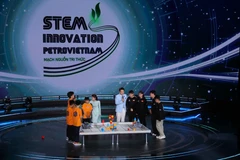
STEM Innovation Petrovietnam helps cultivate knowledge in technological era
The programme connected three sites in Hanoi, Nguyen Hue High School in Lao Cai, and Chau Thanh High School in Ho Chi Minh City, bringing together educators, students, representatives of businesses, and industry–energy engineers, and those directly supporting schools in implementing STEM (science, technology, engineering, and mathematics) education in practice.
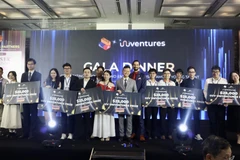
Top 10 university start-ups in Vietnam secure innovation backing
The selected projects share a strong technology-driven orientation, particularly in artificial intelligence (AI), digital solutions and advanced materials. Their innovations address large-scale, real-world issues across sectors including healthcare, education, legal services, agriculture, energy, environmental protection and public governance.
Breakthroughs under Resolution No. 57 affirm leadership in digital era
After one year of implementing the Politburo’s Resolution No. 57-NQ/TW on breakthroughs in science, technology, innovation, and national digital transformation, numerous digital models and knowledge-based initiatives have been rolled out, bringing digital transformation to communities and contributing to the fulfilment of socio-economic development targets.
Resolution 57: Vinh Long makes clear shift in green agriculture development
Resolution 57-NQ/TW has opened up new space and momentum for Vinh Long’s agriculture to transform towards modernity, sustainability and climate resilience.
VinFuture opens call for excellent scientific breakthroughs for 6th season
The evaluation process is scheduled to be completed by September 2026, with the 6th VinFuture Prize Award Ceremony slated for early December 2026. Nominations submitted after April 17, 2026, will automatically be considered for the 2027 season.
Science - technology paves way for “second wave of Doi moi”: expert
Assoc. Prof. Dr. Tran Le Hung, lecturer at the ESIEE Paris - an engineering school of University Gustave Eiffel, said future “Make in Vietnam” science and technology products will not only directly serve domestic demands, improve the people’s livelihoods, and boost labour productivity, but also have the potential to compete in international markets.
High-quality training key to Vietnam’s technological self-reliance: VietNuc
Training must undergo a fundamental overhaul, with quality as the core focus. Curricula should be updated to international standards and developed in a comprehensive manner, said members of the executive board of the network of overseas Vietnamese nuclear energy experts (VietNuc)
Vietnam promotes On-chain financial infrastructure cooperation at Davos 2026
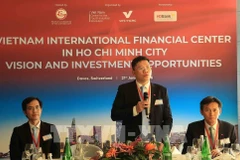
Jointly organised by the municipal People’s Committee, the Centre for the Fourth Industrial Revolution (C4IR) in the city (HCMC C4IR) and the Vietnam International Financial Centre in Ho Chi Minh City (VIFC-HCMC), the event was part of a series of activities showcasing the vision for building VIFC-HCMC, while expanding cooperation with global partners in finance, technology and innovation.
Trio of core drivers of new growth model highlighted at 14th National Party Congress
Member of the Party Central Committee and Minister of Science and Technology Nguyen Manh Hung emphasised that in moving from middle-income to high-income status, Vietnam must rely on science and technology, innovation, and digital transformation. These three drivers have been expanded and redefined by the Party under a new approach, creating broader development space and unlocking new resources for growth. With this trio, Vietnam has the potential to achieve double-digit growth.
AI strategy seen as engine for innovation-driven growth in Vietnam: scholar
Vietnam is standing at a historic moment to achieve a meaningful breakthrough based on science, technology and innovation.