Resolution No. 57: Vietnam moves to create favourable legal framework for technology transfer

The Ministry of Science and Technology has sought feedback on a draft decree amending the Government's Decree No. 76/2018/ND-CP, aiming to strengthen the legal framework for technology appraisal and transfer, improve support policies for participating entities, and enhance risk management to ensure sustainable development, environmental protection and public health.

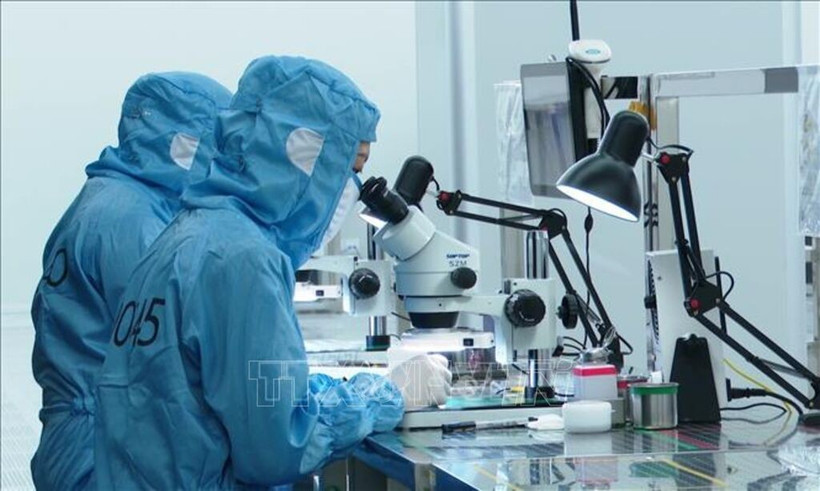
Camera manufacturing at Sunny Opotech Vietnam Co., Ltd. in Yen Binh Industrial Park in Thai Nguyen province. (Photo: VNA)

Hanoi (VNA) – Amid the strong implementation of the Politburo’s Resolution No. 57 on breakthroughs in science – technology development, innovation and national digital transformation, the 15th National Assembly has adopted the law amending and supplementing certain provisions of the Law on Technology Transfer.

The Ministry of Science and Technology said the amended law is designed to balance risk control with facilitation for investment, technological development and national competitiveness enhancement. With 21 revised articles, it is expected to create a more enabling legal corridor for technology transfer and technology market development in the coming time.

To support enforcement, the ministry has sought feedback on a draft decree amending the Government's Decree No. 76/2018/ND-CP, dated May 15, 2018, which details and guides the implementation of the 2017 Law on Technology Transfer.

A more enabling legal corridor for technology transfer

The amended Law on Technology Transfer pursues three main objectives – further refining the legal framework to promote efficient, coherent and practical technology transfer in line with socio-economic development priorities; keeping pace with international trends while boosting decentralisation and simplifying policy implementation; and fostering indigenous innovation and technology transfer by strengthening technological linkages between domestic enterprises, organisations and individuals and foreign partners.

The law also seeks to develop the science and technology market in a more efficient, transparent and professional manner, creating an optimal environment for technology and intellectual property transactions, thus helping improve the economy's productivity, quality and competitiveness.

A notable new feature of the law is the expanded definition of technology, which is no longer confined to machinery and equipment but also includes knowledge, data, designs, models, algorithms and software, all recognised as full technology assets.

Regarding risk management and technology appraisal, the law stipulates that appraisal is required only for projects using technologies subject to transfer restrictions or those posing potential environmental risks, with a view to preventing risks from the project approval stage.

The law also places emphasis on developing intermediary institutions in the science and technology market—such as brokerage, consultancy, evaluation, technology valuation and supply – demand matching entities—towards greater professionalism and transparency.

The establishment of science and technology exchanges, along with innovation support mechanisms, is expected to address weaknesses in the intermediary system and provide a foundation for a smoothly functioning technology market. Besides, the law adds provisions for comprehensive digital transformation in state management, covering monitoring, statistics and the public disclosure of technology transfer activities.

Improving legal framework for technology transfer

The ministry noted that the implementation of Decree No. 76 has revealed shortcomings that need to be addressed. In particular, regulations on technology appraisal in investment projects remain incomplete, lack alignment with laws on investment, public investment, public – private partnerships and environmental protection, and do not yet provide for appraisal based on demand of organisations and individuals.

Incomplete and unclear regulations, along with weak incentives, have led to low registration of technology transfer contracts and authorities' limited supervision of technology transfer, particularly domestic activities. Existing incentives remain outdated and ineffective, offering little targeted support for businesses, especially SMEs and other small economic entities.

Therefore, revisions are needed to the detailed regulations guiding the implementation of the Law on Technology Transfer so as to address shortcomings of Decree No. 76/2018 and promptly specify the new provisions under the amended law.

The draft new decree aims to strengthen the legal framework for technology appraisal and transfer, improve support policies for participating entities, and enhance risk management to ensure sustainable development, environmental protection and public health.

Under the draft, the State will support enterprises operating in investment-incentivised sectors or priority areas when they receive technology transferred from science and technology organisations. Support will be provided through measures such as interest-rate subsidies for loans used to implement technology transfer activities, funding for science, technology and innovation tasks, and direct assistance for developing innovation systems, start-up ecosystems and a culture of innovation.

According to the draft, technology transfer is designated as a priority under the State’s financial mechanisms for science, technology and innovation. Financial support will be channelled through existing funds, including the National Technological Innovation Fund; science, technology and innovation development funds of ministries, sectors and localities; as well as other lawful funding sources./.

VNA
See more

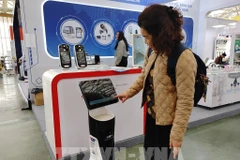
A visitor experience the robot receptionist at the Spring Fair 2026. (Photo: VNA)

Glorious Spring Fair 2026: technology underpins product quality

With the Politburo's rollout of Resolution No. 57-NQ/TW on breakthroughs in science, technology, innovation, and national digital transformation, along with Resolution No. 68-NQ/TW on developing the private economic sector, a key focus is on applying scientific and technological advances to produce essential consumer goods.

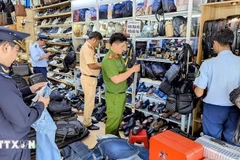
A large volume of goods of unclear origin is found in An Giang province (Photo: VNA)

PM orders tougher IP enforcement under new decree

The move aims to promptly combat, curb, and minimise IP violations; safeguard the legitimate rights and interests of citizens and businesses; build a transparent and healthy business environment; spread the nation’s image and prestige to advance rapid and sustainable development.

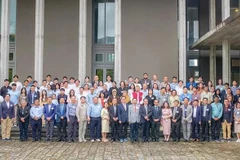
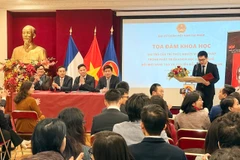
An overview of the seminar (Photo: VNA)

Vietnamese intellectuals in France join hands to advance science, technology at home

Held amid the nationwide efforts to implement the Resolution of the 14th National Party Congress and the Politburo’s Resolution No. 57-NQ/TW on breakthroughs in science, technology, innovation, and national digital transformation, the seminar served not only as an academic forum but also as a platform reflecting the sense of responsibility, intellectual engagement and aspiration to contribute among overseas Vietnamese intellectuals in the nation’s new development era.

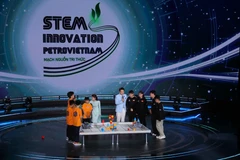
The robotics team from Cau Giay Secondary School, Hanoi, performs at the event (Photo: VNA)

STEM Innovation Petrovietnam helps cultivate knowledge in technological era

The programme connected three sites in Hanoi, Nguyen Hue High School in Lao Cai, and Chau Thanh High School in Ho Chi Minh City, bringing together educators, students, representatives of businesses, and industry–energy engineers, and those directly supporting schools in implementing STEM (science, technology, engineering, and mathematics) education in practice.

Top 10 start-ups from Vietnamese universities receive innovation support from Singapore. (Photo: VNA)

Top 10 university start-ups in Vietnam secure innovation backing

The selected projects share a strong technology-driven orientation, particularly in artificial intelligence (AI), digital solutions and advanced materials. Their innovations address large-scale, real-world issues across sectors including healthcare, education, legal services, agriculture, energy, environmental protection and public governance.

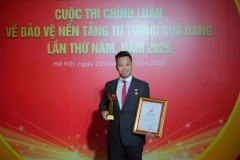
Assoc. Prof. Dr. Tran Le Hung, lecturer at the ESIEE Paris - an engineering school of University Gustave Eiffel. wins the promising award in the 5th national writing contest on safeguarding Party's ideological foundations in 2025 (Photo: VNA)

Science - technology paves way for “second wave of Doi moi”: expert

Assoc. Prof. Dr. Tran Le Hung, lecturer at the ESIEE Paris - an engineering school of University Gustave Eiffel, said future “Make in Vietnam” science and technology products will not only directly serve domestic demands, improve the people’s livelihoods, and boost labour productivity, but also have the potential to compete in international markets.

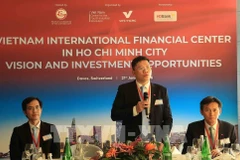
Hoang Nguyen Dinh, Vice Chairman of the People’s Committee of Ho Chi Minh City, speaks at the event (Photo: VNA)

Vietnam promotes On-chain financial infrastructure cooperation at Davos 2026

Jointly organised by the municipal People’s Committee, the Centre for the Fourth Industrial Revolution (C4IR) in the city (HCMC C4IR) and the Vietnam International Financial Centre in Ho Chi Minh City (VIFC-HCMC), the event was part of a series of activities showcasing the vision for building VIFC-HCMC, while expanding cooperation with global partners in finance, technology and innovation.

Trio of core drivers of new growth model highlighted at 14th National Party Congress

Trio of core drivers of new growth model highlighted at 14th National Party Congress

Member of the Party Central Committee and Minister of Science and Technology Nguyen Manh Hung emphasised that in moving from middle-income to high-income status, Vietnam must rely on science and technology, innovation, and digital transformation. These three drivers have been expanded and redefined by the Party under a new approach, creating broader development space and unlocking new resources for growth. With this trio, Vietnam has the potential to achieve double-digit growth.

A view of the site where the Ninh Thuan 1 Nuclear Power Plant is located in Phuoc Dinh commune, Khanh Hoa province (Photo: VNA)

Gov’t rolls out communication scheme for nuclear energy development

By 2027 around 60% of leaders, managers, civil servants and public employees in relevant ministries and localities will acquire basic knowledge of nuclear energy development and application. In parallel, the professional capacity of reporters, editors and information officers covering the sector will be strengthened.

According to Minister of Science and Technology Nguyen Manh Hung, Vietnam has established a new framework in which science, technology, innovation and digital transformation are judged by outcomes, with socio-economic effectiveness as the core benchmark. (Photo: baochinhphu.vn)

Science, technology and innovation elevate Vietnam’s standing in new era

The most significant achievement in recent years has not been a single technological success, but a fundamental shift in awareness, mindset and ways of doing. Vietnam has established a new framework in which science, technology, innovation and digital transformation are judged by outcomes, with socio-economic effectiveness as the core benchmark.

Dr. Heng LiHong, Permanent Vice Chairman and Secretary-General of the Vietnam-Cambodia Business Association. (Photo: VNA)

New growth model helps position Vietnam on global technology map: expert

Heng LiHong, who is also a member of the Standing Board of the Business Association of Overseas Vietnamese (BAOOV), expressed his confidence that this new growth model will help Vietnam move beyond a development path reliant on low-cost labour and resource extraction, enabling the country to gradually climb to higher levels in the global value chain.