Resolution No. 57 - A strategic vision to position Vietnam at forefront of quantum technology era

Vietnam should prioritise investment in key quantum laboratories toward establishing a National Quantum Research Centre; develop long-term human resources training programmes; build a supportive innovation ecosystem through regulatory sandboxes and targeted investment funds; and strengthen international cooperation with leading global research institutions.

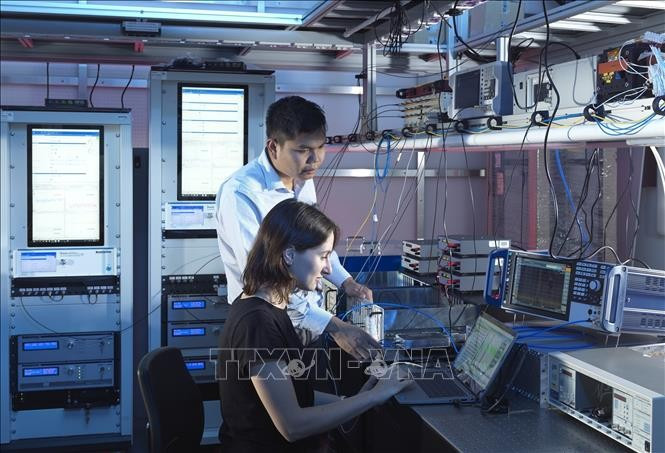
Dr. Tran Dang Bao An with a colleague at the UK’s National Physical Laboratory. (Photo: VNA)

Hanoi (VNA) – The inclusion of quantum technology in the Politburo’s Resolution No. 57-NQ/TW on breakthroughs in the development of science, technology, innovation and national digital transformation demonstrates Vietnam’s proactive vision in anticipating global trends, at a time when major economies such as the US, the European Union, the UK and China are investing heavily in this field, according to a UK-based Vietnamese expert in quantum technology.

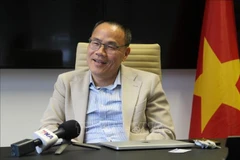
In an interview with the Vietnam News Agency’s correspondent in the UK, Dr. Tran Dang Bao An, a senior researcher at the UK’s National Physical Laboratory (NPL), expressed confidence in the feasibility of Resolution 57 which carries profound significance and a high strategic vision, reflecting the Party and State’s strong political will and forward-looking mindset, creating new momentum for Vietnam’s socio-economic development in the period ahead.

According to him, quantum technology development is currently focused on three main pillars: quantum computing, quantum communication, and quantum sensing and metrology. Many countries are shifting from basic research toward practical applications and commercialisation, marked by increased public investment and the mobilisation of private capital. The researcher cited the US, the EU and the UK as examples, noting that they have all launched large-scale national quantum programmes and strategies with long-term horizons. Over the past five years alone, the EU has invested approximately 11 billion EUR (around 12.8 billion USD) in quantum research, while the UK aims to become a global quantum hub through its 10-year National Quantum Strategy.

For Vietnam, he assessed that participation in the global quantum race offers an opportunity not only to catch up with advanced countries, but also to create new value and establish a solid foundation for applying quantum technologies in areas such as cybersecurity, high-performance computing, advanced materials, biomedicine and sensing.

Beyond being a scientific breakthrough, quantum technology is expected to underpin national security and economic innovation in the coming decade. Therefore, he stressed that Vietnam should proactively pursue research and gradually deploy quantum technology in science, technology and daily life, particularly in cybersecurity and the digital economy.

Alongside these opportunities, An acknowledged that Vietnam faces significant challenges, as quantum technology requires substantial investment, involves high risks and is subject to intense global competition. Moreover, the country’s infrastructure and human resources in this field remain nascent, with a considerable gap compared to developed countries. He therefore recommended that Vietnam promptly formulate a national quantum technology programme with a clear vision and strategic roadmap.

Drawing on his research and professional experience in the UK, the expert proposed a comprehensive set of policy recommendations tailored to Vietnam’s development level and national resources. These include prioritising investment in key quantum laboratories toward establishing a National Quantum Research Centre; developing long-term human resources training programmes; building a supportive innovation ecosystem through regulatory sandboxes and targeted investment funds; and strengthening international cooperation with leading global research institutions.

He also emphasised the importance of focusing on selected strategic areas, such as quantum communication networks and quantum sensing, to enable early practical applications in secure communications, high-security banking and health care./.

VNA

See more

A view of the site where the Ninh Thuan 1 Nuclear Power Plant is located in Phuoc Dinh commune, Khanh Hoa province (Photo: VNA)

Gov’t rolls out communication scheme for nuclear energy development

By 2027 around 60% of leaders, managers, civil servants and public employees in relevant ministries and localities will acquire basic knowledge of nuclear energy development and application. In parallel, the professional capacity of reporters, editors and information officers covering the sector will be strengthened.

According to Minister of Science and Technology Nguyen Manh Hung, Vietnam has established a new framework in which science, technology, innovation and digital transformation are judged by outcomes, with socio-economic effectiveness as the core benchmark. (Photo: baochinhphu.vn)

Science, technology and innovation elevate Vietnam’s standing in new era

The most significant achievement in recent years has not been a single technological success, but a fundamental shift in awareness, mindset and ways of doing. Vietnam has established a new framework in which science, technology, innovation and digital transformation are judged by outcomes, with socio-economic effectiveness as the core benchmark.

Dr. Heng LiHong, Permanent Vice Chairman and Secretary-General of the Vietnam-Cambodia Business Association. (Photo: VNA)

New growth model helps position Vietnam on global technology map: expert

Heng LiHong, who is also a member of the Standing Board of the Business Association of Overseas Vietnamese (BAOOV), expressed his confidence that this new growth model will help Vietnam move beyond a development path reliant on low-cost labour and resource extraction, enabling the country to gradually climb to higher levels in the global value chain.

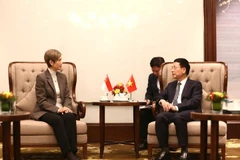
Deputy Prime Minister Nguyen Chi Dung receives a delegation of Seoul Semiconductor Co., Ltd. led by its CEO Lee Chung-hoon in Hanoi on January 16. (Photo: Government Portal)

Vietnam seeks stronger sci-tech cooperation with international partners

Informing the UN official about some of Vietnam’s achievements in sci-tech development, innovation, and digital transformation, Deputy PM Nguyen Chi Dung highlighted that the country and the UN have recorded progress in their sci-tech relations, with cooperation in strategic areas matching global trends and bilateral cooperation demand.

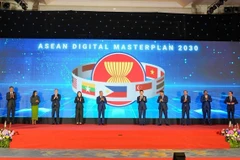
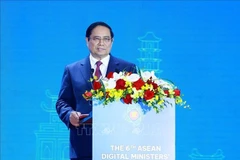
The ASEAN Digital Awards 2025 ceremony is held in Hanoi on January 15 (Photo: VietnamPlus)

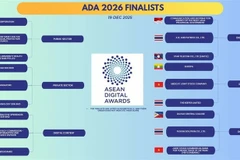
Vietnam wins three awards at ASEAN Digital Awards 2026

In the digital startup category, MedCAT’s Idus platform, developed by MedCAT, won the gold award. Designed for reading, classifying and structuring documents, the platform has been applied in banking, public administration and healthcare, supporting automated insurance claims processing, smart healthcare services and the development of personal electronic health records.

Illustration of part of the digital technology and mixed-use park project in Hanoi Tay Tuu and Phu Dien wards. (Photo: FPT)

Hanoi breaks ground on digital technology, mixed-use park

The digital technology and mixed-use park in Hanoi is envisioned as a key nucleus of the capital’s innovation ecosystem, aligned with its goal of becoming a major national hub for science, technology and the digital economy.

Illustrative photo (Photo: Ampshireflag)

Promoting cooperation aligned with ASEAN digital priorities

The sixth ASEAN Digital Senior Officials’ Meeting (ADGSOM) and related meetings took place from January 12 to 14 in Hanoi. Delegations exchanged views and reviewed progress in priority cooperation areas, focusing on enhancing coordination and harmonisation of digital policies across ASEAN.

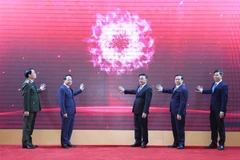
The Au Lac AI Alliance officially announces the inaugural Au Lac Grand Prize on January 12. (Photo: VNA)

Au Lac Grand Prize launched to honour Vietnamese-made AI

The competition is open to all Vietnamese citizens, regardless of age, place of residence or professional background, provided the submitted product or solution is legally protected intellectual property developed and owned by Vietnamese individuals or entities and used in compliance with the law.