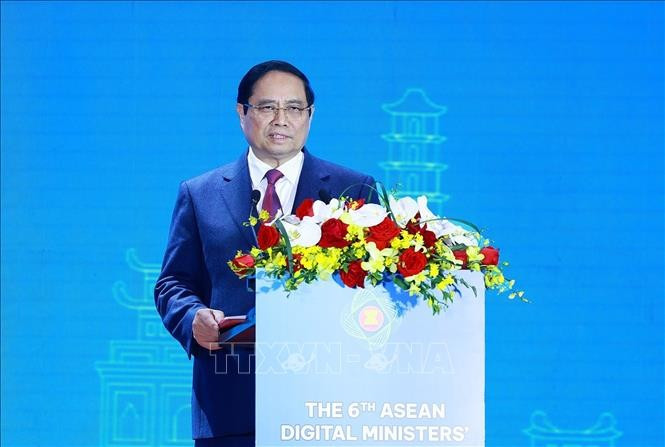
Hanoi (VNA) – Vietnam remains firmly committed to being a proactive, active and responsible member of ASEAN’s digital cooperation, Prime Minister Pham Minh Chinh affirmed while addressing the opening ceremony of the 6th ASEAN Digital Ministers' Meeting (ADGMIN 6) and related meetings in Hanoi on January 15.
The PM called for more comprehensive regional collaboration built on transparency, mutual trust and respect to help shape a united, resilient and prosperous ASEAN digital community.
Hosted by Vietnam, the event brought together ASEAN ministers in charge of information technology, telecommunications and digital transformation, heads of delegations of dialogue partners, ASEAN Secretary-General Kao Kim Hourn, UN Under-Secretary-General and Secretary-General's Special Envoy on Technology Amandeep Singh Gill, ambassadors, along with representatives of international organisations and technology enterprises.
ASEAN: From infrastructure connectivity to intelligent connectivity
In his opening remarks, Vietnam’s Minister of Science and Technology Nguyen Manh Hung, who chairs ADGMIN 6, said the conference theme “ASEAN Adaptive: From Infrastructure Connectivity to Intelligent Connectivity” reflects a defining shift in ASEAN’s digital development thinking.
ASEAN is moving beyond a focus on expanding connectivity infrastructure toward harnessing intelligence, data and the added value generated from digital connections. This transition from “infrastructure connectivity” to “intelligent connectivity” is not a matter of choice but an inevitable step in the digital era, he noted.
ASEAN Secretary-General Kao Kim Hourn reaffirmed ASEAN’s commitment to advancing comprehensive digital cooperation, narrowing digital divides and building a safe, trusted and inclusive digital space.
Meanwhile, UN Under-Secretary-General and Secretary-General's Special Envoy on Technology Amandeep Singh Gill called for a balanced, human-centred approach to digital transformation and AI governance to ensure technology contributes meaningfully to sustainable development.
Digital transformation – new growth driver
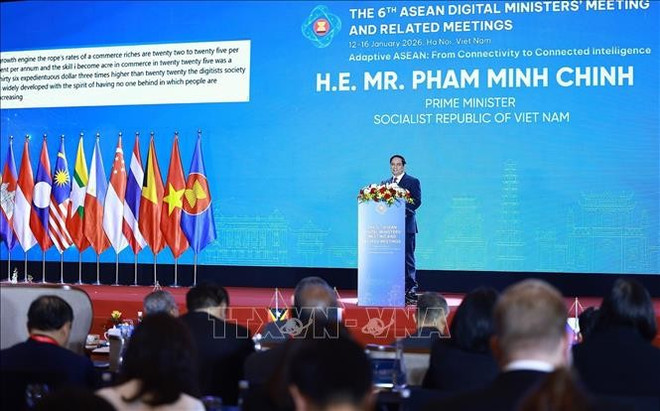
The 6th ASEAN Digital Ministers' Meeting (ADGMIN 6) and related meetings opens in Hanoi on January 15. (Photo: VNA)
Addressing the conference, PM Chinh stressed that ASEAN and the world are undergoing profound and comprehensive transformations, with digital transformation, digital government, the digital economy and digital society emerging as new growth drivers and pillars of sustainable development.
The rapid development of digital ecosystems is profoundly changing the way people and nations connect and interact, creating both an urgent and long-term strategic need for a synchronised digital infrastructure, inclusive digital institutions, and high-quality digital human resources.
The PM said data has become a new strategic resource. The ability to master and connect data is critical not only to national governance and competitiveness, but also to expanding the cooperation space within ASEAN and between ASEAN and the wider world.
On AI, he urged ASEAN to promote regulatory sandboxes for new technologies and business models, while ensuring AI development adheres to ethical standards, remains human-centred, and serves the goals of peace, cooperation and development.
Reaffirming that ASEAN remains a strategic priority in Vietnam’s foreign policy, PM Chinh said Vietnam’s sustainable development in the digital era is closely linked to peace, stability and prosperity within the ASEAN Community.
He highlighted Vietnam’s strong progress in national digital transformation, including the issuance of major policy frameworks on science – technology development, innovation and digital transformation that emphasise international cooperation. Vietnam’s digital infrastructure has made significant strides, with 5G coverage reaching 91.2% of the population and mobile internet speeds ranking among the world’s top 20 in 2025, up 50 places from 2020.
Vietnam has also strengthened digital government with the expansion of online public services toward a paperless administration, and seen the digital economy emerge as a new growth engine. E-commerce has grown by around 25% annually, reaching an estimated 36 billion USD in 2025, three times its size in 2020.
Aside from the widespread development of digital society, he added, cybersecurity has received particular attention. Vietnam successfully hosted the signing ceremony of the UN Convention against Cybercrime, known as the Hanoi Convention, and now ranks 16th globally and third in ASEAN on the Global Cybersecurity Index.
Looking ahead to the ASEAN Community Vision 2045, PM Chinh proposed three overarching directions for regional digital cooperation.
First, ASEAN should strengthen digital trust and adaptive governance by building a human-centred digital ecosystem guided by ethical norms and balanced interests. He called for effective implementation of the ASEAN Guide on AI Governance and Ethics, as well as gradually effective operation of the regional AI safety network.
Second, ASEAN should develop modern digital infrastructure and boost smart, synchronised and sustainable digital connectivity. It should upgrade submarine and terrestrial cable systems and data centres, and step up cooperation in satellite development to support disaster monitoring, resource management and internet access in remote and island areas. He also underscored the importance of building a green, clean and secure power grid to ensure sustainable energy for digital infrastructure and connectivity.
Third, the PM continued, ASEAN should enhance cybersecurity cooperation and develop a high-quality digital workforce. This includes stronger information sharing, joint exercises and trust-building to counter cyberattacks; enhance ties to combat online fraud and cybercrime; and promote the development of high-quality digital manpower, particularly in the fields of big data, AI and cloud computing. Efforts to provide digital skills for all should also be strengthened like Vietnam’s “Digital Literacy for All" movement under the principle that no one is left behind.
“On the spirit of harmonised benefits and shared risks, Vietnam is committed to remaining a proactive, active and responsible member of ASEAN’s digital cooperation,” the PM affirmed, adding that Vietnam is ready to share experience and support less-developed partners to narrow digital gaps and achieve shared development.
PM Chinh expressed confidence that ADGMIN 6 will mark an important milestone in ASEAN’s transition from digital infrastructure connectivity to intelligence connectivity and trust connectivity.
Commitments made at the meeting, he said, will help shape a coherent institutional framework, interoperable digital infrastructure and a safe digital space, laying a solid foundation for inclusive growth, enhanced competitiveness and a stronger global standing for ASEAN.
With unity as the binding force and “unity in diversity” as ASEAN’s defining identity, he stressed that deeper cooperation, strengthened dialogue and mutual trust will guide the region toward a peaceful, prosperous and sustainable future in the digital era./.