Viettel’s virtual assistant among Top 10 technology products

The accolade recognises the mastery of core technologies by the Viettel Artificial Intelligence and Data Services Centre (Viettel AI), while reaffirming the group’s capacity to successfully deploy “Make in Vietnam” artificial intelligence solutions in international markets.

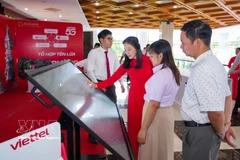
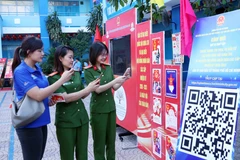
Viettel's virtual assistant for searching administrative units helps shorten time and simplify searches for people. (Photo: Viettel)

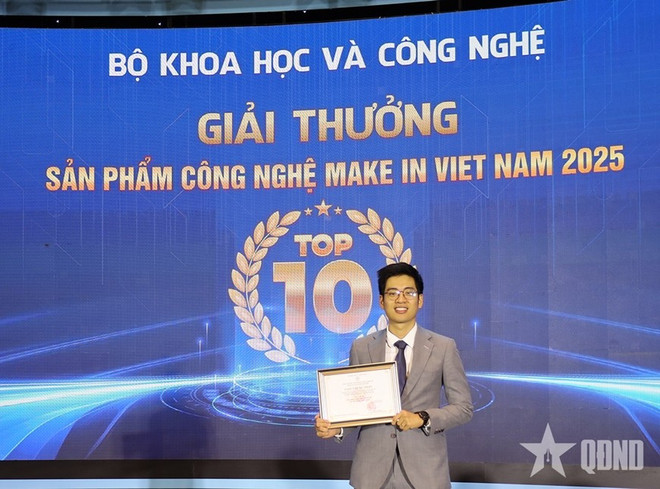
Hanoi (VNA) – The Viettel Virtual Assistant platform, researched and developed by Viettel AI, has been named among the Top 10 Outstanding Digital Technology Products for Overseas Markets at the Make in Vietnam 2025 Awards, a representative of Viettel Group said on January 5.

The accolade recognises the mastery of core technologies by the Viettel Artificial Intelligence and Data Services Centre (Viettel AI), while reaffirming the group’s capacity to successfully deploy “Make in Vietnam” artificial intelligence solutions in international markets.

"Make in Vietnam" is an annual digital technology awards programme held by the Ministry of Science and Technology to honour outstanding digital products, platforms and solutions developed by Vietnamese enterprises. The awards aim to promote innovation that addresses real-world needs and helps Vietnamese products gradually establish a foothold in global markets.

The category “Outstanding Digital Technology Product for Overseas Markets” recognises products and services that meet international standards, demonstrate competitiveness and contribute to promoting Vietnam’s technological capability worldwide.

The Viettel Virtual Assistant platform meets the criteria for this category thanks to its flexible deployment across countries with diverse languages, cultures and service models. It supports multiple languages, including English, Spanish and Portuguese, and is widely applied in customer care, consultancy, and support for fixed and mobile telecommunications services, as well as integration with enterprise management systems in local markets.
virtual-assistance.jpg
The Viettel Virtual Assistant platform, researched and developed by Viettel AI, has been named among the Top 10 Outstanding Digital Technology Products for Overseas Markets at the Make in Vietnam 2025 Awards. (Photo: qdnd.vn)

Using state-of-the-art technologies, the platform is capable of deep content comprehension and topic classification throughout real-time interactions. This enables it to handle regionally diverse speech patterns and accurately predict user intent, thereby enhancing customer experience.

At the same time, the product is continually upgraded in line with user demand, with features such as workflow-based conversation routing and customisable management dashboards, helping clients streamline operations and improve service efficiency.

The Viettel Virtual Assistant is currently deployed in several international markets, including Peru, Mozambique, Tanzania and Laos, handling millions of calls daily. It helps address challenges such as processing high customer volumes, managing multilingual communication in areas with limited IT infrastructure, and providing round-the-clock services at competitive cost.

In Vietnam, the platform has also been widely adopted by more than 20 major organisations, public agencies and enterprises, including the People’s Court Virtual Assistant, the Ministry of Science and Technology Virtual Assistant, and the Virtual Assistant for civil servants in Bac Ninh province.

Under its long-term strategy, Viettel AI identifies virtual assistant technology as a core development pillar, contributing to deeper participation of “Make in Vietnam” AI products in the global technology value chain and further strengthening Vietnam’s position in the international technology market./.

VNA

See more

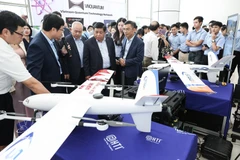
At a display of UAVs (Photo: VNA)

HCM City pilots UAVs for delivery services

HCM City aims to promote UAV use in urban delivery - a promising field contributing to smart logistics and postal services for e-commerce, smart cities and high-tech public services, while fostering UAVs as a strategic technology sector underpinning the innovation ecosystem.

Workers are operating a robotic wafer conveyor assembly line in the semiconductor industry. (Illustrative image. Photo VNA)

Innovation – Driver for new development phase

The draft action programme of the Party Central Committee to implement the Resolution of the 14th National Party Congress identifies the shift to a new growth model, economic restructuring, and accelerated industrialisation and modernisation, with science, technology, innovation and digital transformation as the core engines, as key tasks.

Participants at the 5th ASEAN Digital Ministers Meeting (ADGMIN) in Thailand. (Photo: VNA)

Hanoi to host 6th ASEAN Digital Ministers’ Meeting in January

Held annually on a rotating basis among ASEAN member states, the meeting plays a key role in shaping strategic orientations, formulating policies and promoting digital cooperation within ASEAN, while strengthening collaboration with partners and international organisations amid rapid digital and digital-economy transformation globally.

A biotechnology laboratory of the International University at Vietnam National University-Ho Chi Minh City. (Photo: VNA)

Resolution 57: Role of intellectuals in advancing science and technology research

Prof. Dr. Tran Dai Lam, Director of the Institute of Materials Science at the Vietnam Academy of Science and Technology (VAST), emphasised that intellectuals should nurture national responsibility and ambition, be ready to take on challenges, evaluate research outcomes by international standards, and engage in collaboration across different sectors.

Professor Vu Minh Khuong, of the Lee Kuan Yew School of Public Policy (right), talks to a Vietnam News Agency correspondent in Singapore. (Photo: VNA)

Resolution 57 - catalyst for scientific and technological breakthroughs

The resolution also seeks to create stronger mechanisms to mobilise social and private resources and support an innovation ecosystem; link digital transformation in the public sector with the modernisation of national governance; and prioritise the development of elite human resources and internationally-standard research infrastructure.

Workers produce electronic components (Photo: VNA)

Science, technology drive Vietnam’s rising global profile: expert

Assoc. Prof. Le Duc Anh from Tokyo University held that for fast and sustainable development, Vietnam should prioritise science – technology and innovation as the main driver of productivity, focusing on sectors with high spillover effects such as semiconductors, AI, data, new energy and materials, biomedical technology, automation – robotics, and cybersecurity.

An overview of the workshop. (Photo: nafosted.gov.vn)

National portal expected to transform innovation into reality

The portal, which can be accessed at sangkien.gov.vn, was built to address the urgent need to mobilise collective intelligence and unlock the creativity of the entire population, in accordance with the directives of the steering committee for the implementation of the Politburo’s Resolution No. 57-NQ/TW on creating breakthroughs in science, technology, innovation and national digital transformation.

Sucker-mouthed minnow (Supradiscus varidiscus). (Photo: researchgate.net)

Vietnamese fish, bee named among 70 species newly identified in 2025

One of the most notable “hidden” finds is a small sucker-mouthed minnow endemic to Vietnam’s highlands, discovered in the Lo River. Scientifically named Supradiscus varidiscus, the specimen was collected and shelved some 25 years ago but has only now been studied and formally described.

The Ministry of Science and Technology launches a centralised one-stop-shop unit on December 19. (Photo: VNA)

Vietnam pushes sci-tech, innovation as growth drivers under Resolution 57

The Ministry of Science and Technology (MoST) bears the responsibility of “paving the way”, guided by a consistent spirit of transitioning from a management-oriented mindset to a facilitative one, from “input-based management” to “output-based evaluation”, and from fragmented investment to a focused approach centred on strategic technologies.