Vietnam promotes science, technology, energy cooperation with French businesses

With a population of more than 100 million people, strong economic growth, and an increasingly favourable investment environment, Vietnam is regarded as one of the most dynamic markets in Asia.

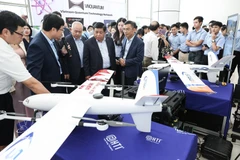
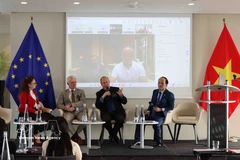
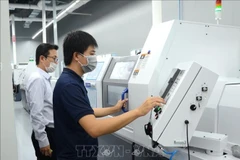
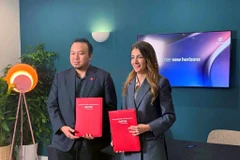
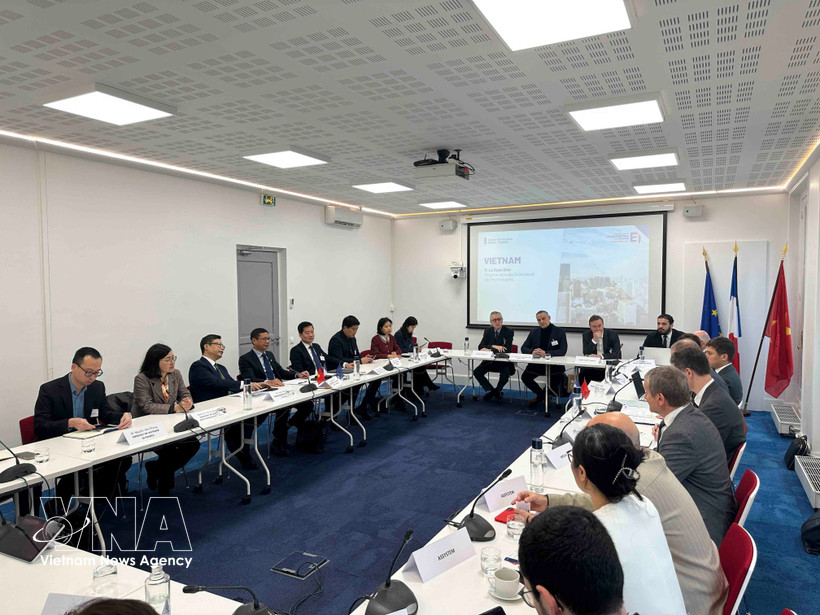
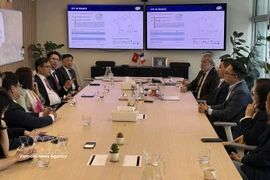
The Vietnamese delegation works directly with representatives of French enterprises through the connection facilitated by Mouvement des Entreprises de France (MEDEF) (Photo: VNA)

Paris (VNA) – Vietnam hopes that French enterprises will step up partnerships with Vietnamese counterparts, enhance technology transfer, and regard Vietnam as a promising venue for piloting and implementing innovative technologies, Deputy Minister of Science and Technology Le Xuan Dinh has said.

Speaking at a working session with the Mouvement des Entreprises de France (MEDEF) (Movement of French Enterprises) – the organisation representing the French business community – in Paris on March 11, Dinh highlighted opportunities for Vietnam –France cooperation in science, technology, energy, infrastructure, and high-tech industries.

The meeting formed part of efforts to promote exchanges between the two sides’ business communities and explore potential collaboration in key sectors.

The deputy minister noted that Vietnam is entering a new stage of development, with growing demand for science and technology, energy, and infrastructure.

With a population of more than 100 million people, strong economic growth, and an increasingly favourable investment environment, Vietnam is regarded as one of the most dynamic markets in Asia, he stated.

For his part, Benoit Clocheret, Vice President of MEDEF International – the global outreach arm of MEDEF – who is also Chairman of the France–Vietnam Business Council and Executive Chairman of Artelia Group, affirmed that Vietnam remains one of the most dynamic and promising markets in Asia.

He said MEDEF wants to continue acting as a bridge between the business communities of the two countries and promote cooperative projects in infrastructure, energy, technology, and green transition.

Cooperation in nuclear energy was also a topic of discussion during the working session between the Vietnamese delegation and MEDEF.

Vietnamese Ambassador to France Trinh Duc Hai said that as the world faces major challenges related to energy security and climate change, many countries are reassessing the role of nuclear power as a stable and low-carbon energy source.

Vietnam is currently studying and refining policy orientations aimed at ensuring long-term energy security, diversifying energy supply, and achieving its net-zero emissions target by 2050, the ambassador said.

According to the diplomat, Vietnam is restarting plans to invest in the construction of Ninh Thuan 1 and Ninh Thuan 2 nuclear power plants. At the same time, the country is continuing to improve its legal framework, strengthen management capacity, and train human resources in the nuclear energy sector.

Vietnam is also committed to complying with the highest standards of nuclear safety and non-proliferation, while working closely with the International Atomic Energy Agency (IAEA) to ensure adherence to international norms, Hai stressed.

Apart from energy, many French companies expressed interest in expanding cooperation with Vietnam in high-tech sectors. A representative of Airbus said the group has been present in Vietnam for more than 40 years, with over 200 Airbus aircraft currently operated by Vietnamese airlines. Airbus is also working with Vietnamese partners in pilot training, the development of the aviation industry, and space projects, including the launch of the VNREDSat-1 Earth observation satellite.

Meanwhile, engineering companies such as Assystem, Egis, and Artelia voiced their interest in participating in Vietnam’s energy and nuclear infrastructure projects, particularly in technical consultancy, project management, human resources training, and the development of small modular reactor technologies.

At the end of the meeting, both sides agreed to continue stepping up dialogue and promoting concrete cooperation projects in the coming time.

Dinh took this occasion to invite French enterprises to visit Vietnam to explore investment opportunities and implement new technology cooperation projects, contributing to enhanced bilateral collaboration in science, technology, and innovation./.

VNA

See more

Participants in the ASEAN Plus Photonics Symposium in Gia Lai province on April 8 (Photo: baogialai.com.vn/)

Gia Lai province hosts ASEAN Plus Photonics Symposium

Participants presented and discussed a wide range of advanced topics shaping the future of photonics, including nanophotonics and metasurfaces; topological and non-Hermitian photonics; photonic crystals and optical lattices; light–matter interactions and polariton systems.

Vietnamese Ambassador to Brazil Bui Van Nghi (right) and Professor and quantum physicist Olival Freire Juniorin, President of Brazil's National Council for Scientific and Technological Development, at their meeting on April 7. (Photo: Vietnamese Embassy in Brazil)

Vietnam, Brazil to strengthen cooperation in science, technology

Ambassador Bui Van Nghi expressed Vietnam’s interest in strengthening cooperation with Brazil in areas such as renewable energy and environmental technologies, as well as high-tech sectors including artificial intelligence (AI), quantum technology, and the semiconductor industry.

Teachers guide students in experiencing the application of science (Photo: VNA)

Results become benchmark for science-technology governance

The transition to facilitative governance marks not only an operational reform but also a shift in development thinking. With expanded autonomy and controlled risk acceptance, science, technology, innovation and digital transformation are expected to become key drivers of rapid and sustainable growth in the years ahead.

Students experience robotic products (Photo: VNA)

AI powers sweeping overhaul of Vietnam’s education system

Nguyen Son Hai, Deputy Director General of the Department of Information and Communication Technology under the Ministry of Education and Training (MoET), said the sector has made rapid strides in digital transformation, from online classes during the COVID-19 pandemic to nationwide platforms covering the national education database, registration for high school graduation exam, and online university admissions.

Voters can access essential information about candidates on the VNeID app, enabling them to proactively learn and enhance their awareness when participating in elections. (Photo: VNA)

Digital transformation gathers pace nationwide

Adopted by the Politburo in late 2024, Resolution 57 positions science – technology development, innovation, and digital transformation as a top important breakthrough and strategic pillar for Vietnam’s development in the new era. Early implementation shows a clear shift toward data-driven governance and technology-enabled public services.

Can Tho city pledges to allocate at least 1% of total budget spending to science, technology and innovation (Illustrative image. Source: VNA)

Plan issued to implement Vietnam–France agreement on science-technology cooperation

Under the plan, the Ministry of Science and Technology will take the lead, in coordination with relevant ministries and agencies, in directing, guiding, monitoring and inspecting the implementation of the agreement. The ministry will also prepare reports on the signing and implementation progress for submission to the Ministry of Foreign Affairs for consolidation and reporting to competent authorities as required.

An overview of the provincial steering committee of Tay Ninh on implementing Resolution 57 on April 2 (Photo: VNA)

Tay Ninh moves to accelerate digital transformation

In science, technology and innovation, Tay Ninh has identified six major priorities: development of the digital economy, a carbon credit market, a Halal ecosystem, renewable energy, enterprise innovation support, and applications of artificial intelligence and big data.

Vietnam successfully held its first auction of national “.vn” domain names from March 18 to 20. (Photo: VNA)

Sci-tech revenue up 17% in March

The sci-tech sector contributed 133.5 trillion VND to the country’s gross domestic product (GDP) in March, a 28% increase from the same period last year.

By 2030, Vietnam targets ranking among the world’s top 15 countries in the Global Cybersecurity Index (Source: baochinhphu.vn)

Project aims to enhance capacity of national cybersecurity protection force

The project aims to strengthen overall capabilities and develop an elite and modern cybersecurity force able to proactively prevent and effectively respond to all cyber risks and threats, safeguarding national security, social order and safety, and the rights and lawful interests of organisations and individuals in cyberspace.

Delegates at the meeting (Photo: VNA)

Da Nang boosts hi-tech partnership with Germany’s Chemnitz City

Authorities in Da Nang hope Chemnitz and German partners will continue to accompany and support the city in accessing advanced technologies, connecting experts, integrating into innovation ecosystems, and attracting high-tech enterprises and supporting industries to explore investment and long-term cooperation opportunities.