Backup infrastructure keeps Vietnam’s Internet stable after undersea cable incident

Immediately after the disruption was detected, telecom operators activated contingency plans, rerouting traffic to other undersea cables and alternative connection routes. Coordination between domestic carriers and international partners was carried out promptly, and no localised service interruptions were reported.

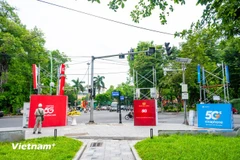
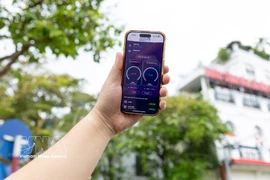
Illustrative image (Photo: VNA)

Hanoi (VNA) - Vietnam has still maintained stable Internet connectivity amid a malfunction on the AAE-1 undersea cable, thanks to its backup infrastructure and the Vietnam–Singapore Terrestrial Cable Network (VSTN), according to the Vietnam Telecommunications Authority under the Ministry of Science and Technology.

The incident occurred during the Lunar New Year (Tet) holiday. The affected capacity accounted for nearly 10% of Vietnam’s total international Internet bandwidth, equivalent to about 45,000 Gbps. However, this reduction was considered relatively minor in the overall context and insufficient to create an imbalance between international bandwidth supply and demand.

Immediately after the disruption was detected, telecom operators activated contingency plans, rerouting traffic to other undersea cables and alternative connection routes. Coordination between domestic carriers and international partners was carried out promptly, and no localised service interruptions were reported.

Following the incident, FPT Telecom said its total international bandwidth at peak times remained secure and within backup capacity. MobiFone reported that its average international channel load stood at 56%, rising to 64.2% when the AAE-1 cable encountered problems—still within safe limits.

Viettel and VNPT also confirmed that their international connectivity capacity has been sufficiently upgraded and backed up, making the capacity loss from AAE-1 negligible compared to the overall capacity of remaining routes.

According to the Telecommunications Authority, Vietnam has steadily expanded its international connectivity infrastructure in recent years. Internet access to the global network relies mainly on three channels —undersea fiber-optic cables, terrestrial cables and satellite Internet— with undersea systems playing a dominant role.

Vietnam currently operates six undersea cables, namely AAG, IA, AAE-1, APG, ADC and SJC2. The newly launched ADC and SJC2 have boosted outbound capacity, while AAE-1, in service since July 2017, links Vietnam to Europe and the Middle East and provides backup capacity toward Hong Kong (China) and Singapore.

To reduce reliance on undersea cables, in 2025, Vietnam, for the first time, took full control of the Vietnam–Singapore Terrestrial Cable Network (VSTN), which has a designed capacity of 4 Tbps and scalability up to 12 Tbps. The route enables end-to-end operational control, helping mitigate risks of international Internet disruptions.

Vietnam has also agreed to pilot satellite Internet services. In mid-February, after completing relevant procedures, Starlink was officially licensed, though its rollout schedule and pricing for the domestic market have yet to be announced./.

VNA

See more

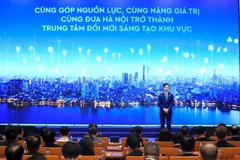
Tran Quang Hung, Chairman of the Board of Directors of HIC, presents the company’s operating model at the launch event. (Photo: hanoimoi.vn)

Hanoi’s innovation centre to drive digital transformation, creative industries

HIC is envisioned as a central “brain” connecting data, resources, policies, technology and culture to address urban development challenges, operate the national innovation ecosystem, promote a sustainable digital economy and digital society, improve the quality of life for local residents, and foster creative industries, particularly cultural industries linked to Hanoi’s identity.

Participants pose for a group photo at the International Conference on Advanced Microscopy for Life Sciences and Materials held in Gia Lai on February 25. (Photo: ICISE)

International conference spotlights advanced microscopy in life sciences, materials

The microscopy user community in Vietnam remains fragmented, lacking a common platform for sharing technical expertise, research experience and collaboration opportunities. This limited connectivity has, to some extent, curtailed the full potential of microscopy technologies in advancing scientific progress and industrial applications at home and abroad.

With just a smartphone, travellers can search for and book a variety of travel services for their journey. (Photo: VNA)

Digital transformation – a lever for building a smart tourism ecosystem

In recent years, digital transformation has become a common feature in socio-economic development strategies. For tourism – a multi-sector, experience-driven industry closely tied to information – digitalisation is no longer a trend but an inevitable requirement to enhance competitiveness and ensure sustainable development.

Prime Minister Pham Minh Chinh meets students of the University of Science and Technology of Hanoi. (Photo: VNA)

VAST – core force in national science system: Prime Minister

The Party, the State, and the Government identify science, technology, and innovation as both a fundamental pillar and a central engine of growth, as well as a direct productive force driving rapid and sustainable development, Prime Minister Pham Minh Chinh said, stressing that VAST stands as a crucial “fortress” of knowledge that concentrates the intellectual resources and limitless creativity of the Vietnamese people.

Experiencing digital transformation at a forum on supporting businesses in digital transformation and e-commerce development (Photo: VNA)

Resolution No.57: driving shift to knowledge- and technology-based growth

With the official launch of the Hanoi Technology Exchange (HanoTEX) and the Digital Transformation Market (DTMarket) - combined with the development of hard infrastructure - Hanoi aims to become a place where technology is translated into practical value, directly contributing to the city’s GRDP growth target of at least 11% in 2026.

A banking chatbot addresses urgent operational needs in digital transformation. (Photo: VNA)

Central bank moves to tighten AI use in banking

Under the draft, banks and intermediary payment service providers must inform customers before deploying AI-powered tools such as virtual assistants, automated hotlines and chatbots in customer communications.