Vietnam makes scientific strides in decoding ancient human genomes

One of the most important outcomes was the successful sequencing of complete mitochondrial genomes from two ancient human bone samples over 2,000 years old excavated at the Dong Xa archaeological site, now in Luong Bang commune of Hung Yen province.

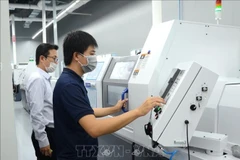
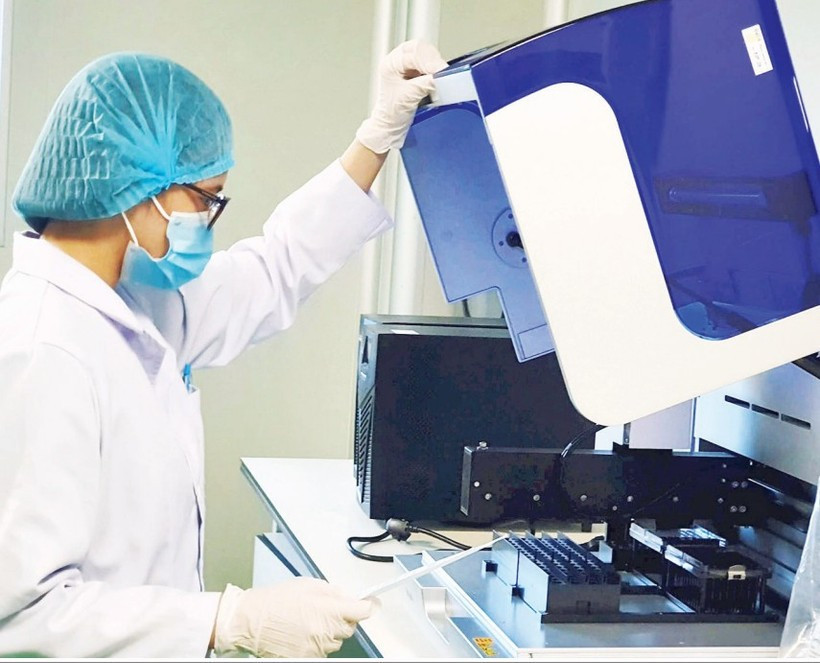
Research on ancient human genes at the Vietnam Academy of Science and Technology (Photo: nhandan.vn)

Hanoi (VNA) – Vietnamese scientists have, for the first time, successfully decoded mitochondrial genomes from ancient human bone samples dating back around 2,000 years, marking a significant breakthrough in genetic and archaeological research.

The achievement, made by researchers from the Vietnam Academy of Science and Technology (VAST), not only opens up new research directions into the evolutionary history of human populations but also provides valuable genetic data to help clarify links between ancient and modern populations in the region.

Along with advances in biology and biotechnology, gene sequencing technology has been increasingly applied, particularly in forensic identification and the analysis of long-buried human remains. It has become a key tool for accessing ancient genetic data, offering strong support for archaeological research and studies of human evolution.

Southeast Asia, where humans have inhabited for more than 65,000 years, is regarded as a hotspot of human diversity.

As part of this region, Vietnam has a multi-ethnic population structure shaped by the interaction of five major language families and is home to many important archaeological sites. However, studies of ancient human remains in Vietnam have largely been confined to archaeology, with limited genetic data, leaving major gaps and debates in reconstructing settlement and evolutionary histories.

To address this gap, Dr. Hoang Ha, deputy head of the Department of Technology Application and Deployment at VAST, together with researchers from the academy's Institute of Biology, carried out a project on sequencing genes from archaeological human remains in Vietnam to support research on human biodiversity and archaeology.

The project, which was conducted from August 2020 and completed in December 2024, applied advanced sequencing and analytical techniques to human bone samples dating approximately 1,000 to 6,000 years ago.

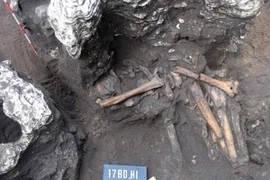
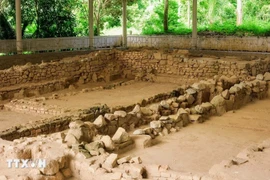
One of the most important outcomes was the successful sequencing of complete mitochondrial genomes from two ancient human bone samples over 2,000 years old excavated at the Dong Xa archaeological site, now in Luong Bang commune of Hung Yen province. The study produced high-coverage and high-accuracy mitochondrial genome sequences, meeting requirements for further genetic analysis.

Dong Xa is a representative site of the late Dong Son Civilisation. Although discovered and excavated in the 1980s, it had never before been studied from a genetic perspective.

Recovering genetic material from ancient human remains at Dong Xa and applying modern analytical techniques—such as mitochondrial genome sequencing, short tandem repeat (STR) genetic markers commonly used in forensic science, and nuclear genome analysis—are expected to generate valuable insights for interdisciplinary research combining archaeology and genetics in Vietnam.

Researchers tested mitochondrial DNA extraction and sequencing on 10 human bond samples dated between 1,000 and 2,000 years ago. These samples had previously been assessed by archaeologists and dated using radiocarbon (carbon-14) methods.

The project also collected genetic samples from modern population groups representing Vietnam’s five major language families, including Kinh, E De, H’Mong and Tu Di, and established STR databases for several ethnic minorities to support population genetics, biodiversity studies and comparisons with ancient Vietnamese populations.

The findings have been published on prestigious international journals such as Molecular Genetics and Genomics, Legal Medicine, and American Journal of Human Biology.

According to Dr. Hoang Ha, one of the greatest challenges was extracting DNA from heavily degraded archaeological bones under Vietnam’s hot and humid tropical climate. The team tested more than three extraction methods, with the most effective being a large-capacity filtration column combined with complete demineralisation, enabling the recovery of short DNA fragments under 100 base pairs—typical of degraded ancient DNA.

The method was later applied to samples from the Da But era, dating back nearly 6,000 years. Analysis revealed that these individuals belonged to distinctive haplogroups closely related to ancient Southeast Asian populations but rare among modern Vietnamese. This finding suggests significant changes in population genetic structure over time, reflecting migration, admixture or the disappearance of certain maternal genetic lineages.

The results provide new insights into the evolutionary history of human populations in the region and highlight the possibility that some ancient genetic lineages once present have either vanished or been fully absorbed into other populations./.
VNA

See more

With just a smartphone, travellers can search for and book a variety of travel services for their journey. (Photo: VNA)

Digital transformation – a lever for building a smart tourism ecosystem

In recent years, digital transformation has become a common feature in socio-economic development strategies. For tourism – a multi-sector, experience-driven industry closely tied to information – digitalisation is no longer a trend but an inevitable requirement to enhance competitiveness and ensure sustainable development.

Prime Minister Pham Minh Chinh meets students of the University of Science and Technology of Hanoi. (Photo: VNA)

VAST – core force in national science system: Prime Minister

The Party, the State, and the Government identify science, technology, and innovation as both a fundamental pillar and a central engine of growth, as well as a direct productive force driving rapid and sustainable development, Prime Minister Pham Minh Chinh said, stressing that VAST stands as a crucial “fortress” of knowledge that concentrates the intellectual resources and limitless creativity of the Vietnamese people.

Experiencing digital transformation at a forum on supporting businesses in digital transformation and e-commerce development (Photo: VNA)

Resolution No.57: driving shift to knowledge- and technology-based growth

With the official launch of the Hanoi Technology Exchange (HanoTEX) and the Digital Transformation Market (DTMarket) - combined with the development of hard infrastructure - Hanoi aims to become a place where technology is translated into practical value, directly contributing to the city’s GRDP growth target of at least 11% in 2026.

A banking chatbot addresses urgent operational needs in digital transformation. (Photo: VNA)

Central bank moves to tighten AI use in banking

Under the draft, banks and intermediary payment service providers must inform customers before deploying AI-powered tools such as virtual assistants, automated hotlines and chatbots in customer communications.

Viettel Digital Talent and Viettel Future Changemakers are open for registration until March 15, 2026. (Photo: Viettel)

Viettel launches talent search to develop young workforce for core technologies

Unlike conventional internship or management trainee schemes, both programmes are designed and implemented directly by Viettel, integrating training with real-world work in a global technology group. Participants are entrusted with solving major challenges that directly impact Viettel’s research, production and business operations.

A close-up view of the UAVs used in the Can Gio - Vung Tau delivery route on Fenruary 12, 2026 in Ho Chi Minh City (Photo: CT UAV)

Vietnam’s first cross-sea UAV delivery route inaugurated

The event marked the debut of the country’s first cross-sea unmanned postal route, representing a pioneering step in smart mobility solutions aimed at boosting the digital economy and easing pressure on road transport infrastructure in Ho Chi Minh City.

According to the Vietnam National Authority of Tourism (VNAT), which cited the Google–Temasek–Bain & Company e-Conomy SEA 2025 report, tourism remains one of the key drivers of Vietnam’s economy. (Photo: VNA)

Digital transformation in tourism for comprehensive, sustainable growth

Vietnam is well positioned to become a leading digital tourism destination in the region. By capitalising on current growth momentum and implementing targeted support measures for small and medium-sized enterprises, the country can build a smart and sustainable tourism ecosystem aligned with global digital transformation trends.

Party General Secretary To Lam ( second, from left) visits an exhibition showcasing the government's achievements in science, technology, innovation, and digital transformation. (Photo: VNA)

Fund mechanisms positioned to unlock greater resources for innovation

Resolution No. 57-NQ/TW of the Politburo defines fund-based mechanisms as the core financial tool for advancing science, technology and innovation. Under the resolution, State budget funding for research and development is prioritised for allocation through funds, alongside reforms in financial management, expanded autonomy, streamlined procedures, and acceptance of the risks and time lags inherent in research activities. It also calls for the establishment of venture capital funds and science and technology development funds to steer, mobilise and unlock social resources for innovation.