Hanoi (VNA) – The discovery of mummies preserved through the smoke-drying method in Vietnam and some other Southeast Asian countries was a finding recognised as one of the world’s top 10 archaeological discoveries of 2025.
Old sites, new perspectives
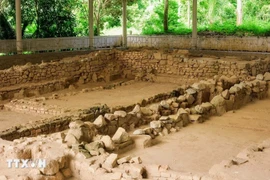
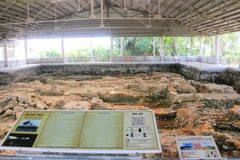
Archaeological sites such as Con Co Ngua and Mai Da Dieu (Thanh Hoa province), Mang Chieng Cave (Ninh Binh province) and Hon Hai Co Tien (Quang Ninh province) are well known to Vietnam’s archaeological community and are regarded as key sites for the study of the country’s prehistoric period.
Dr Nguyen Khanh Trung Kien of the Southern Institute of Social Sciences, said Con Co Ngua provides valuable insights into how ancient communities adapted to coastal environments and practised burial rites.
While Mai Da Dieu is a typical site for research on funerary customs during the Hoa Binh Civilisation period, Mang Chieng Cave offers important evidence of cave habitation. Hon Hai Co Tien, meanwhile, is crucial for understanding cave burials and ritual behaviour among prehistoric inhabitants in Vietnam.
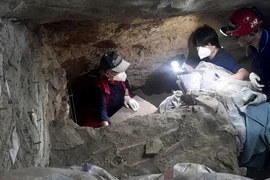
These sites have recently gained renewed attention through a multinational archaeological study led by Dr Hsiao-chun Hung of the Australian National University and Prof. Hirofumi Matsumura of Sapporo Medical University. The research team includes scholars from Vietnam’s Institute of Archaeology and Southern Institute of Social Sciences, alongside researchers from Australia, Japan and China.
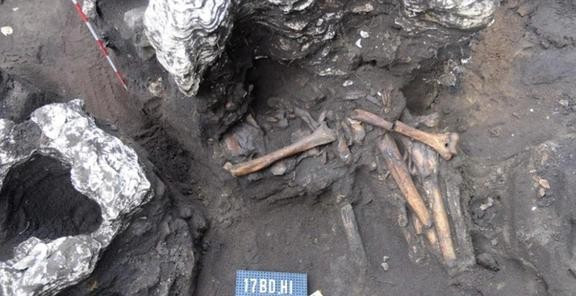
Published in Proceedings of the National Academy of Sciences (PNAS) in 2025, the study analysed 54 prehistoric graves from 11 sites across Southeast Asia and southern China. Important sites include Huiyaotian and Liyupo in Guangxi (China), Gua Harimau in Indonesia, and several Vietnamese sites such as Con Co Ngua, Mai Da Dieu, Mang Chieng Cave and Hon Hai Co Tien.
Kien said the findings indicate that many bodies from the pre-Neolithic period were preserved through prolonged smoking over fire, a form of mummification. This practice closely resembles mortuary customs documented among certain indigenous communities in Australia and Papua, Indonesia.
Previously, such remains had not been classified as mummies but were recorded as a distinctive burial type involving flexed body positions.
However, following the excavation of the Bau Du site in Quang Nam province in 2017, researchers began to recognise that many prehistoric graves in Vietnam, Southeast Asia and southern China likely involved deliberate long-term preservation through smoking, he noted.
World's archaeological study of the year
The Archaeological Institute of America has named the research one of the top 10 archaeological studies of 2025, praising its cultural insights, innovative approach and fresh perspective on a long-standing archaeological mystery.
The study argues that smoke-drying mummification was not merely a practical response to hot and humid tropical conditions, but also reflected deep cultural and spiritual connections linking ancient populations in the region with present-day indigenous communities in New Guinea and Australia.
The study argues that smoked mummification was not merely a practical response to hot and humid tropical conditions, but also reflected deep cultural and spiritual connections linking ancient populations in the region with present-day Indigenous communities in New Guinea and Australia.
Hung noted that the research represents the first comprehensive archaeological framework in East Asia to explain this phenomenon, supported by evidence ranging from field discoveries to laboratory analysis.
Dr Hsiao-chun Hung noted that the research represents the first comprehensive archaeological framework in East Asia to explain this phenomenon, supported by evidence ranging from field discoveries to laboratory analysis.
The research team also highlighted that smoked mummies in East Asia predate the famous mummies of Egypt and South America by several thousand years, offering groundbreaking insights into the global history of mummification.
According to Kien, the study’s impact stems from close international collaboration and the effective use of Vietnam’s rich archaeological resources.
More importantly, he said, the research sheds light on how people more than 10,000 years ago understood life and death, their bonds with loved ones, and their desire to maintain the presence of the deceased in a tangible form. The continuity of these practices over millennia, and their survival in some communities today, stands as a powerful testament to the enduring nature of human cultural consciousness./.