Strategy to help enhance Vietnam’s prestige, appeal on international arena

The target is set out in the Government’s strategy to promote Vietnam’s global image for the 2026–2030 period, with a vision to 2045, approved by the Prime Minister on January 27. The strategy underlines that promoting Vietnam's image abroad is not merely information activities, but a strategic "soft" tool serving the country's development.

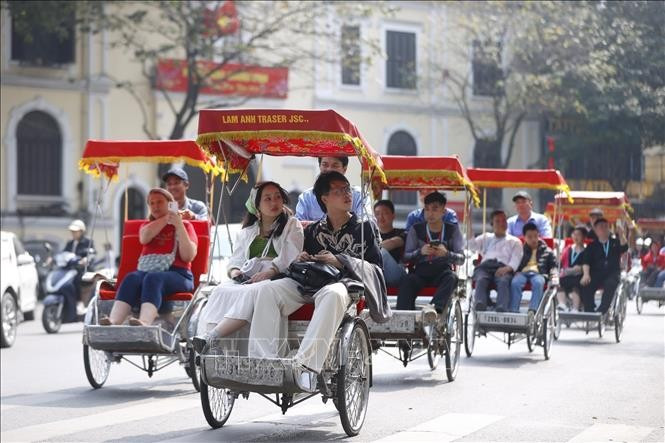
Tourists experience a cyclo ride around Hoan Kiem Lake (Photo: VNA)

Hanoi (VNA) – Vietnam aims to rank among the top three ASEAN countries and the world’s top 30 in the Soft Power Index by 2045, while becoming an attractive destination for tourism, investment, innovation and international cultural exchange, supporting its goal of becoming a developed, high-income nation.

The target is set out in the Government’s strategy to promote Vietnam’s global image for the 2026–2030 period, with a vision to 2045, approved by the Prime Minister on January 27. The strategy underlines that promoting Vietnam's image abroad is not merely information activities, but a strategic "soft" tool serving the country's development.

According to the Department of Grassroots and External Information under the Ministry of Culture, Sports and Tourism, a major new element of the strategy is the first-time requirement to develop a unified national message and visual identity at a strategic level. This will serve as a consistent foundation for all overseas communication and promotion efforts.

Vietnam’s image will no longer be presented in a fragmented or sector-by-sector manner by individual agencies, but instead positioned in a coherent and comprehensive way. At the same time, it will remain flexible enough to adapt to different markets, regions and international audiences.

The strategy seeks to build and spread the image of Vietnam as a country with political stability, dynamic economy, rich cultural identity, strong aspirations for innovation, and an appealing investment and business environment. It also aims to portray Vietnam as a safe and friendly destination, as well as a reliable and responsible partner in the international community.

Vietnamese people are identified as the central focus of the national image strategy. They are described as modern yet deeply rooted in tradition, creative yet humane, and globally integrated while preserving national cultural identity.

The document highlights the need to renew communication methods towards greater professionalism and modernity, in line with international standards. Communication content must be accurate, objective, engaging and diverse in format, while being tailored to specific target audiences.
tourism-2.jpg
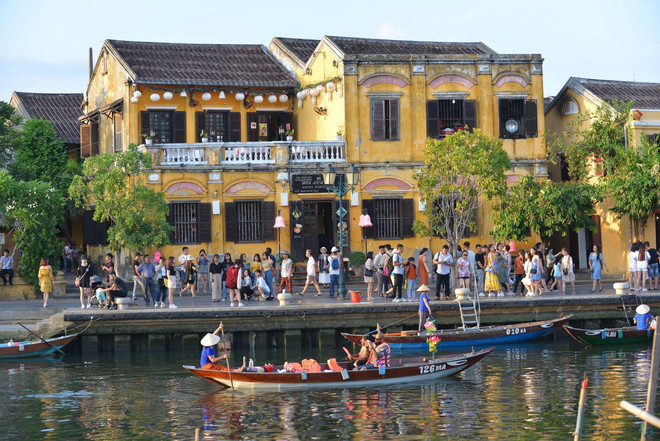
Hoi An ancient town attracts large numbers of visitors (Photo: VNA)

A balanced combination of traditional media and digital platforms, together with direct and online promotion, is seen as the main approach to expanding outreach and enhancing Vietnam’s presence across cross-border platforms.

The strategy also places strong emphasis on applying advances in digital technology, big data and artificial intelligence throughout the communication process, from audience research and message development to content production, distribution and impact measurement. The establishment of a national digital communication ecosystem is considered a breakthrough solution to strengthen proactive capacity, adaptability and the long-term effectiveness of Vietnam’s overseas image promotion.

Another key aspect is encouraging the involvement of the entire society in promoting the national image. Alongside Party and State agencies, businesses, intellectuals, artists, the creative community, and particularly overseas Vietnamese are encouraged to contribute to spreading Vietnam’s image through their experiences and credibility.

The strategy further identifies investment in human resources for national image communication as a decisive factor, aiming to build a team of communicators with international skills, digital expertise and multilingual capacity to meet increasing demands in the new era./.
VNA

See more

The opening ceremony of the first Spring Fair 2026. (Photo: VNA)

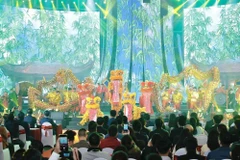
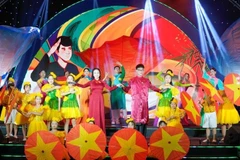
Spring Fair 2026 showcases Vietnam’s finest performing arts

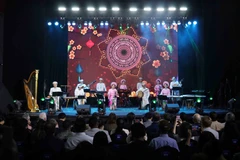
According to the Organising Committee, the artistic programme of Spring Fair 2026 is designed to honour traditional cultural values, inspire national pride and promote confidence in Vietnam’s future. By bringing a wide range of art forms into an open, friendly public space, the fair allows audiences to experience high-quality performances in a festive setting.

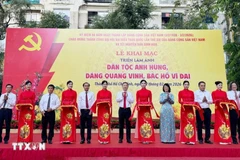
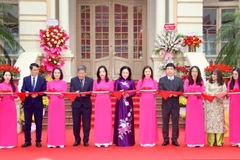
Delegates cut the ribbon to inaugurate the exhibition on February 2. (Photo: VNA)

Images highlight Vietnam’s revolutionary journey on Party’s 96th anniversary

Bringing together more than 100 photographs, the exhibition revisits pivotal chapters of the nation’s revolution, from the August Revolution of 1945, victories in the resistance wars against the French colonialists and US imperialists, to achievements of the Doi moi (Renewal) process that have strengthened Vietnam’s international standing and improved people's living standards.

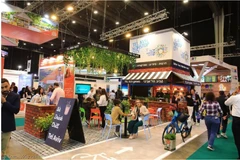
Vietnam promotes tourism potential in Israeli market

Vietnam promotes tourism potential in Israeli market

IMTM is the largest professional tourism fair in Israel and the Mediterranean region, held annually for more than 30 years. Taking place from February 3 to 4 at the Expo Tel Aviv Exhibition Centre, the fair features nearly 200 booths and thousands of delegates from over 50 countries.

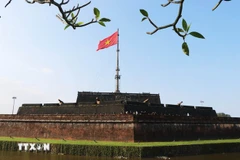
The Flag Tower of Hue Ancient Citadel is part of the Hue Imperial Citadel Complex - a World Cultural Heritage site. (Photo: VNA)

UNESCO praises Vietnam’s view of culture as core resource for sustainable development

From UNESCO’s perspective, the resolution articulates a concrete roadmap for structural reform, aiming to mobilise social capital, catalyse the creative economy, and safeguard cultural diversity. This builds upon Vietnam’s long-standing cultural advocacy and will enable Vietnam to navigate the complexities of the digital era and a volatile global landscape, he stated.

A performance at the opening ceremony (Photo: VNA)

Get on Hanoi 2026 – A Green Journey kicks off

A new feature of the 2026 event is the fusion of activities with “Tet of the Mong comes to the city,” held by Tay Ho ward, and the “Gia Lai Day in Hanoi – Introduction of National Tourism Year Gia Lai 2026” hosted by Gia Lai province. Together, they are expected to create a diverse and distinctive array of experiences for both residents and visitors throughout the three-day event.

An art performance at the cultural exchange event (Photo: VNA)

Cultural exchange strengthens friendship between Ho Chi Minh City, Liverpool

Ho Chi Minh City and Liverpool shared notable similarities as creative and people-centred urban centres where tradition and modernity coexist, and where historical heritage goes hand in hand with aspirations for future development, he said, affirming that the signing of the MoU was seen as a reflection of political trust, consensus and determination to build a model of local-level cooperation between Vietnam and the UK.

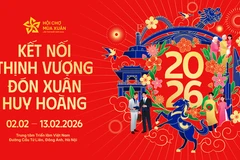
The Spring Fair 2026, themed “Connecting Prosperity – Welcoming a Glorious Spring,” will take place from February 2 to 13, 2026. (Photo: VNA)

Spring Fair 2026 showcases Vietnamese spring culture in contemporary life

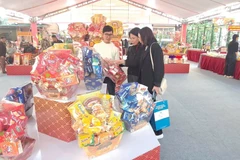
Building on the success of the first Autumn Fair in 2025, the event reflects the government’s determination to develop the domestic market as a key pillar of the economy alongside exports and investment. It aims to stimulate production, circulation and distribution of goods for Tet consumption, helping stabilise the market and boost confidence among businesses and consumers from the start of the year.

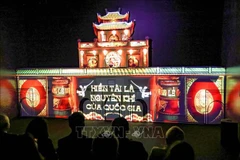
Delegates tour the space introducing Vietnam’s world documentary heritage (Photo: VNA)

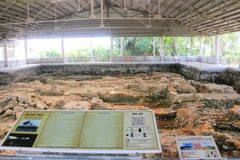
New space celebrates Vietnam’s world documentary heritage

Situated in central Hanoi, the venue is poised to become a culturally profound destination, offering a comprehensive, authentic window into Vietnam's layered history, heritage, and governance traditions, all revealed through the presence of original documents themselves.