Digitisation breathes new life into Oc Eo cultural heritage in An Giang

At present, more than 3,350 original artefacts are on display at the Oc Eo Culture Exhibition House, with the majority digitised through QR codes.

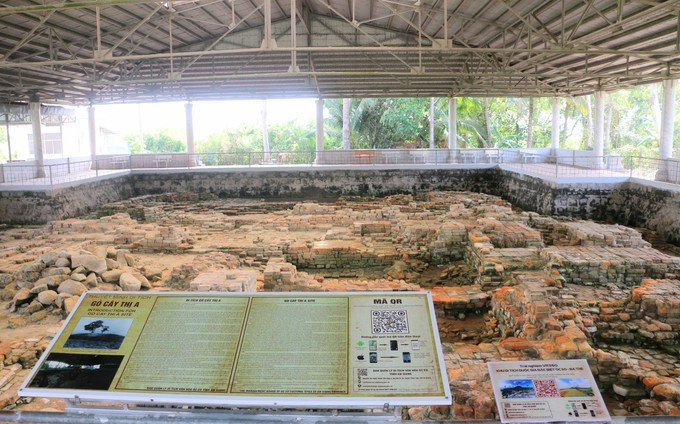
QR code, 3D and VR 360 technologies for presentation are applied at the Go Cay Thi A historical site of the Oc Eo – Ba The archaeological complex in An Giang province. (Photo: VNA)

An Giang (VNA) – The Mekong Delta province of An Giang is accelerating the digitisation of cultural and museum activities related to the Oc Eo Civilisation, aiming to enhance public access, enrich visitors' experiences and promote the heritage of one of Southeast Asia’s earliest civilisations to a wider domestic and international audience.

Enhancing visitors' experiences

The Oc Eo Cultural Relic Management Board of An Giang has been implementing a comprehensive digital transformation plan for the Oc Eo Culture Exhibition House and key relic sites within the Oc Eo – Ba The archaeological complex. The initiative forms part of broader efforts to preserve heritage values while adapting to new trends in cultural tourism.

Since 2016, the Oc Eo Culture Exhibition House has served as a central venue for preserving and displaying thousands of artefacts dating from the 1st to the 7th centuries. These artefacts reflect the material culture of the ancient Funan Kingdom, an early state in Southeast Asia that played a major role in regional trade and cultural exchanges during the early centuries of the Common Era. Among the collections are four national treasures recognised for their outstanding historical and archaeological value.

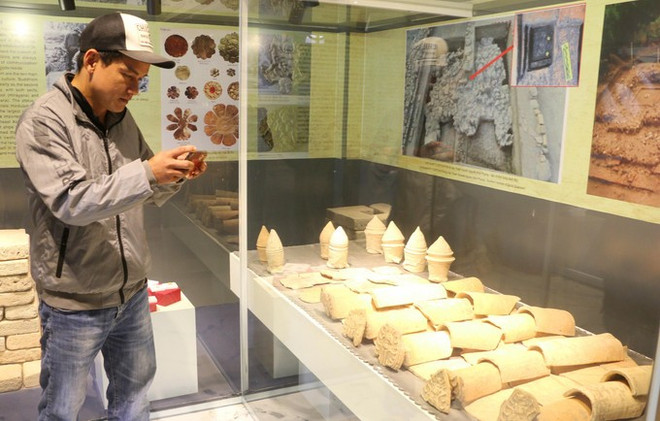
At present, more than 3,350 original artefacts are on display, with the majority digitised through QR codes. By scanning the codes with smartphones, visitors can access high-resolution images, detailed explanations and related historical information, enabling deeper engagement with each artefact while supporting research and educational activities.

Digital applications have also expanded beyond basic information access. The exhibition house has introduced 3D modelling and VR 360 technologies, allowing visitors to experience virtual tours and explore artefacts and exhibition spaces from multiple perspectives. This approach offers greater flexibility, especially for visitors who wish to explore the site remotely or gain a comprehensive overview before an on-site visit.

Trang My Linh, a tour guide at the exhibition house, said that by using smartphones to scan QR codes combined with 3D and VR 360 technologies, visitors can take virtual tours and actively explore detailed information about the artefacts. In addition to Vietnamese, exhibition content is available in English, Japanese and Korean, with further languages under development to serve a wider range of domestic and international visitors.
oc-eo-3.jpg
With QR code, 3D and VR 360 technologies, visitors can experience and explore the Oc Eo Culture exhibition space by themselves. (Photo: VNA)

Japanese tourist Ichira Shimoda said he was impressed by the Oc Eo Culture Exhibition House during his visit to An Giang, noting its long-standing historical value and vivid displays. He added that digital services enhanced his experience and would attract visitors from Japan and other countries.

Building a smart, interactive museum

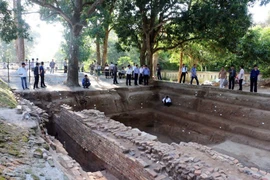
In addition to the exhibition house, digital technologies have been applied at seven key relic sites within the Oc Eo–Ba The special national relic complex. Virtual tours and 3D reconstructions enable immersive experiences, allowing visitors to visualise ancient spaces and better understand the historical context without affecting the integrity of the original relics.

Nguyen Xuan Bang, Deputy Director of the Oc Eo Cultural Relic Management Board, said digital transformation aims to help visitors better connect with and understand the value of the Oc Eo heritage. He stressed that technology alone is insufficient without high-quality content, emphasising the need to integrate technology with appropriate programmes to gradually build an interactive and intelligent museum model that remains both educational and engaging.

The Oc Eo – Ba The archaeological site was recognised as a special national relic in 2012 and is regarded as a vital testament to the Oc Eo Civilisation, which flourished in southern Vietnam from the 1st to the 7th centuries. Through sustained digital transformation, An Giang hopes to create new momentum in heritage preservation, cultural dissemination and tourism development, while paving the way for the site to gain wider international recognition in the future./.
VNA

See more

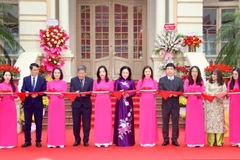
A performance at the opening ceremony (Photo: VNA)

Get on Hanoi 2026 – A Green Journey kicks off

A new feature of the 2026 event is the fusion of activities with “Tet of the Mong comes to the city,” held by Tay Ho ward, and the “Gia Lai Day in Hanoi – Introduction of National Tourism Year Gia Lai 2026” hosted by Gia Lai province. Together, they are expected to create a diverse and distinctive array of experiences for both residents and visitors throughout the three-day event.

An art performance at the cultural exchange event (Photo: VNA)

Cultural exchange strengthens friendship between Ho Chi Minh City, Liverpool

Ho Chi Minh City and Liverpool shared notable similarities as creative and people-centred urban centres where tradition and modernity coexist, and where historical heritage goes hand in hand with aspirations for future development, he said, affirming that the signing of the MoU was seen as a reflection of political trust, consensus and determination to build a model of local-level cooperation between Vietnam and the UK.

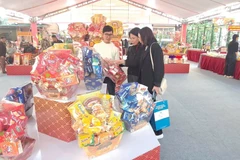
The Spring Fair 2026, themed “Connecting Prosperity – Welcoming a Glorious Spring,” will take place from February 2 to 13, 2026. (Photo: VNA)

Spring Fair 2026 showcases Vietnamese spring culture in contemporary life

Building on the success of the first Autumn Fair in 2025, the event reflects the government’s determination to develop the domestic market as a key pillar of the economy alongside exports and investment. It aims to stimulate production, circulation and distribution of goods for Tet consumption, helping stabilise the market and boost confidence among businesses and consumers from the start of the year.

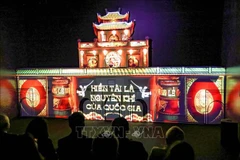
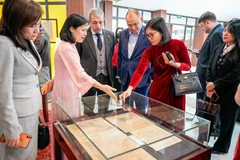
Delegates tour the space introducing Vietnam’s world documentary heritage (Photo: VNA)

New space celebrates Vietnam’s world documentary heritage

Situated in central Hanoi, the venue is poised to become a culturally profound destination, offering a comprehensive, authentic window into Vietnam's layered history, heritage, and governance traditions, all revealed through the presence of original documents themselves.

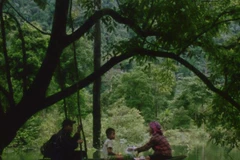
"Hair, Paper, Water" follows Hau, a woman from the Ruc ethnic minority, portraying her relationship with nature, traditional knowledge and the transformations of contemporary society (Photo: VNA)

Vietnamese-Belgian documentary to be screened in Brussels

By taking part in the seventh “En ville !” documentary film festival in Brussels, Hair, Paper, Water not only continues the international journey of a highly regarded Vietnamese film, but also helps bring closer to European audiences the people, culture and daily life of Vietnam’s ethnic minority communities.

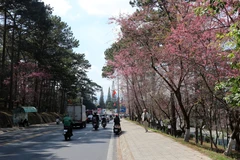
Cherry trees in full bloom along Tran Hung Dao street in Xuan Huong – Da Lat ward, (Photo: VNA)

Da Lat opens cherry blossom viewing space on heritage route

The space stretches for about two km along Tran Hung Dao street, where rows of cherry (Prunus cerasoides) trees are currently in full bloom, offering a scenic setting enhanced by century-old pine trees and historical French-style villas.

Representatives of the organising board, officials and artists at the programme announcement event. (Photo: VNA)

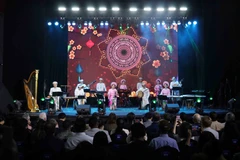
Light concert ushers in New Year with music, light and heritage

The Light Concert – Welcome 2026, themed “Vibrant Light,” will take place at 8:00 pm on January 31 at August Revolution Square, in front of the Hanoi Opera House. The event will be open to the public free of charge, serving residents of the capital and visitors alike.

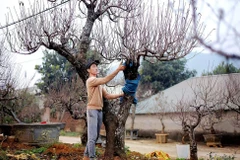
A gardener in Da Bac commune, Phu Tho province, tends peach trees for Tet. (Photo: VNA)

Da Bac peach trees draw crowds ahead of Lunar New Year

The blossoms typically range from pale to deep pink, with thick petals that bloom evenly and last long, making them ideal for Tet display. The area’s cool climate and large day–night temperature variation help prolong flowering, allowing the trees to retain their fresh colours throughout the holiday. Beyond aesthetics, ancient Da Bac peach trees are closely linked to the cultural life of local ethnic communities, symbolising spring and wishes for future prosperity.

Vietnamese music has matured into a spearhead sector with export potential and tangible influence on cultural branding and music tourism. (Illustrative photo: Ministry of Culture, Sports and Tourism)

Cultural industries emerge as new growth driver

The Government rolled out the Cultural Development Strategy for 2021–2025 with a vision to 2030, the Strategy for Cultural Industry Development to 2030 with a vision to 2045, and the National Assembly approved the National Target Programme on Cultural Development for 2025–2035. These moves signal an unequivocal commitment to positioning culture as a core driver of sustainable growth.